Life and Training
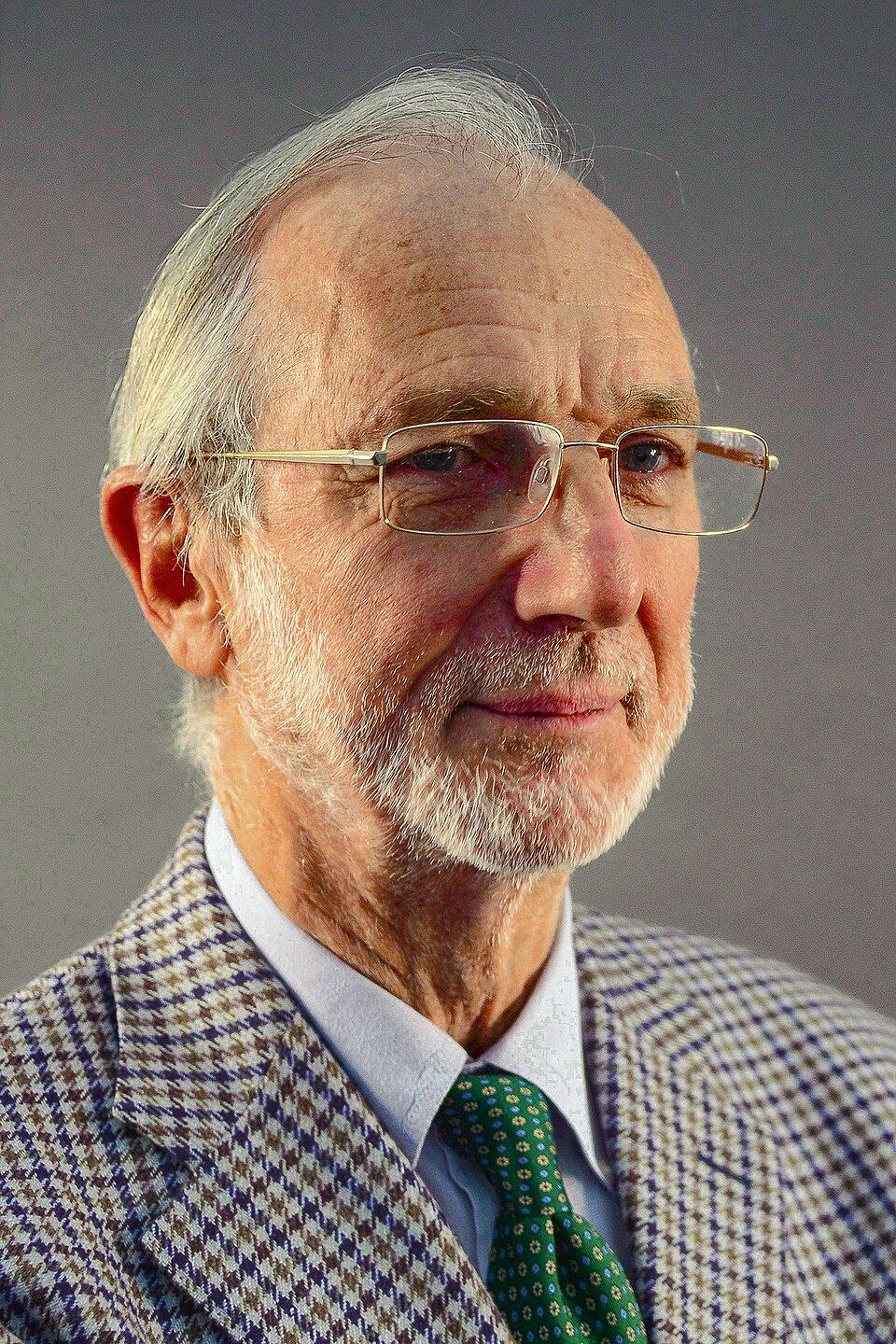
Renzo Piano was born on 14 September 1937 in Genoa, Italy, into a family of builders — his father, grandfather, and four uncles were all in the construction trade. He grew up in an environment of timber, concrete, and scaffolding, developing an early fascination with structure and making. He studied architecture at the Politecnico di Milano, graduating in 1964, and then worked in the office of Louis Kahn in Philadelphia and Franco Albini in Milan before establishing himself independently. These formative years exposed him to two contrasting sensibilities: Kahn's monumental gravity and Albini's delicate precision, both of which left traces in his mature work.
The turning point of his career came in 1971, when he and Richard Rogers won the international competition for the Centre Pompidou in Paris — a commission that announced an entirely new approach to the cultural institution. Piano and Rogers dissolved their partnership after Pompidou was completed in 1977, and Piano founded the Renzo Piano Building Workshop (RPBW) with offices in Genoa and Paris. Over the following decades RPBW became one of the most globally active architectural practices, producing museums, airports, urban developments, and civic buildings across five continents. In 1998, Piano received the Pritzker Architecture Prize. He also serves as a Senator for Life in the Italian Republic, appointed in 2013.
Architectural Philosophy
Piano has consistently resisted the label "high-tech" as a complete description of his work, preferring to speak of architecture as a craft practice rooted in the specific conditions of place, material, and use. Where high-tech architecture (as associated with Rogers, Foster, and Hopkins) tends toward the systematic expression of structure and servicing as a universal language, Piano's approach is more contextual: each project begins from an intensive study of the site's cultural, climatic, and urban character, and the resulting building is calibrated to those particular conditions rather than to a generic technological aesthetic.
Light is his most consistent preoccupation. Nearly every major Piano building addresses the quality of natural light in a different way — the sloping glass filters of the Menil Collection, the flying roof of the Zentrum Paul Klee, the layered glass screens of The Shard. He is also attentive to the relationship between building and city: his cultural institutions typically generate active public spaces around them, functioning as urban catalysts rather than self-contained monuments. This dual commitment to technical refinement and civic generosity defines what critics mean when they call his work "humanist high-tech."
Key Works
- Centre Pompidou (with Richard Rogers), Paris, France (1971–1977): The winning entry in a 1971 competition that drew 681 entries, the Centre Pompidou turned the conventional cultural institution inside out: all structural, mechanical, and circulatory systems — the skeleton, the guts, the veins — were moved to the exterior, leaving the interior as a completely open, column-free loft that could be reconfigured for any exhibition. The color-coded exterior systems (blue for air, green for water, yellow for electricity, red for circulation) became the defining image of high-tech architecture. The building was initially vilified by Parisian critics but is now one of the most visited buildings in Europe.
- Menil Collection, Houston, Texas (1987): Designed for art collectors Dominique and John de Meníl, the Menil is Piano's masterwork in the mediation of natural light. A series of "leaves" — ferro-cement louvres engineered to admit north sky light while blocking direct sunlight — form the ceiling of the galleries, creating a warm, even illumination that changes with the weather. The building sits in a residential neighborhood and deploys the scale and cladding of a Texas frame house, relating to its context with an unusual modesty.
- Kansai International Airport, Osaka Bay, Japan (1988–1994): Built on an artificial island in Osaka Bay, Kansai is one of the great engineering-architecture collaborations of the late twentieth century. The terminal building is 1.7 kilometers long — one of the longest buildings in the world at the time — and its gull-wing roof of triangulated steel trusses is shaped by computational aerodynamic analysis to guide airflow smoothly through the building. The project demonstrated that Piano's workshop could operate at infrastructural as well as cultural scale.
- The Shard, London, UK (2000–2012): The tallest building in the United Kingdom at 309 meters, The Shard rises from London Bridge station as a tapered glass spire whose facets are angled slightly differently from each floor to floor, so that the reflection of sky changes constantly as you move around it. Piano's concept was of a vertical city — offices, hotel, apartments, and public viewing gallery stacked within a single crystalline form — and its silhouette has decisively altered the London skyline. The name was bestowed sardonically by English Heritage conservationists who opposed it, and Piano adopted it.
- Whitney Museum of American Art, New York City (2015): Relocated from its Marcel Breuer building uptown to the Meatpacking District at the foot of the High Line, Piano's Whitney is a deliberately asymmetric stack of industrial-scaled volumes that mediates between the scale of the Hudson River piers and the fine grain of the West Village neighborhood. Generous outdoor terraces on the upper floors blur the boundary between gallery and city, and the building's industrial aesthetic — raw steel, concrete, and glass — echoes the neighborhood's own material history.
Legacy
Renzo Piano Building Workshop has produced more than 130 projects over five decades, and the quality has remained remarkably consistent — a difficult achievement for a large architectural practice. Piano's influence operates through the standard his work sets for the integration of technical sophistication with cultural sensitivity, particularly in the design of museums and cultural institutions. His commitment to working across scales — from furniture details to airport infrastructure — reflects a Bauhaus-derived conviction that architecture is a single discipline that encompasses making at every level. At an age when most architects have long retired, Piano remains active in practice, demonstrating that architectural creativity, unlike athletic performance, does not necessarily diminish with time.
Explore Renzo Piano's buildings in the game.
Play Building Guessr