The Bauhaus school existed for exactly fourteen years. It was founded in Weimar in 1919, moved to Dessau in 1925, relocated to Berlin in 1932, and was forced to close by the Nazis in 1933. In that time it produced no more than 1,400 graduates. By the standard measures of institutional life, it was a failure: too radical for its host cities, too internationalist for the rising nationalist tide, too poor to pay its teachers reliably. And yet the Bauhaus shaped how the entire twentieth century thought about design, architecture, and the relationship between art and industrial production. Almost every flat roof, glass curtain wall, sans-serif typeface, and tubular-steel chair that you have encountered owes something — directly or indirectly — to the ideas worked out in those three buildings over those fourteen years.
Walter Gropius and the founding idea
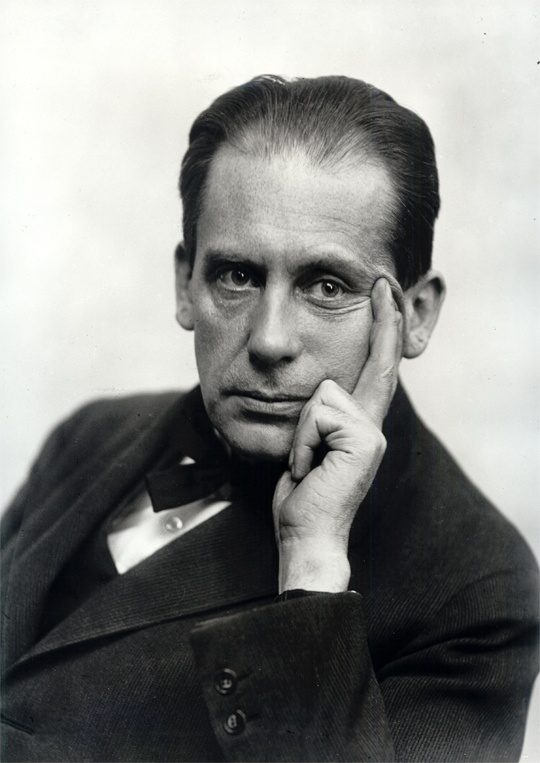
Walter Gropius founded the Bauhaus with a manifesto that was, at its core, a rejection of the division between fine art and applied craft. Victorian culture had separated the fine arts — painting, sculpture, architecture — from the decorative and applied arts — ceramics, weaving, furniture, metalwork — and ranked them accordingly. Fine art was for genius; craft was for artisans. Gropius thought this division was strangling both, and he thought the machine was the reason to finally heal it. If the new century was going to be defined by industrial production — by factories, printing presses, and assembly lines — then artists needed to understand manufacturing, and manufacturers needed to understand design. The Bauhaus was the institution that would train people who could do both.
The school's pedagogy was structured around this idea. Students went through a preliminary course — the Vorkurs, eventually taught by Johannes Itten and later by László Moholy-Nagy — that stripped away their accumulated visual assumptions and made them look at materials, textures, and spatial relationships from first principles. Then they entered one of the school's workshops — weaving, ceramics, metalwork, printmaking, photography, theatre, or architecture — where they were taught by both a master craftsman and a master of form, one for the technical knowledge and one for the aesthetic judgment. The idea was that neither alone was sufficient. A master craftsman who could not think about form would produce technically competent but visually inert work. A master of form who did not understand the constraints of production would produce beautiful ideas that could never be made.
In practice, the separation between fine art and craft was never entirely dissolved at the Bauhaus — the school was full of artists who thought of themselves as artists and treated the workshops as vehicles for self-expression. But the aspiration generated an enormous amount of influential work: Marcel Breuer's tubular steel chairs, Marianne Brandt's metal lamps, Herbert Bayer's universal typeface, and the weaving workshop's fabrics were all designed with the explicit aim of being reproducible in industrial quantities at an affordable price. Some were actually produced that way. Many more were influential as demonstrations of what machine-age design could look like if it were thoughtful rather than merely cheap.
The Dessau building as manifesto
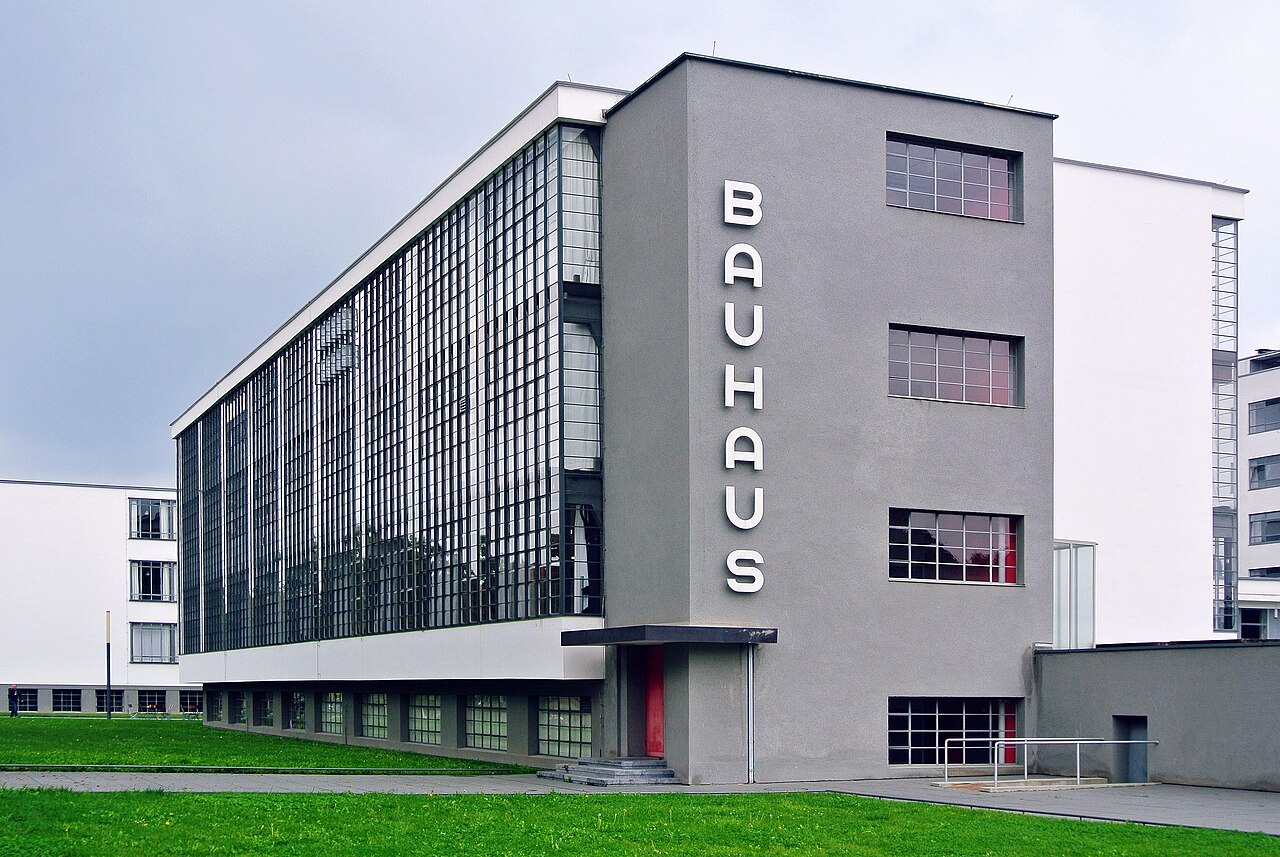
When the Bauhaus moved to Dessau in 1925, Gropius designed a new building for it that functioned simultaneously as a school and as a demonstration of everything the school stood for. The Bauhaus Dessau building (completed 1926) is, by most accounts, one of the most important buildings of the twentieth century, not because it is the largest or the most technologically ambitious, but because it is the most deliberately expressive of a set of ideas about what modern architecture should be.
The building is organized into three wings connected by a two-story bridge. The workshop wing — the most famous part — is a three-story glass curtain wall: the entire exterior surface is glass, hung from a concrete slab structure whose columns are set back from the facade so that the glass reads as a continuous skin rather than a series of windows between structural piers. This was technically new in 1926 and visually astonishing: a building that appeared to have no wall, only a membrane of glass that revealed the interior structure directly. The message was explicit. A building honest about its construction, with no historical ornament added to disguise the structure, was the architectural equivalent of the Bauhaus design principle: form follows function, and function should be visible.
The typography of the building's facade was itself a statement. The word BAUHAUS was lettered vertically on the corner of the workshop wing in the school's own sans-serif typeface — no decorative border, no carved stone, just the name of the institution in the visual language the institution had developed. This integration of graphic design into the architecture of the building was itself a Bauhaus idea: there was no distinction between the design of the building and the design of the lettering on it. Everything was part of the same project.
Key teachers and their influence
The Bauhaus is often reduced to Walter Gropius, but the school's actual intellectual range came from a remarkable collection of teachers whose ideas frequently conflicted. Paul Klee and Wassily Kandinsky — two of the most important painters of the early 20th century — both taught at the Bauhaus, and both ran workshops in which abstract painting was used not as an end in itself but as a method for understanding visual composition. Their theoretical work on color, line, and form, developed in part through their Bauhaus teaching, has been influential in design education ever since.
László Moholy-Nagy took over the preliminary course from Johannes Itten in 1923 and reoriented it away from spiritual self-discovery (Itten's approach was influenced by Mazdaznan, a mystical religious movement) and toward rigorous engagement with materials, light, and space. Moholy-Nagy was fascinated by photography, film, and the new industrial materials — he experimented with transparent plastics, photograms, and light installations that had no precedent in any existing artistic tradition. His influence on visual arts education, particularly in America after his emigration, was enormous.
Marcel Breuer, who had been a student at the Bauhaus before becoming a teacher, designed the Wassily chair in 1925 — a chair made of bent tubular steel and canvas slings, inspired by the handlebars of his new Adler bicycle. It was not the first tubular steel chair, but it was the most elegant, and it established tubular steel as the material of modernist furniture design. Breuer went on to have a major career as an architect in both Europe and the United States, where his concrete and timber houses of the 1950s and 1960s defined New England modernism for a generation.
Ludwig Mies van der Rohe became the last director of the Bauhaus in 1930, two years before the Nazi pressure forced the school's closure. Mies was already one of the most important architects in Europe — his German Pavilion at the 1929 Barcelona International Exposition had established the free-plan, flat-roofed, polished-surface aesthetic that would define his entire career. At the Bauhaus, he concentrated the school's curriculum increasingly on architecture at the expense of the workshops, a move that reflected his own priorities. When the school closed and Mies emigrated to the United States, he brought the Bauhaus architectural aesthetic — refined to its absolute minimum — to American corporate and institutional architecture, where it became the dominant style for two decades.
The Nazi closure and the American diaspora
The Bauhaus was always politically vulnerable. Its internationalism, its left-leaning faculty, and its connection to the modernist avant-garde made it a target for the rising nationalist right throughout its existence. The Weimar school was pressured out of the city in 1925. The Dessau school was closed by the Nazi-controlled city government in 1932. Mies moved the school to Berlin as a private institution, but the Gestapo raided it in April 1933, and the remaining faculty voted to dissolve the school rather than operate under Nazi oversight.
What happened next determined the shape of architectural culture for the rest of the century. Gropius emigrated to England, then to the United States, where he became chair of the architecture department at Harvard's Graduate School of Design in 1937. His students at Harvard included Philip Johnson, Paul Rudolph, and I.M. Pei — three architects who would define American modernism in the postwar decades. Moholy-Nagy founded the New Bauhaus in Chicago in 1937, which eventually became the Illinois Institute of Design. Mies became head of architecture at the Illinois Institute of Technology in Chicago in 1938 and spent the next decade redesigning the entire IIT campus in his own stripped-down modernist idiom.
The result of this diaspora was that Bauhaus ideas, which might have remained a European avant-garde experiment, were transplanted into the most powerful educational institutions in the richest country in the world at exactly the moment when that country was about to embark on the largest building program in human history. The postwar American boom — suburban housing, corporate headquarters, university campuses, civic buildings — was designed largely by people trained in the Bauhaus tradition or by people trained by those people. The flat roof, the open plan, the glass wall, the absence of ornament: these became not just an aesthetic preference but a professional default.
Bauhaus influence on postwar architecture
The most visible legacy of the Bauhaus in the built environment is the glass-box corporate tower. The Seagram Building in New York (Mies van der Rohe and Philip Johnson, 1958) is the canonical example: a rectangular bronze-and-glass slab set back from Park Avenue on a plaza, with every detail reduced to its irreducible minimum. The structural columns are concealed inside the building. The bronze I-beams on the exterior are not structural but are applied to the glass skin to express the structural logic of the building — a move that is, paradoxically, ornamental in its anti-ornamentalism. The Seagram Building was so influential that it was replicated, in cheaper and less precise versions, in every major city in the world over the following two decades. The curtain-wall glass office tower became the architectural default of late 20th-century commercial development worldwide.
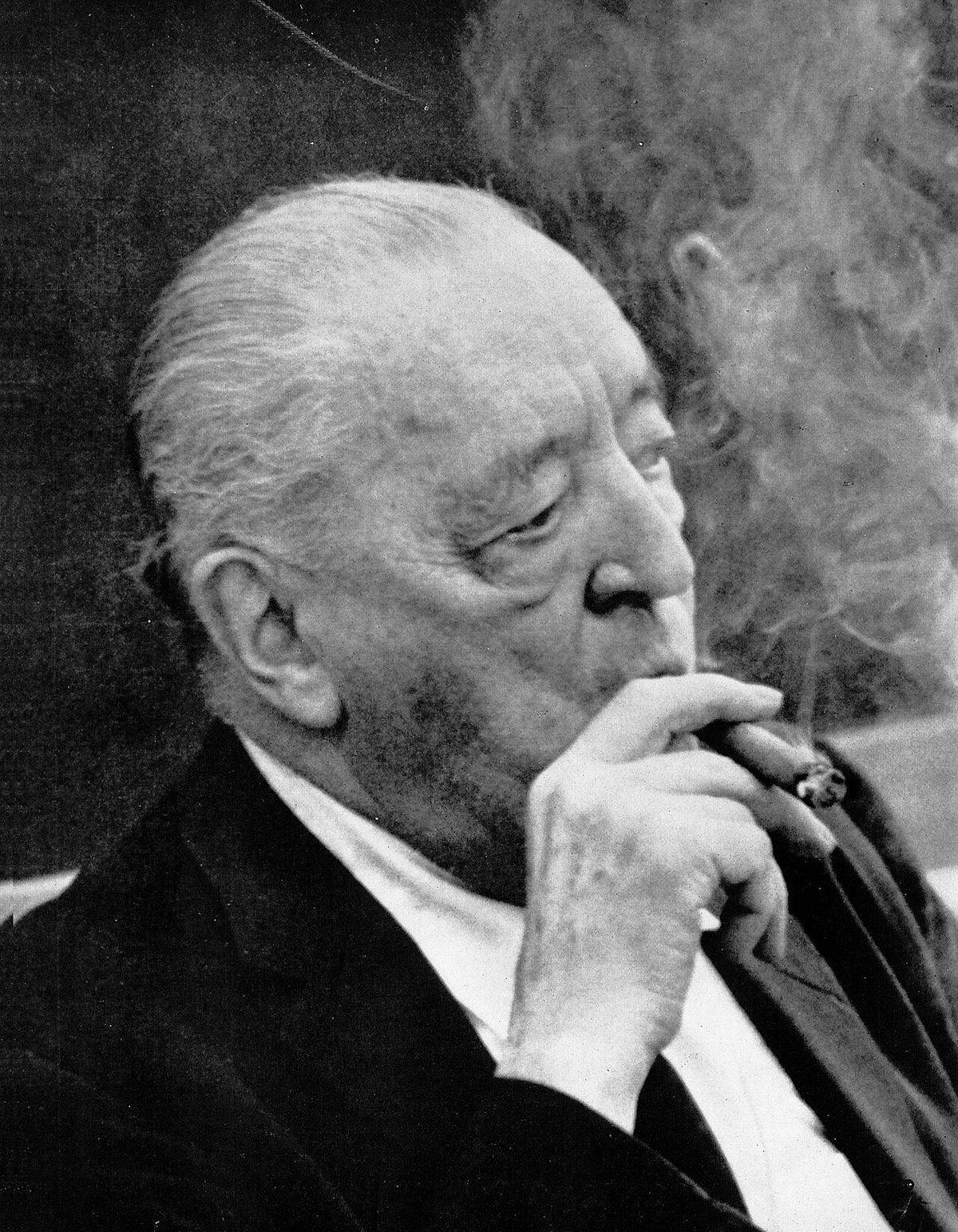
At a smaller scale, the Bauhaus influenced the design of private houses in ways that are still visible in the premium residential market. The flat-roofed house with white rendered walls, large sliding glass doors opening to a garden, and an open-plan interior organized around natural light is a direct descendant of the Bauhaus domestic aesthetic. Philip Johnson's Glass House in New Canaan, Connecticut (1949) pushed this logic to its extreme: the entire house is a glass box with no solid walls at all, the privacy provided only by a circular brick cylinder containing the bathroom. The house is a demonstration of the Bauhaus idea — taken to the point where it became a philosophical manifesto rather than a livable building — that architecture should be transparent about its structure and its relationship to the landscape.
Regional Variations
The Bauhaus had different heirs in different national traditions, and these regional variants produced architectures that are recognizably related but distinctly inflected. In Switzerland, the influence of the Bauhaus merged with a native tradition of engineering precision and material honesty to produce what is often called Swiss Concrete or Neue Sachlichkeit (New Objectivity). Swiss architects like Max Bill, who had actually studied at the Bauhaus under Gropius and Albers, brought the school's ideas into a tradition that valued exactness and restraint over the more expressive possibilities of modernism. Swiss graphic design and typography, which drew directly on Herbert Bayer's Bauhaus experiments, became the international standard for corporate communication through the postwar decades.
In Italy, the Bauhaus found a more complicated reception. Italian Rationalism of the 1920s and 1930s — the work of Giuseppe Terragni, Pietro Lingeri, and the MIAR group — shared the Bauhaus commitment to geometric clarity and functional honesty, but was inflected by the specific political situation of Italian fascism. Mussolini's government initially supported rationalist architecture as a modern expression of fascist efficiency, then gradually pushed the style toward a more monumental classicism. Terragni's Casa del Fascio in Como (1936) is the most important surviving example: a cubic white building with a grid facade of equal structural bays, an open courtyard, and a complete absence of historical ornament. It is one of the most beautiful buildings of the interwar period, and one of the most morally complex, built as the headquarters of the local fascist organization.
American corporate modernism is probably the most consequential regional heir of the Bauhaus, and also the most problematic. When Gropius and Mies brought their ideas to American universities, those ideas were immediately useful to American corporate clients who wanted buildings that signaled modernity, efficiency, and seriousness without the expense of ornament or the complications of historical style. The curtain-wall glass box was cheaper to build than a stone-clad building with carved detail, it was faster to erect, and it photographed well against a blue sky. The result was a version of Bauhaus modernism stripped of its social idealism — the idea that good design could improve the conditions of working-class life — and retained as pure aesthetic preference in the service of corporate image.
In Japan, the Bauhaus influence merged with a native design tradition that already valued material honesty, geometric simplicity, and the relationship between interior and exterior space. Japanese architects of the postwar period — Kenzo Tange most prominently — found in the Bauhaus a Western vocabulary that was philosophically compatible with the aesthetics of traditional Japanese architecture, even if the materials (concrete and steel rather than wood and paper) were entirely different. The result was a modernism that felt distinctly Japanese in its proportions and its relationship to nature while using the abstract geometric language of the European avant-garde.
Key Identifiers: Bauhaus and Its Legacy
- Flat roof — no pitched roof, no gable, no historical roofline; the rooftop is a usable surface or simply a horizontal termination
- White render or glass curtain wall — the exterior surface is either smooth white plaster or a continuous skin of glass, with no stone cladding, brick facing, or applied ornament
- No historical ornament — no columns, cornices, pediments, arches, or carved decoration; any surface articulation comes from the structural system or the material itself
- Primary colors used as accents — where color appears, it is typically the red, yellow, and blue of the Bauhaus color theory; color is used functionally to identify elements rather than decoratively
- Open plan — interior partitions are minimized; the floor plan is organized around the structural grid rather than around cellular rooms; space flows between functions
- Functional window placement — windows are sized and positioned according to the interior's lighting needs, not according to the exterior facade's symmetry or proportion
- Expressed structure — the structural frame (columns, beams, slabs) is either visible or legible through the facade; the building does not conceal how it stands up
- Industrial materials — steel, glass, and reinforced concrete are used without disguise; the building does not pretend to be made of stone or wood
A Closer Look: The Bauhaus Building, Dessau
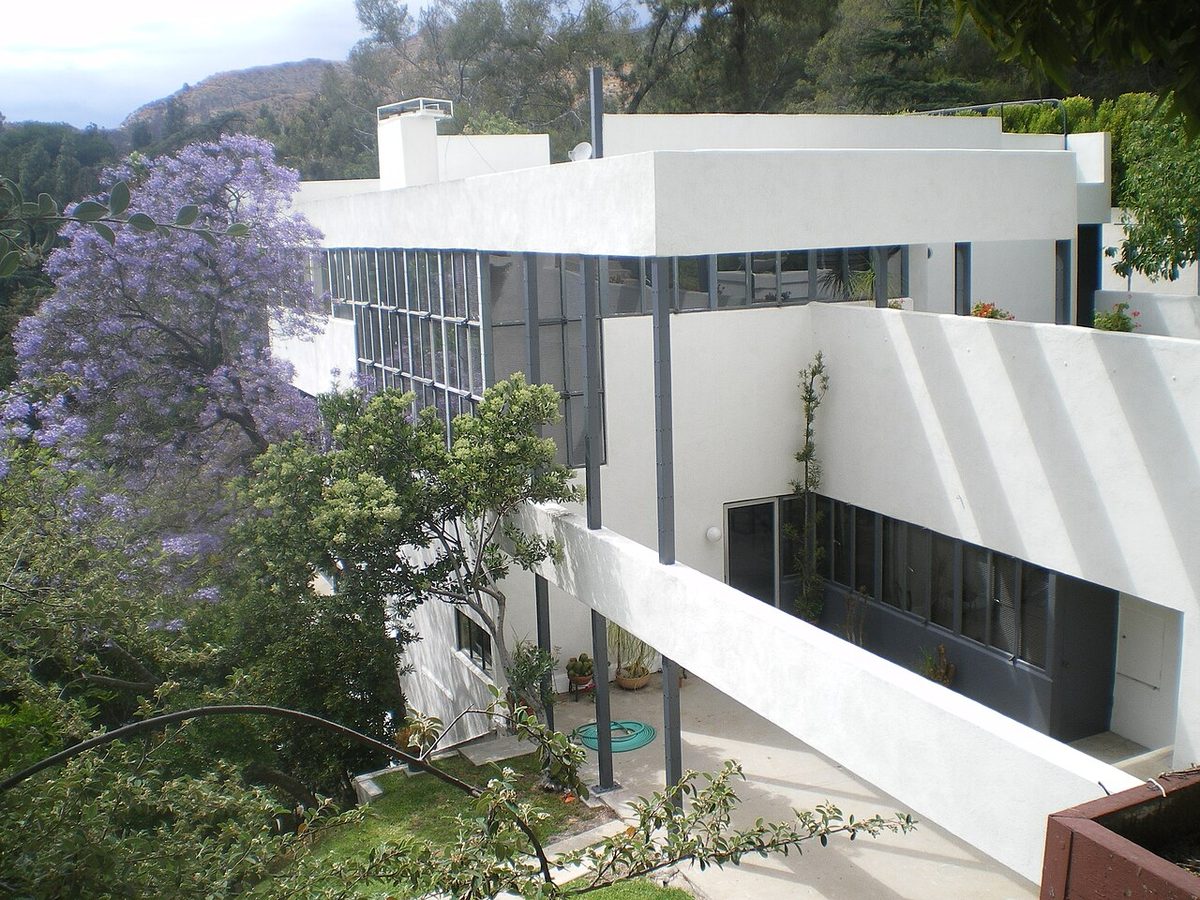
The Dessau Bauhaus building (Walter Gropius, 1926) is a small building by the standards of major public architecture — roughly comparable in size to a medium-sized secondary school — but it has been studied and photographed more intensively than almost any building of the 20th century, because every element of it is an argument. The building is organized around three wings arranged in an asymmetric pinwheel plan, connected at two points: the workshop wing (the glass curtain wall), the student dormitory wing (a long residential block raised on pilotis, with individual balconies for each room), and the school buildings wing (containing classrooms and administration). A two-story bridge connects the workshop wing and the school wing over a public road, and this bridge contains the director's office — Gropius's own workplace — positioned so that he had a view of both halves of the school.
The asymmetry of the plan was itself a statement. Symmetrical plans had been the default of European institutional architecture since the Renaissance: a central axis, flanking wings, a monumental entrance on the axis of symmetry. The Bauhaus plan rejected this in favor of a composition that could only be understood by moving around the building, seeing it from multiple angles, understanding each wing's relationship to the others and to the street. The building does not present a single principal facade because it insists that there is no single correct viewpoint — a position that was simultaneously a claim about architecture and about the democratic, non-hierarchical organization of the school itself.
The glass curtain wall of the workshop wing has been restored twice since the building's original construction — once after wartime damage, and once as part of a comprehensive restoration completed in 2006. The current glass is double-glazed and meets modern energy standards; the original single-pane glass would have made the workshops essentially unworkable by contemporary standards of temperature control. This creates a small paradox: the building that insisted on honesty about materials and construction is now clad in a material that is technically very different from the original, though visually identical. The Bauhaus is now a UNESCO World Heritage Site (designated in 1996, as part of a listing that included all surviving Bauhaus buildings in Weimar and Dessau), which means its future alterations are subject to international oversight. There is a working school in the building — the Stiftung Bauhaus Dessau — that continues programs in design education in keeping with the original mission.
Spotting It in Building Guessr
Bauhaus-influenced buildings are among the most common modern buildings in the game's database, because the style became the international default for institutional and commercial architecture across much of the world from the 1950s through the 1980s. The primary signals are the flat roof combined with the absence of historical ornament. If a building has no cornice, no columns, no arched windows, no carved detail, and a flat or very slightly pitched roof, it is operating in the Bauhaus tradition even if it was designed by someone who had never consciously studied the school. The secondary signal is the treatment of the facade: if the facade is a glass curtain wall with a visible structural grid behind it, or a flat white or light-colored rendered surface with functionally placed windows, the Bauhaus influence is almost certainly present.
Distinguishing Bauhaus-lineage buildings from other modernist traditions can be done by period and by the degree of geometric discipline. A building that is geometrically very precise, with windows aligned on a clear grid, a flat roof with a clean parapet, and either white render or glass as the primary material — and that was built between 1930 and 1980 — is very likely in the Bauhaus tradition. The Brutalist tradition, by contrast, uses exposed concrete rather than render or glass, and tends toward more sculptural massing. The Deconstructivist tradition, which came later, deliberately breaks the geometric discipline that the Bauhaus maintained. A building that is both geometrically disciplined and materially restrained, from the middle decades of the 20th century, is almost certainly a Bauhaus descendant.
Find Bauhaus-influenced buildings in the Modern and International Style filters.
Play Building GuessrFurther Reading
Sources & further reading
Reference material this page draws on, and where to read further. External links open third-party sites.
- Bauhaus · Wikipedia
- Walter Gropius · Wikipedia
- Ludwig Mies van der Rohe · Wikipedia
- International Style · Wikipedia
- Marcel Breuer · Wikipedia
- White City, Tel Aviv · Wikipedia
- World Heritage listing: White City, Tel Aviv · UNESCO World Heritage Centre