Buildings as climate solutions
Before central heating, air conditioning, and cheap glass, a building was a climate instrument. Its job was to shelter its occupants from whatever the local weather threw at them using only locally available materials and the intelligence accumulated across generations of builders. The result is that the world's vernacular architecture, the unlabeled ordinary buildings of each region, is one of the best datasets we have about what climate feels like in different places.
Modern architecture often hides this logic behind identical glass-and-steel international styles. But even now, a trained eye can read climate from a building. This article walks through the major climate zones and the architectural responses each one produced.
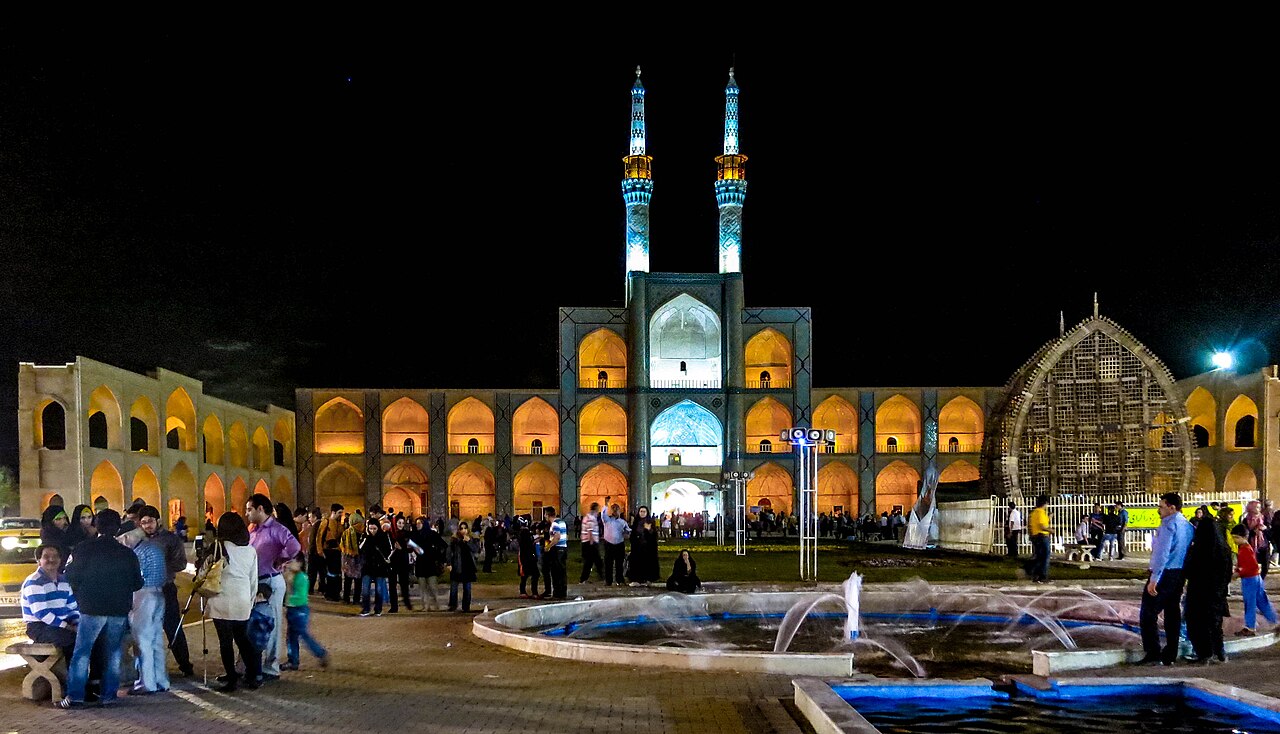
Hot and dry: the Middle East and North Africa
In desert climates, the critical problem is managing a huge day-night temperature swing. Days are brutally hot; nights can be genuinely cold. Traditional solutions developed thick walls of mud brick, adobe, or stone that absorb heat during the day and release it at night, smoothing the swing. Walls are whitewashed to reflect sunlight. Streets are narrow so buildings shade each other. Windows are small and high, and often screened with wooden lattice (mashrabiya) that lets air through but blocks direct sun.
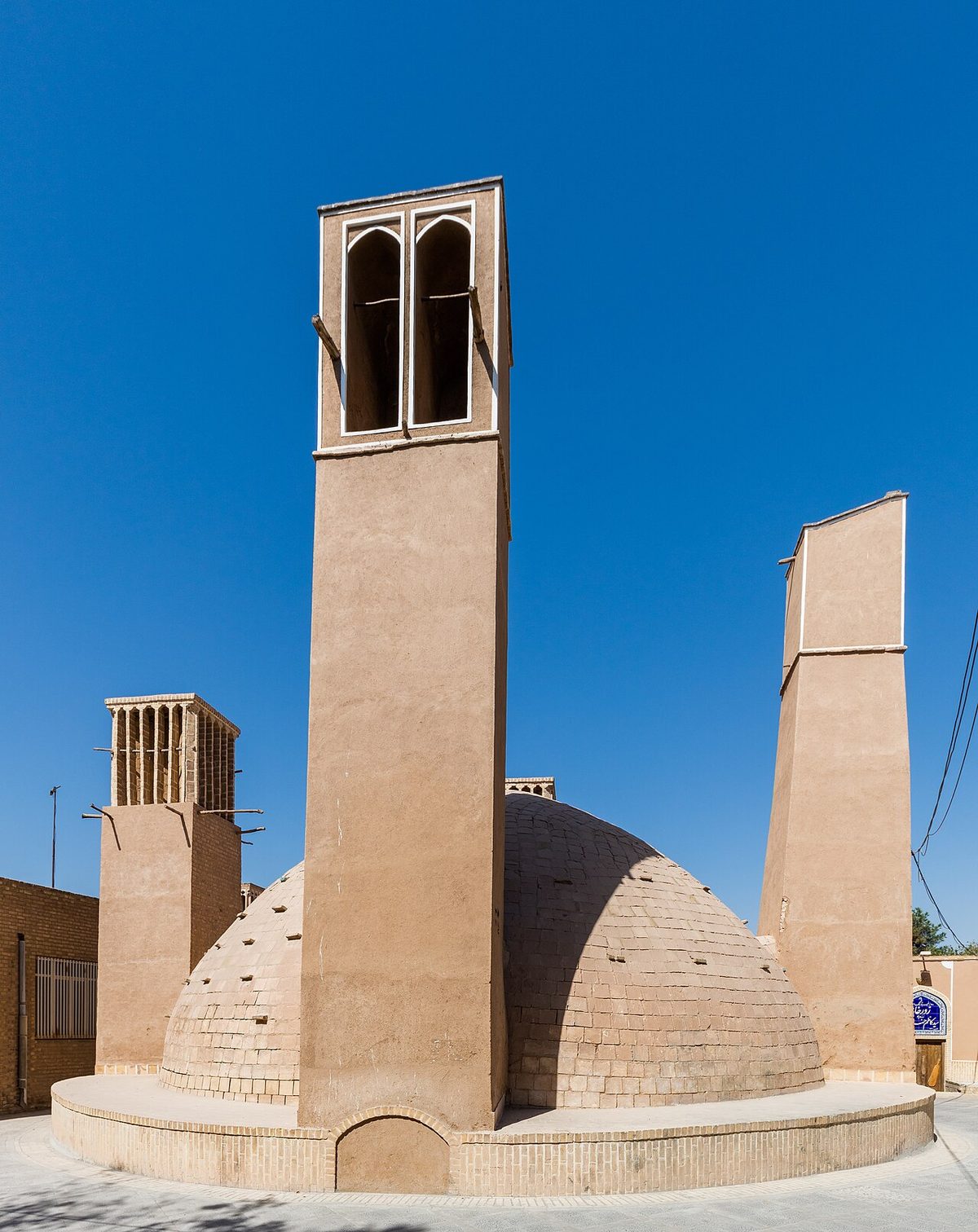
The classic form is the courtyard house: rooms arranged around an inner open space, often with a fountain or small pool for evaporative cooling. The courtyard is private and shaded; the outer walls present a blank face to the street. You see this pattern from Morocco through the Levant into Iran. Wind towers (badgirs) in Yazd and Dubai pull cooler upper-air down into the house. The oldest continuously inhabited city in the world, Damascus, still has neighborhoods built on this logic.
Hot and humid: Southeast Asia and the tropics
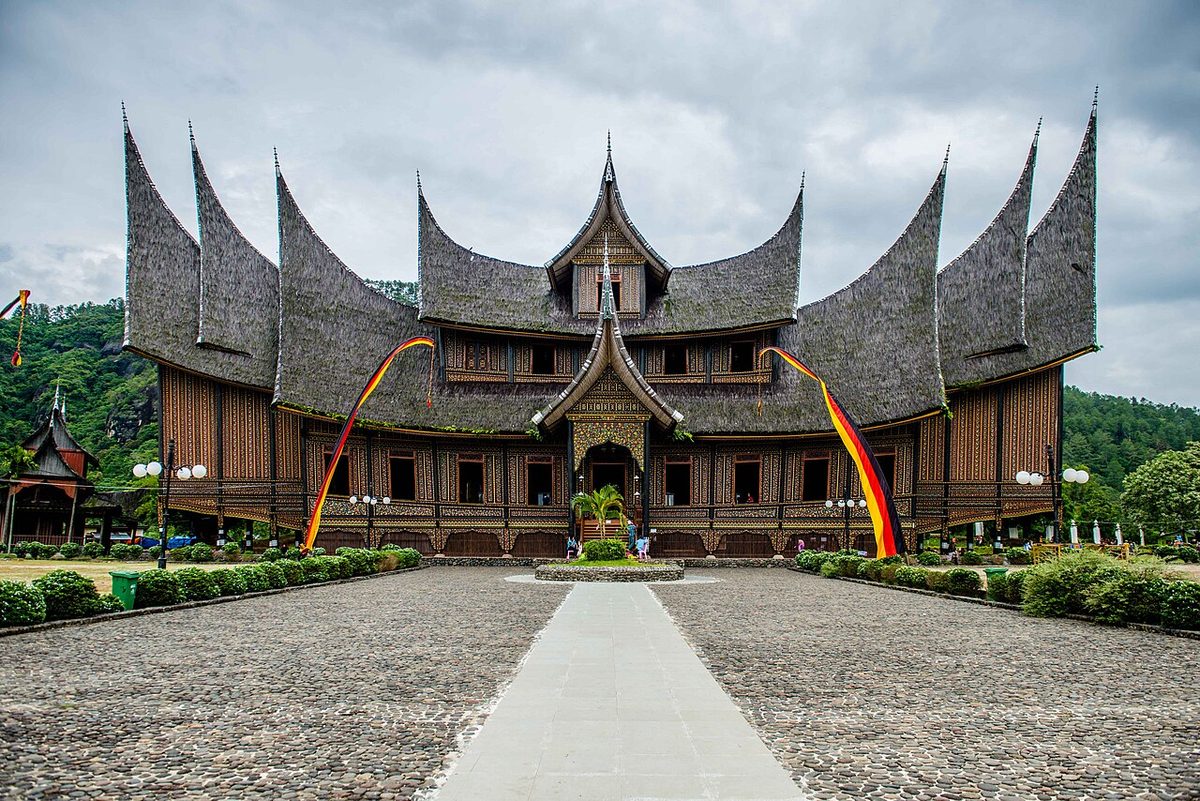
A hot desert is bad; a hot jungle is worse. When you add humidity to heat, the solution shifts entirely. You want maximum airflow, not thermal mass. Buildings are raised on stilts to catch breezes, open to their surroundings on multiple sides, and roofed with steep-pitched thatch or tile to shed monsoon rain.
The traditional Malay, Thai, Indonesian, and southern Chinese house is a set of wooden platforms under a big roof, with shutters instead of windows and open eaves that vent rising heat. Materials are typically bamboo, hardwood, and thatch, all of which breathe and rot in predictable ways. The same logic produces the wide verandas of Georgian-era colonial buildings in Singapore, Yangon, and Penang, and the deep roof overhangs of Japanese traditional houses in humid southern Japan. Thick walls would only trap moisture and mold.
Cold and snowy: the northern tradition
Move north and the problem reverses. Heat becomes a precious resource you cannot afford to lose. Walls thicken again, not for thermal mass but for insulation. Windows shrink and multiply their panes. Roofs pitch steeply so snow slides off rather than accumulating. Buildings huddle together and may share walls so each can heat the next.
Scandinavian and Russian traditional architecture is dominated by timber. Pine and spruce are abundant, insulate reasonably, and can be stacked into log construction that is both strong and airtight. Painted red (from the iron-oxide pigment in the copper mines at Falun) or black (from tar), Scandinavian farmhouses are a distinctive signature of cold-climate vernacular. Inuit snow-block construction and Sami turf huts are different answers to the same underlying math: minimize surface area, maximize insulation, avoid losing heat through the floor.
Mediterranean: the middle path
The Mediterranean climate, with hot dry summers and mild wet winters, produced a hybrid tradition. Walls are thick enough for summer thermal mass but not extreme. Windows are larger than in desert climates but still shuttered against summer heat. Roofs are tile because rain is real if seasonal. The typical Greek island house of whitewashed stone with blue-painted wood is at least as much about bouncing summer sun as it is about looking pretty.
Urban patterns in Mediterranean cities are notable: streets are narrow and irregular to create shade; piazzas and squares are generous but often ringed by buildings that let breezes in from one direction only. The Italian passeggiata, the evening walk that happens in almost every Mediterranean town, is a social response to an architectural fact: outdoor life becomes pleasant only after sundown in summer.
The modern problem
The twentieth century broke the link between climate and architecture. Cheap mechanical cooling, aluminum-frame windows, and curtain-wall construction meant that the same glass-and-steel office tower could be built in Dubai, Moscow, and Jakarta, with HVAC systems brute-forcing the interior to 22 degrees Celsius year-round. The result is that downtown districts in wildly different climates increasingly look alike.
There are costs. A glass office tower in a hot climate spends massive energy fighting its own envelope; the building is effectively trying to heat up and the cooling system is trying to bring it back down. A glass office tower in a cold climate has the inverse problem in winter. When a country's grid strains or fuel prices spike, these buildings become uneconomic in ways vernacular architecture never was.
Vernacular vs global style
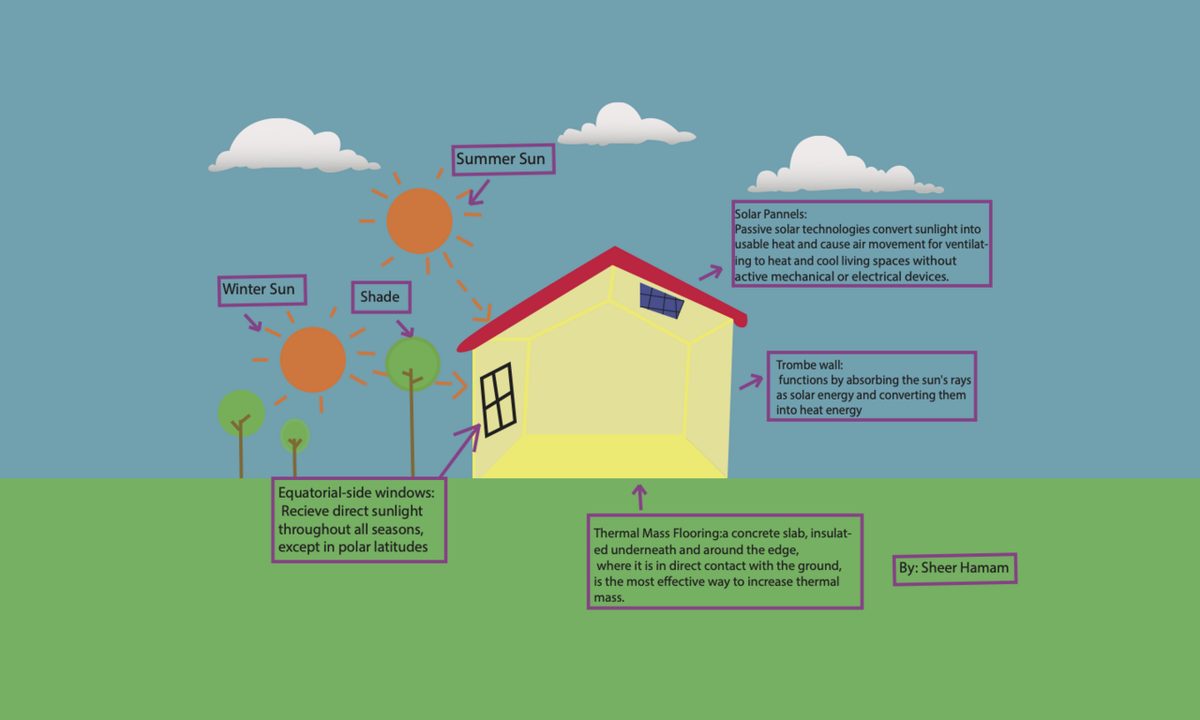
A small but serious revival of climate-responsive design is underway. Architects in the Middle East are rediscovering courtyards and mashrabiya; Southeast Asian tropical-modern firms design deep overhangs and high ceilings into new houses; northern European Passive House standards are influencing construction across cold climates. The future may be less visually uniform than the late twentieth century suggested.
Meanwhile, vernacular architecture is disappearing at a rapid clip as cities urbanize. The traditional Yemeni tower houses of Sana'a, the Dogon cliff dwellings of Mali, the Hakka earthen roundhouses of Fujian, and the Palaeolithic cave homes of Cappadocia are all listed or endangered because nobody builds new ones anymore. What climate teaches us about how to build is increasingly locked in buildings that tourists visit rather than ones people live in.
Reading climate at a glance
Next time you are given a photograph of an unfamiliar building in a round, before you worry about country, ask three questions. Does the roof pitch steeply (rain or snow) or stay flat (desert)? Are the windows small and recessed (hot or cold extreme) or large and unshaded (mild)? Are the walls massive (thermal mass or insulation, extreme climate) or light and vented (humid tropics)? Answers to those three questions usually eliminate two or three continents before you even start narrowing down cities.
For more pattern recognition, see our piece on reading religious architecture, which works the same way across traditions. The castles article also touches on how European medieval climate constraints shaped building choices.
Regional Variations
The hot-arid tradition is best illustrated by the historic cities of the Middle East and North Africa — Fez, Marrakech, Sana'a, Cairo, and Yazd — but it also appears in the American Southwest, in the Sahel, and in parts of Central Asia. The core strategies are consistent across all these contexts: thick walls of mud brick, adobe, rammed earth, or stone act as thermal batteries, soaking up daytime heat and releasing it slowly after sunset when the outside temperature drops sharply. Courtyard plans create sheltered microclimates: the air in a deep courtyard, shaded from the sun for most of the day and cooled by evaporation from a fountain or pool, can be several degrees cooler than the surrounding streets. Wind towers, called barjeels in the Persian Gulf and malqafs in Egypt, are vertical shafts oriented to catch prevailing breezes at upper-story level, where the air is cleaner and faster-moving, and funnel it down into the interior. The mashrabiya, the carved wooden lattice screen that covers windows throughout Arab domestic architecture, does three things simultaneously: it filters strong sunlight, allows air to pass through freely, and provides privacy without full enclosure. Together, these elements form a passive cooling system sophisticated enough to maintain interior temperatures 15 degrees Celsius or more below the street temperature on a summer day.
The hot-humid tradition is concentrated in equatorial and monsoonal regions — Southeast Asia, sub-Saharan West Africa, the Caribbean, coastal Brazil, and the Pacific islands. The fundamental difference from the hot-arid tradition is that thermal mass is the enemy rather than the solution: a thick wall in a humid tropical climate would trap heat and moisture and produce conditions that promote mold and biological decay. The correct response is almost the opposite of the desert solution: light, open construction raised above the ground on stilts, maximum airflow through the building from every direction, a steeply pitched roof to shed heavy rain quickly, and deep overhanging eaves to keep the sun off walls and openings while allowing breezes to flow freely beneath the eave line. Traditional Malay houses, Thai temple complexes, the wooden longhouses of Borneo, and the thatch-roofed structures of West African villages all apply this logic with local materials and ornamental vocabularies. The wide verandas of colonial bungalows across the British tropical empire, the open shop-houses of Singapore and Penang, and the pole-frame structures of the Pacific Islands are all recognisable variations on the same basic strategy.
Cold-climate architecture in Scandinavia, Russia, Finland, and Canada faces the opposite problem: the sun is a rare resource in winter, heat loss must be minimised, and the structural system must carry enormous snow loads. The pitched roof is universal — it sheds snow before the cumulative weight can damage the structure — and the pitch is often steep enough that snow slides off rather than accumulates. Log construction, which remains the dominant vernacular tradition from Norway to Siberia, provides both structural strength and substantial insulation; the thermal mass of dense timber is lower than stone but the insulation value per unit thickness is far higher. Windows are small, because every square meter of glass is a significant heat loss even with double or triple glazing, and they are typically set deep in thick walls so that some of the cold glass surface is shielded from the interior air. The bright, saturated paint colors used on Scandinavian farmhouses — the deep red of Falun paint in Sweden, the ochre and blue of Norwegian farmsteads — are partly a practical response to the visual monotony of long winters under gray skies, and partly a matter of tradition that has come to define the regional aesthetic as strongly as any structural feature.
Mediterranean climate architecture splits the difference between extremes. Summers are hot and dry; winters are mild and wet. Walls are thick enough to provide summer cooling but not the extreme thermal mass of desert construction. Roofs are tiled, because rain falls seasonally, but pitched at moderate angles rather than the steep grades of northern snowfall regions. Shuttered windows, external loggias, and colonnaded ground floors manage summer solar gain while remaining pleasant to use in the cooler months. The whitewashed render of Greek island villages, Greek Cycladic island architecture, and Moroccan medinas reflects summer sunlight effectively; the blue paint on wooden elements in Greek villages is not purely decorative — blue was traditionally a cheap pigment derived from copper sulfate (also used as a fungicide) that served practical as well as aesthetic purposes. Mediterranean urban planning consistently responds to climate through the shading of streets: the narrow alleys of the medinas, the arcaded streets of Bologna, the continuous colonnades of classical agoras, all create street-level shade that makes walking outdoors tolerable in summer heat.
Key Identifiers by Climate Zone
- Hot-arid: mashrabiya (carved wooden lattice screens), internal courtyard (riad pattern), flat or very low roof, wind tower (barjeel/malqaf), thick mud-brick or stone walls
- Hot-arid: small high windows, whitewashed exterior, narrow shaded streets, blank external walls
- Hot-humid: raised floor on stilts (pilotis), large overhanging roof, open walls or screen-only enclosure, steep roof pitch
- Hot-humid: light timber or bamboo construction, cross-ventilation priority, deep verandas, no thermal mass
- Cold climate: steep pitched roof for snow shedding, small windows, thick insulating walls (log or stone)
- Cold climate: bright saturated paint colors (Scandinavian reds and yellows), district heating infrastructure, compact clustered plans
- Mediterranean: moderate wall thickness, tiled roof, shuttered windows, arcaded or colonnaded ground floor
- Mediterranean: white render, blue painted woodwork, narrow shaded streets, generous squares for outdoor life
A Closer Look: Shibam, Yemen
Shibam, in the Hadhramaut Valley of eastern Yemen, is called the "Manhattan of the Desert" for good reason: a dense cluster of mud-brick tower houses rising five to nine stories above a flat desert floor, enclosed within a defensive wall, and concentrated on a small plateau above a seasonal river bed. The towers are the world's oldest example of high-rise urban planning, with some dating back to the sixteenth century, and they represent an architectural response to two simultaneous environmental pressures that have no precise parallel anywhere else in the world.
The first pressure is flash flooding. The Hadhramaut Valley receives very little rain but when it does rain, it rains catastrophically: flash floods from the surrounding plateau can fill the valley floor in minutes with water carrying debris, livestock, and entire sections of agricultural terrace. Shibam's plateau site keeps the city itself above the flood level, but the town's extreme vertical density reflects the scarcity of safe, elevated ground. There is simply not enough room on the plateau to build a conventional low-rise city; the only direction available is up. Each tower house occupies a minimal footprint and stacks family accommodation through multiple stories, with the ground floor reserved for livestock and storage, the middle floors for living and sleeping, and the upper floors — the most private, the most ventilated, and the highest above potential flood water — for the women's quarters and the reception rooms that guests might visit.
The second pressure is climate: Shibam experiences the full desert day-night temperature swing, with midday heat reaching above 40 degrees Celsius and nighttime temperatures dropping sharply. The mud brick of the tower walls is the perfect thermal battery. Its thermal mass — the ability to absorb heat during the day and release it slowly at night — is much greater than fired brick and far greater than timber frame. The walls are typically 60 to 90 centimetres thick at the base, tapering slightly as they rise. The towers are also extremely close together, so the narrow streets between them receive sun for only a short period each day; the mutual shading dramatically reduces the solar gain that any individual building has to contend with. The combined effect is that the interior of a Shibam tower house remains tolerable even on the hottest summer days without any mechanical assistance.
Shibam is a UNESCO World Heritage Site and is sometimes described as threatened by the combination of inadequate maintenance, population migration to cities, and the periodic flooding that it was designed to withstand at the edge — not at the center — of its tolerance. The mud brick requires regular replastering to resist erosion, and as younger generations leave for Aden or Mukalla, the communal maintenance effort that kept the towers intact for centuries is faltering. The city stands as one of the most complete surviving demonstrations of climate-responsive design anywhere in the world, and its threatened status makes understanding its principles all the more urgent.
Spotting It in Building Guessr
In the game, climate inference is most valuable when other visual cues are ambiguous. When you can see little more than a building and its immediate surroundings, the architectural response to climate is often the most stable signal you have. Dense stone or mud-brick construction with tiny windows and flat roofs places you in a hot-arid context — eliminate Northern Europe, Southeast Asia, and the humid tropics immediately. Open timber-frame construction raised off the ground on piers or stilts, with a large overhanging roof and no solid ground-level walls, places you in a hot-humid tropical context — eliminate the Mediterranean, the Middle East, and all cold-climate regions. Steep-pitched roofs with small windows and tightly grouped forms suggest cold climates in Europe, Russia, Canada, or mountainous Asia.
The combination of climate inference and regional inference is more powerful than either alone. A building in a hot-arid style with Arabic script on its surfaces confirms the Middle East or North Africa. A building in hot-arid style made from red sandstone with Rajasthani ornament confirms India. A hot-humid stilted structure with carved wooden panels in a tropical landscape narrow to Southeast Asia or the Pacific islands. Use region and climate together, and the number of possible locations collapses quickly from global to continental to national scale — which is exactly where other cues like language, signage, and vegetation can finish the identification.
Put your climate-reading skills to the test.
Play Building GuessrFurther Reading
Sources & further reading
Reference material this page draws on, and where to read further. External links open third-party sites.
- Vernacular architecture · Wikipedia
- Passive solar building design · Wikipedia
- Windcatcher · Wikipedia
- Igloo · Wikipedia
- Courtyard house · Wikipedia
- Stilt house · Wikipedia