Religious buildings as maps
A religious building tells you where in the world you are more reliably than a flag. Faith traditions develop architectural vocabularies that reflect their theology, their climate, and their history of contact with other traditions, and those vocabularies travel with the religion when it spreads. If you can identify half a dozen silhouettes, you can place many rounds of Building Guessr in the right region before reading any labels.
This guide walks through the main traditions, the key visual signals in each, and the edge cases where they blend. It is not a substitute for theological study, only a field guide for the eye.
Christian buildings: basilicas and spires
The dominant Christian form in Europe is the basilica: a long rectangular hall, usually oriented east-west, with a raised area at the east end for the altar. Add transepts and you get a cross-shaped floor plan. Add towers on the west front and a central spire above the crossing, and you have the medieval parish church.
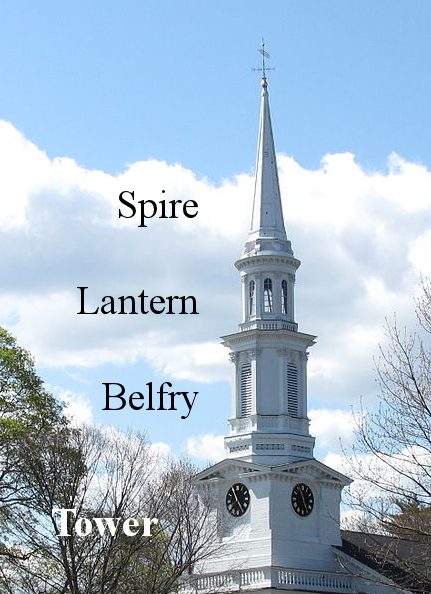
Visual cues: a prominent steeple or spire, often with a cross on top; stained-glass windows, sometimes arranged in a rose pattern; a bell tower, either attached or freestanding (the Italian campanile). Gothic churches emphasize verticality and light; Romanesque ones emphasize mass and heaviness; Baroque churches use curves, drama, and gilded interiors; Orthodox churches tend to be centrally planned around a dome rather than stretched lengthways.
Islamic buildings: domes, minarets, and prayer halls
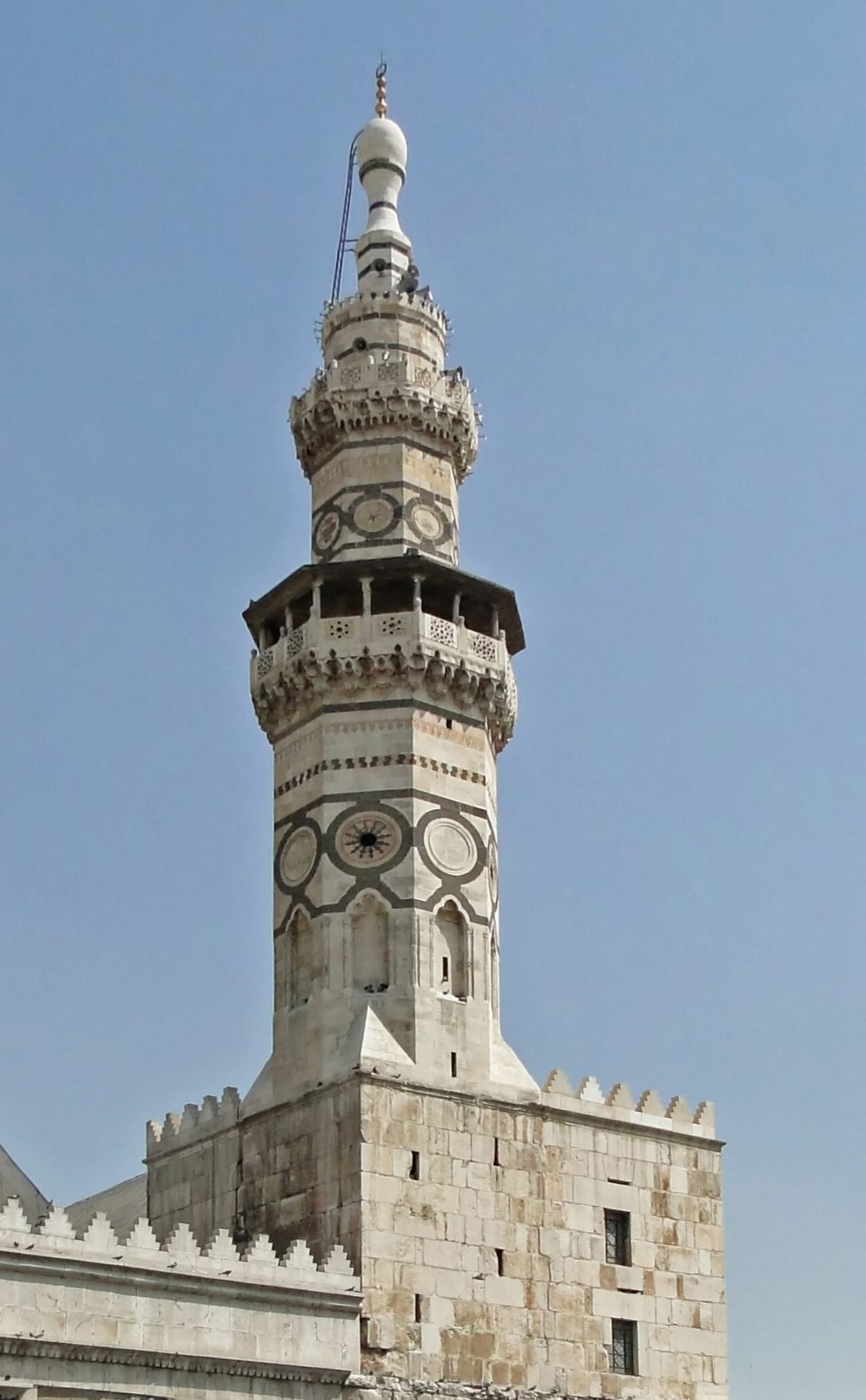
A mosque's job is to shelter worshippers during ritual prayer, facing Mecca. Everything else is cultural. The basic components are a mihrab (a niche indicating the direction of Mecca) inside a large open prayer hall, a dome above the hall in many (not all) traditions, and one or more minarets, the tall slender towers used historically for the call to prayer.
Regional variants are dramatic. Turkish and Ottoman mosques, influenced by Hagia Sophia, favor a large central dome with half-domes and pencil-thin minarets, often four or six at the corners. North African and Andalusian mosques have square minarets with flat tops, as at the Koutoubia in Marrakech or the Giralda in Seville. South Asian mosques like the Badshahi in Lahore use red sandstone and bulbous domes in the Mughal style. Southeast Asian mosques often use multi-tiered roofs instead of domes, reflecting pre-Islamic temple forms. If a skyline has a big dome and slender towers that do not carry bells, you are almost certainly looking at a mosque.
Hindu temples: shikharas and gopurams
Hindu temples are sculpted rather than built. Most classical temples are covered in layered stone relief from the foundation to the top, with figures, animals, and geometric patterns that are themselves a form of scripture. The main tower over the sanctum is called a shikhara in northern India and a vimana in the south, and it tapers upward in either a beehive curve (north) or a stepped pyramid (south).
South Indian temples add gopurams: enormous gatehouse towers at the cardinal entries to the temple complex, often taller than the central shrine itself and densely populated with colorful sculpted figures. If you see a pyramidal, tiered tower covered in hundreds of brightly painted deities, you are probably in Tamil Nadu or its diaspora. Cambodia's Angkor complex uses a related tradition adapted for Khmer use and blends Hindu and later Buddhist elements.
Buddhist buildings: stupas and pagodas
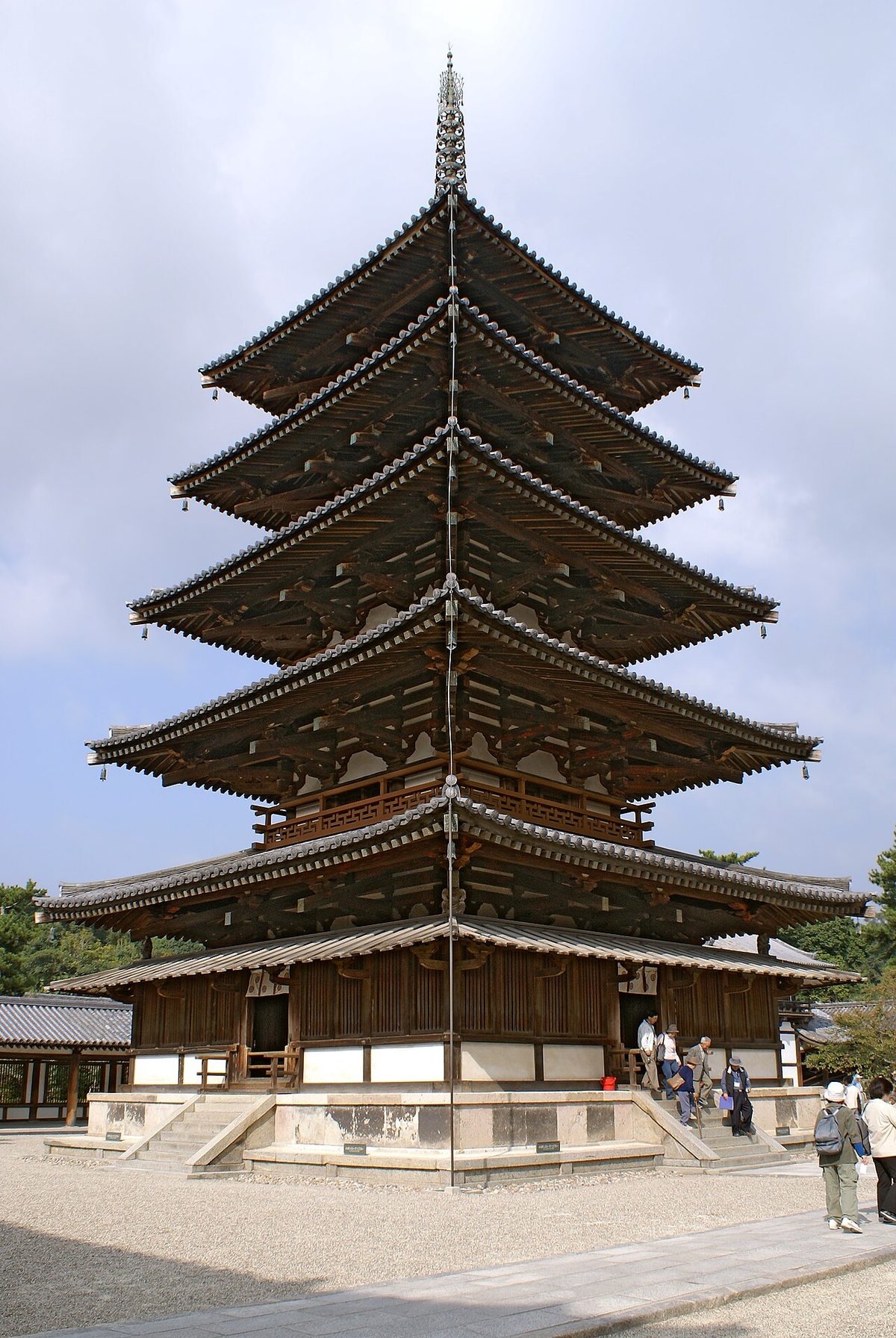
Buddhism's earliest architecture was the stupa, a solid dome containing relics, usually with a square base, a hemispherical dome, and a stacked spire on top representing levels of heaven. Sanchi in India is the classic example. As Buddhism spread east, the stupa evolved into the pagoda: a multi-story tower, originally timber in China and Japan and later in brick and stone, with each tier usually topped by flaring eaves.
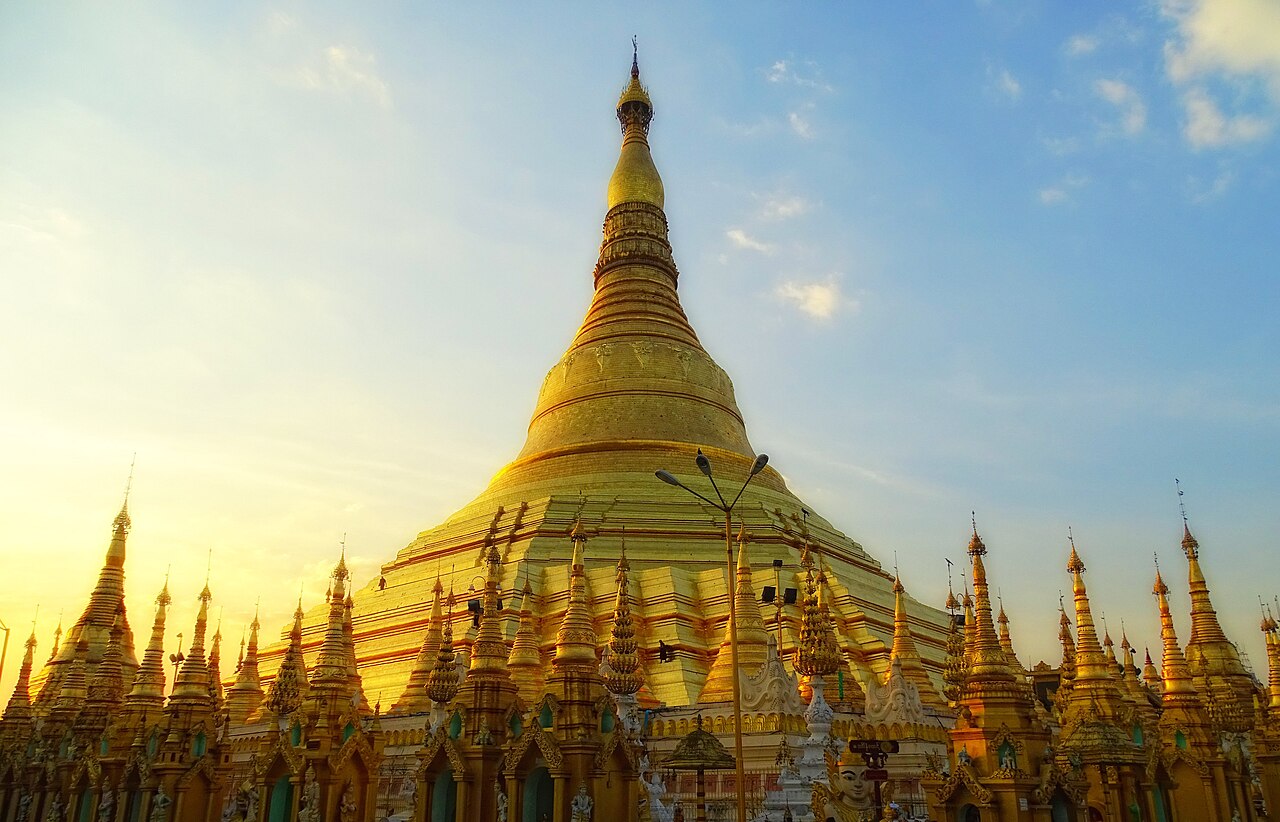
Southeast Asian Theravada traditions preserved the dome shape but made it tall and slender, as at Shwedagon in Yangon or the Golden Pagoda in Thailand. Tibetan Buddhism uses the chorten, a more compressed stupa form with distinctive stepped plinths. If a building looks like a stack of decreasing layers, each ending in a curved roof edge, it is almost certainly Buddhist; the precise region depends on silhouette and materials.
Shinto shrines: torii gates and plain wood
Shinto architecture is the opposite of Hindu exuberance. Shrines are typically built of unpainted cypress, with clean straight lines, thatched or tiled roofs, and almost no ornament beyond functional joinery. The defining element is the torii, a gateway of two upright posts and two horizontal crosspieces that marks the boundary of sacred space. The Itsukushima torii rising out of the sea is famous; most torii are smaller and less dramatic but serve the same function.
Shinto shrines are often rebuilt on a regular cycle, as at Ise, where the main buildings are replaced every twenty years using traditional techniques. This means a Shinto shrine can be simultaneously ancient and brand new, which is a useful thing to know when you are guessing a building's age from its condition.
Jewish synagogues: regional blending
Jewish religious architecture has no universal style. Synagogues take on the vernacular of the surrounding culture, which is why you can find Moorish-Revival synagogues in central European cities like the Spanish Synagogue in Prague, neoclassical ones in the United States, and modernist ones across Israel. Almost all synagogues share an ark at one wall (containing the Torah scrolls) oriented toward Jerusalem, and most have a bimah (a raised reading platform) somewhere in the main hall.
Identifying a synagogue from the outside alone is therefore harder than identifying a church or mosque. Look for a Star of David emblem, Hebrew inscriptions, or a discreet plaque; the building itself will usually take the architectural cues of its neighborhood.
When traditions meet
Some of the most interesting buildings in the database are hybrids. Hagia Sophia was a Byzantine church, then a mosque, then a museum, and is now a mosque again; parts of its interior show all three uses at once. The Great Mosque of Cordoba has a Baroque cathedral inserted into the middle of an Islamic hypostyle hall. The Kaifeng Synagogue in China developed a fully Chinese architectural vocabulary in its Jewish religious building. The rule of style-equals-religion-equals-region holds for most rounds but breaks in these edge cases, which is part of the fun.
For more pattern recognition, see how to tell Gothic, Romanesque, and Byzantine apart, which narrows in on European Christian styles. The climate and architecture piece helps when the religious tradition is ambiguous but the climate is obvious.
Regional Variations
Religious architecture differs more dramatically across cultures than almost any other building type — because the architecture is an expression of theology rather than function alone, and every faith tradition has a distinct understanding of what sacred space should be and do. Christian worship is structured around a linear procession from entrance to altar; the floor plan of a Latin-cross church encodes that theological journey spatially. Islamic worship is a collective act of simultaneous prostration facing a single direction; the mosque's open, egalitarian prayer hall reflects that. Hindu ritual is more complex, involving circumambulation of the inner shrine, multiple mandapa halls for different purposes, and a hierarchical sequence of increasingly restricted sanctuaries. These different theologies produce radically different building forms, and the visual differences are correspondingly dramatic.
Within Christianity, regional variation is profound. Western European Gothic churches reach vertically, using flying buttresses to free the walls for stained glass. Eastern Orthodox churches favor centralized plans centered on a dome over a crossing, with iconostasis screens separating the sanctuary from the nave rather than the open choir of Western churches. Ethiopian Orthodox churches are often circular in plan. Latin American colonial churches combine Spanish Baroque with indigenous decorative vocabulary, producing the extraordinary mestizo or Churrigueresque facades of Mexico and Peru. Within Islam, the difference between Ottoman mosque design (centralized, domed, influenced by Hagia Sophia), North African mosque design (hypostyle, courtyard-centered, square minaret), and South Asian Mughal mosque design (iwan entrance portal, bulbous domes, red sandstone) is substantial enough that each region is immediately recognizable.
Buddhist architecture shows equally dramatic regional variation. Sri Lankan and Southeast Asian Theravada Buddhist traditions favor the dagoba — a large whitewashed dome on a stepped base — as the primary form, often gilded or whitewashed to a high shine. East Asian Mahayana Buddhism produced the pagoda: a multi-story tower with flared eaves at each level, originating in the Chinese translation of the Indian stupa form into timber construction. Tibetan Buddhism evolved the chorten and the lamasery — a mountain monastery complex with flat roofs, red and white banded walls, and golden rooftop ornaments that are immediately distinctive. When you see a tiered tower with progressively receding floors and curved eaves, the precise silhouette, material, and color will tell you whether you are looking at Chinese, Japanese, Korean, or Southeast Asian Buddhism.
Sikh gurdwaras add another tradition to the visual catalog. The most prominent gurdwaras, like the Golden Temple in Amritsar, combine Mughal and Rajput architectural vocabulary — bulbous domes, chattris (small kiosk domes at corners), marble and gilded copper surfaces — with a plan organized around a central sarovar (sacred pool). The Bahá'í faith, which does not have a clergy or a traditional liturgy, has built Houses of Worship on every continent with a commitment to architectural originality and universality that means no two are alike in form, though all must have nine sides and a central dome.
Key Identifiers by Tradition
- Christian church: Latin or Greek cross plan, apse at the east end, bell tower or steeple, pointed or rounded arches, figurative stained glass, cross at apex
- Mosque: minaret (shape varies by region), courtyard with ablution fountain, mihrab niche, absence of figural imagery, calligraphic decoration
- Hindu temple: shikhara tower over inner sanctuary (beehive in north, pyramid in south), mandapa halls, dense figural sculpture covering all surfaces, sacred tank nearby
- Buddhist stupa or pagoda: hemispherical dome on stepped base (stupa) or multi-story tower with flared eaves at each level (pagoda), seated Buddha figures at entrances
- Shinto shrine: unpainted cypress or cryptomeria wood, curved thatched or tiled roofs, torii gate marking approach, gravel forecourt, no figural imagery
- Synagogue: no fixed exterior style — look for Star of David emblem, Hebrew inscription, or combination of local architectural style with religious emblems
- Sikh gurdwara: bulbous domes, chattris at corners, often large and symmetrical, sacred pool (sarovar) in important examples, Nishan Sahib flagpole
- Orthodox church: centralized plan, multiple domes, iconostasis visible through open doors, onion domes in Russian tradition, drum and dome in Byzantine tradition
- Tower type is the fastest discriminator: spire/steeple = Christian; minaret = Islamic; shikhara = Hindu; pagoda/chorten = Buddhist
A Closer Look: The Lotus Temple, New Delhi (1986)
The Bahá'í House of Worship in New Delhi, completed in 1986 and designed by Iranian-Canadian architect Fariborz Sahba, is known universally as the Lotus Temple because its form — twenty-seven free-standing marble-clad petals arranged in clusters of three, opening upward around a central dome — resembles a partially open lotus flower floating above nine reflecting pools. It is one of the most visited buildings in the world. But its interest for the study of religious architecture goes deeper than its striking visual appearance: it is a building that had to solve, from scratch, the architectural problem of expressing a faith that has no traditional forms at all.
The Bahá'í faith emerged in 19th-century Persia and teaches the essential unity of all the world's major religions. Its Houses of Worship must be open to all people regardless of faith, must have nine sides as an expression of completeness, must have a central dome, and must contain no pulpit, altar, images, or music performed by a choir — because the Bahá'í faith has no clergy and its worship consists of readings from scripture by individual participants. These requirements eliminate almost every conventional device of religious architecture: no iconography, no processional axis, no hierarchical space, no visual symbol system derived from any existing tradition. What remains is pure form and light.
Sahba's solution was to use the lotus — a flower with sacred associations in Hindu, Buddhist, and Egyptian traditions, but belonging exclusively to none of them — as the organizing metaphor, expressed in the purest modern structural concrete faced with white Greek and Pentelikon marble. The interior space is open, light-filled, and deliberately unspecific: a great volume of air and light organized by the geometry of the petals overhead, without a single symbol or image that would identify it with any particular tradition. The Lotus Temple demonstrates that the deepest architectural challenge of religious building is not the production of symbolic forms but the spatial organization of the experience of transcendence — and that this challenge can be met in the language of the present as effectively as in any historical vocabulary.
Spotting It in Building Guessr
Religious buildings are the single largest category in the game and account for more correct identifications — and more dramatic mistakes — than any other building type. The tower type is the fastest and most reliable discriminator at the first glance: a pointed or tapered tower with a cross is almost certainly a Christian church; a tall, slender tower with a balcony near the top and no bells is almost certainly a minaret; a curved beehive or pyramidal tower covered in stone sculpture is a Hindu shikhara; a multi-story tower with flared eaves at each level is a Buddhist pagoda. Getting the tower type right puts you in the correct faith tradition in most cases, and the faith tradition immediately narrows the geography.
Within each tradition, the regional sub-type gives you more precision. Ottoman minarets are pencil-thin and cylindrical with a single balcony; North African minarets are square in section with geometric tile decoration; South Asian minarets are bulbous at the base and flared at the top. Gothic church spires are thin and needle-like; Baroque church towers are more massive with curved pediments and scrollwork; Romanesque towers are square and solid with round-arched windows. Once you can read these sub-types, you can often place a religious building at a regional or even national level from a single photograph of the exterior. For practice with European Christian buildings specifically, our article on Gothic, Romanesque, and Byzantine provides the detailed discriminators you need.
Pick the Religious filter in game and see how far you can get.
Play Building GuessrFurther Reading
- Gothic, Romanesque, and Byzantine — the three medieval Christian traditions and how to tell them apart
- How Climate Shapes Architecture — how environmental conditions inflect even sacred buildings
- Vernacular Architecture: Building Without Architects — the folk building traditions that religious buildings often grow from
- Neoclassical Architecture — the secular civic tradition that borrowed heavily from temple forms
Sources & further reading
Reference material this page draws on, and where to read further. External links open third-party sites.
- Minaret · Wikipedia
- Steeple · Wikipedia
- Pagoda · Wikipedia
- Stupa · Wikipedia
- Church architecture · Wikipedia
- Synagogue architecture · Wikipedia
- Borobudur · Wikipedia
- World Heritage listing: Borobudur · UNESCO World Heritage Centre