Why this is a learnable skill
Most buildings announce their era in their materials, proportions, and ornament. This is not an accident or a coincidence — it is the result of the fact that building technology, building economics, and architectural fashion all change in ways that leave indelible marks on the physical fabric of buildings. The structural material available to a builder in 1150 was stone and timber; in 1850, cast iron and wrought iron were newly available; in 1950, reinforced concrete and the glass curtain wall were the dominant new technologies. Each material shapes what a building can look like, and the visual fingerprints of each are distinctive enough to read at a glance once you know what to look for.
This guide is practical rather than comprehensive. It covers the major periods in the order a viewer encounters them — from oldest to newest — and for each period identifies the two or three most reliable visual signals. The aim is not to produce an architectural historian but to give a Building Guessr player enough knowledge to narrow an unknown building to a 50–100-year window from a photograph. With that window established, other signals — country, building type, landscape — can narrow it further.
Before 1000 CE: Roman, Byzantine, and early medieval
Buildings surviving from before 1000 CE are relatively rare outside of religious and civic contexts, and most of what survives has been heavily modified. The signal materials of the ancient period are Roman concrete (opus caementicium) — a mixture of volcanic ash (pozzolana), lime, and aggregate that hardens to great strength — and Roman brick: thin, wide, flat bricks laid in regular courses with thick mortar beds, immediately distinguishable from the taller medieval brick or the machine-made Victorian brick. If you see a wall of thin flat bricks in regular horizontal courses, often combined with courses of stone, and the mortar joints are nearly as thick as the bricks, you are looking at Roman or late-antique construction.
The round arch is the fundamental structural element of Roman and Byzantine architecture. Roman and early Christian buildings use the semicircular round arch exclusively — for windows, for arcades, for vaults. If all arches in a building are semicircular and there is no pointed arch visible anywhere, the building is either ancient, late antique, Romanesque (1000–1200), or Renaissance — pointed arches do not appear until the Gothic period, roughly 1140 in France. Byzantine architecture adds the characteristic central dome on pendentives — a circular or polygonal dome rising from a square bay by means of curved triangular transition pieces (pendentives) at the corners — and gold mosaic decoration on interior wall surfaces. If you see gold mosaic covering the interior walls of a domed building with round arches, you are looking at Byzantine or Byzantine-influenced architecture.
Carolingian and Ottonian architecture (roughly 800–1050 CE) is identifiable by its massive stone or rubble walls, its small round-arched windows (narrow and deeply splayed to admit some light while maintaining structural integrity), and its characteristic westwork — a tall, multi-story entrance block at the west end of a church, often flanked by stair towers, that gives the building a twin-towered silhouette recognizable from a great distance. Carolingian westworks are the ancestors of all subsequent European church tower traditions.
Medieval 1000–1500: Romanesque versus Gothic
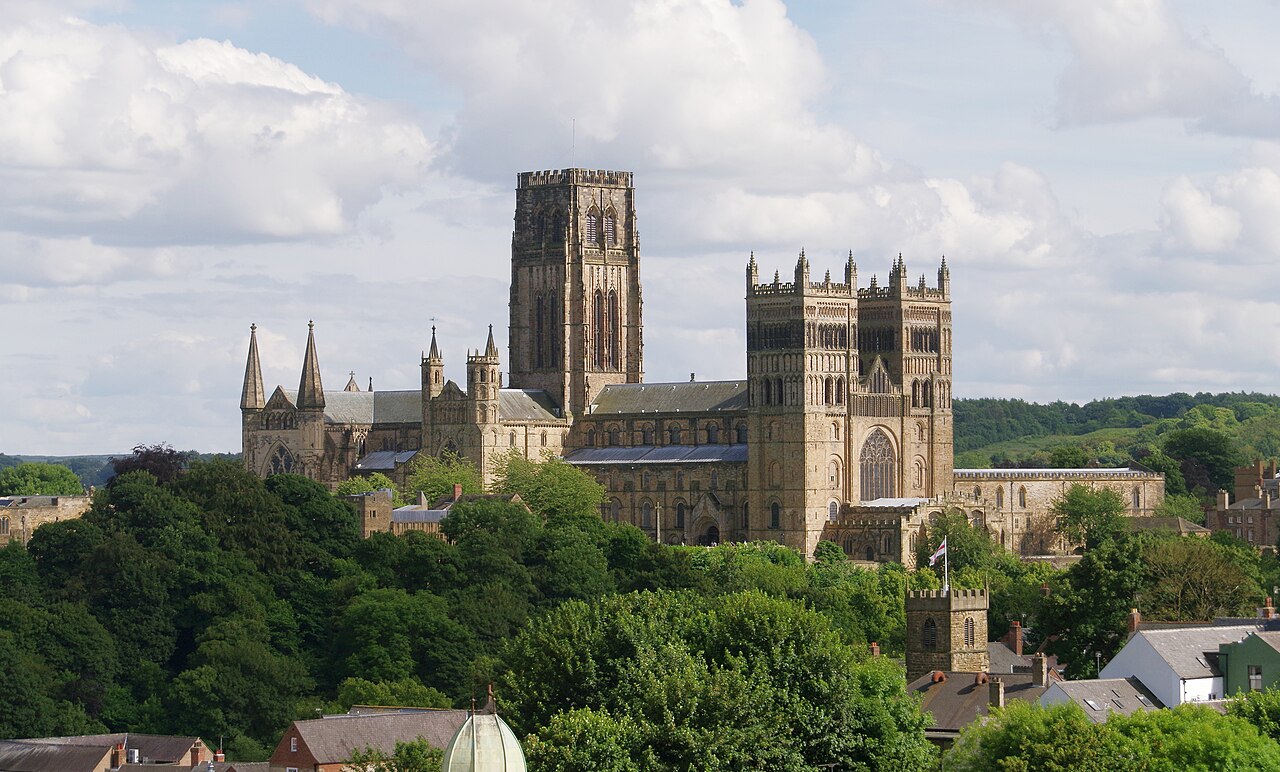
The most important single distinction in medieval architecture is between Romanesque (roughly 1000–1200) and Gothic (roughly 1140–1500), and the single most reliable diagnostic is the shape of the arch. Romanesque uses the semicircular round arch everywhere: in windows, in doorways, in arcade colonnades, in vaults. Gothic uses the pointed arch: two curves that meet at a point at the top, allowing the arch to be made taller relative to its width than a semicircular arch and allowing variable-width openings to be made the same height regardless of their span. The transition from Romanesque to Gothic in a given region can be dated with surprising precision from this single diagnostic — round arch means pre-Gothic, pointed arch means Gothic or later.
Romanesque buildings have thick, massive walls — necessary because the round barrel vault and groin vault exert heavy outward thrust on the walls and the walls must be made very thick to resist it — small windows (because cutting large openings would weaken a thick load-bearing wall), and a characteristic heavy solidity. The ornament of Romanesque buildings is concentrated at the doorways (the tympanum — the semicircular panel above the door — is often richly carved with biblical scenes) and at the capitals of columns, where Romanesque sculptors carved figures and foliage with extraordinary variety and invention. The exterior of a Romanesque church typically reads as a sequence of rounded apse chapels at the east end, a heavy nave with blind arcading on the exterior walls, and a tower (or towers) that is square, solid, and relatively simple in its upper stages.
Gothic buildings look entirely different: taller, lighter, with much larger windows and more transparent walls. This is the direct result of the structural innovation of the flying buttress — an arched stone prop that reaches across the aisle roof to brace the high nave wall at its weakest point, transferring the vault thrust outward and downward to a free-standing pier outside the building. This allows the nave wall to be reduced to a thin screen between structural piers, with large windows filling most of the wall area. Gothic windows are almost invariably pointed arched and often filled with tracery — decorative stone patterns that divide the window opening into multiple lights and support the glass. The style and complexity of the tracery is one of the most reliable dating tools within the Gothic period: early Gothic (before 1250) has very simple plate tracery (circles and pointed shapes cut from solid stone panels); High Gothic (1250–1350) has elaborate geometric or curvilinear bar tracery; Late Gothic (1350–1500) has the most complex tracery patterns, including the flamboyant style (curvilinear forms resembling flames) in France and the perpendicular style (vertical bar tracery and fan vaults) in England.
Renaissance and Baroque 1400–1750: classical orders and curved facades
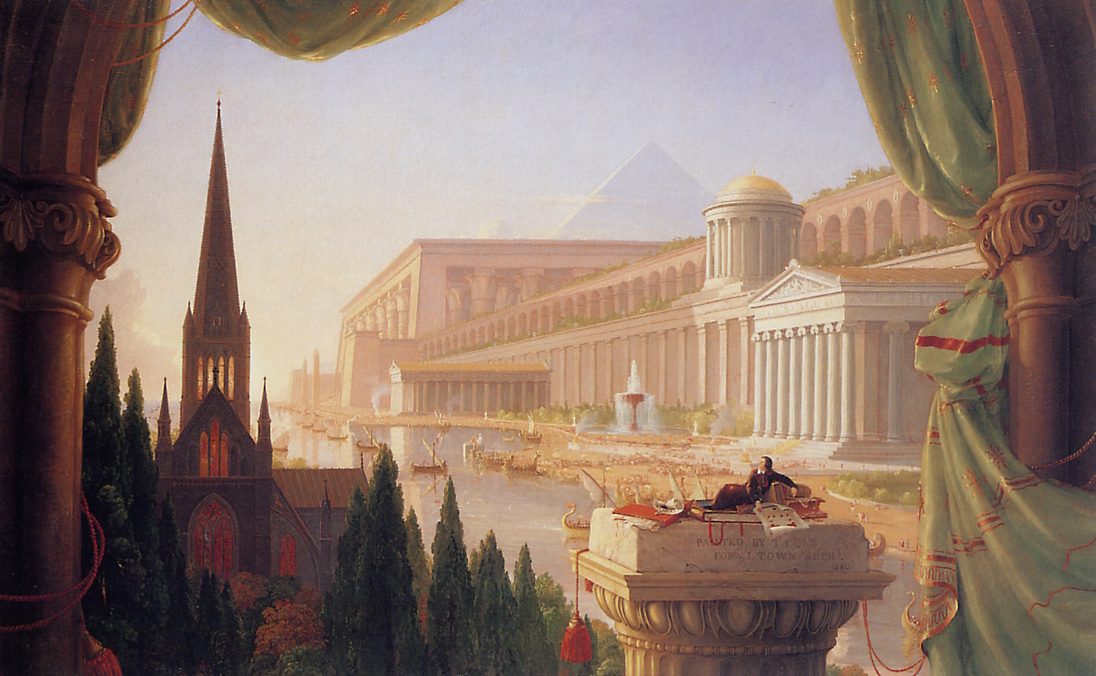
The return of the round arch in the Renaissance (from about 1420 in Florence) can look confusingly similar to Romanesque at first glance — both use semicircular arches and avoid pointed Gothic forms. The difference lies in everything else. Renaissance buildings are thinner, lighter, and more precisely proportioned than Romanesque. The walls are not thick rubble but carefully laid ashlar stone, often rusticated. The ornamental vocabulary is explicitly classical: pilasters with Doric, Ionic, or Corinthian capitals, entablatures with triglyphs or dentils, pediments over windows and doorways. Where Romanesque ornament is provincial and varied, Renaissance ornament is systematic and derived from the study of specific Roman ruins. The presence of pilasters (flat column-forms applied to a wall surface), classical entablatures (the horizontal band of architrave, frieze, and cornice above the columns or pilasters), and round-arched windows with keystones marks a building as Renaissance rather than Romanesque.
Baroque architecture (from about 1600 in Rome, spreading northward and westward through the 17th century) keeps the classical vocabulary but introduces dramatic movement: curved facades that undulate in plan, broken pediments whose triangular profiles are split and pulled apart, sculptural ornament so dense and three-dimensional that the building surface seems to be made of carved stone rather than built of masonry, and a dramatic use of light and shadow created by deep niches, projecting cornices, and concealed light sources. The most reliable single signal for Baroque is the curved facade — if a classical building's facade curves in plan, it is Baroque. If the ornament is extraordinarily rich and the forms are dynamic rather than static, it is probably Baroque rather than Renaissance even if the facade is flat.
Domes appear in both Renaissance and Baroque. Renaissance domes tend to be calm and geometrically precise, with clean drum sections and lanterns of simple profile. Baroque domes are more complex: elliptical in plan rather than circular, with more elaborate drum sections, lanterns with curved profiles, and prominent sculptural ornament at the base and crown. The dome drum — the cylindrical section between the pendentives and the dome proper — is a particularly useful indicator: a tall, windowed drum with paired pilasters on the exterior is almost always Baroque or late Renaissance.
18th and 19th century: Neoclassicism, historicism, and the industrial materials
The late 18th century saw a reaction against the exuberance of the Baroque in the form of Neoclassicism — a return to the more disciplined classical vocabulary of the Greek and Roman originals, informed by new archaeological knowledge from excavations at Herculaneum (from 1738) and Pompeii (from 1748). Neoclassical buildings are identifiable by their very precise, often austere use of Greek or Roman orders — full-height columns rather than pilasters, flat facades, temple-front porticoes with correct triangular pediments, sparse ornament limited to the capital, cornice, and frieze. Where Baroque ornament proliferates over every surface, Neoclassical ornament is concentrated at a few key points and the remaining surfaces are deliberately bare. Large public buildings — national museums, parliament buildings, customs houses, supreme courts — from the late 18th and 19th century are almost invariably Neoclassical.
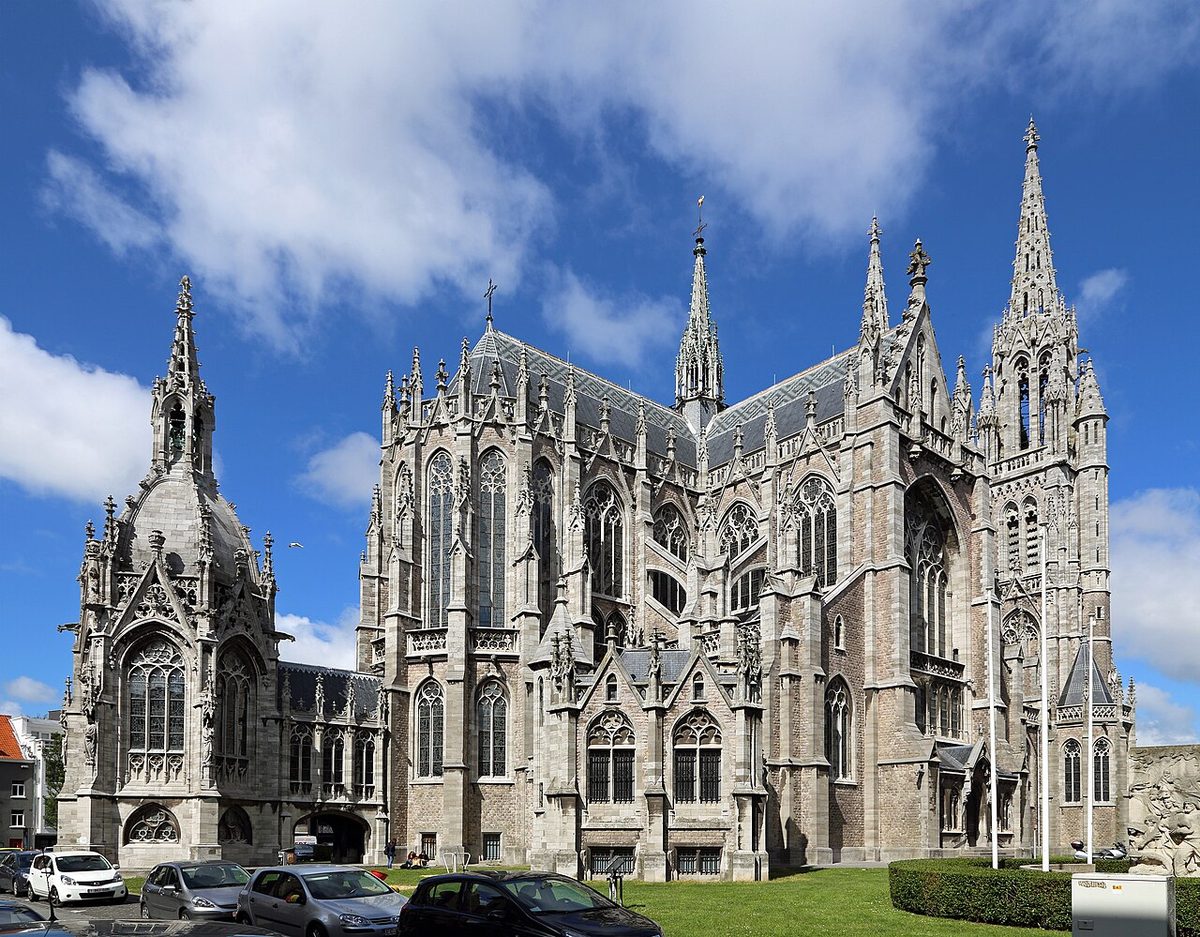
The 19th century also produced the great historicist revivals: Gothic Revival, Romanesque Revival, Renaissance Revival, Baroque Revival, and Moorish Revival all coexisted within the same decades, sometimes within the same city. The distinguishing feature of revival styles compared to their originals is a certain precision and completeness: a Victorian Gothic Revival church is usually more consistently Gothic than any medieval original, because the Victorian architect was working from archaeological surveys and pattern books and applied the style more systematically. Victorian Gothic uses pointed arches, tracery, and polychrome stonework consistently, while actual medieval buildings typically show the evolution of styles over centuries of construction and modification. Similarly, Victorian Neoclassical bank buildings often apply the Greek Doric order with a correctness — no base to the column, a very wide and austere capital — that distinguishes them from 18th-century Neoclassicism, which typically used the more decorative Roman version of the Doric.
The 19th century also introduced cast iron and wrought iron as structural materials, producing building types with no historical precedent: the iron-and-glass greenhouse (the Crystal Palace, 1851, is the canonical example), the iron-framed market hall, and the long-span glass-and-iron train shed. These are immediately recognizable by their slender cast-iron columns (much thinner than any stone column could be), the large areas of glass, and the absence of masonry walls as the primary enclosure. The decorative potential of cast iron — which can be cast into any ornamental form — was enthusiastically exploited: cast-iron storefronts in American cities, cast-iron market pavilions in France, and ornamental cast-iron balconies on the townhouses of New Orleans are all examples of this industrial Baroque.
Early 20th century: Art Nouveau, Art Deco, and early Modernism
Art Nouveau (roughly 1890–1910) is the most visually distinctive of all architectural styles and the easiest to identify: organic, curvilinear forms derived from natural growth patterns (plant stems, flowers, insects, waves), applied to facades, ironwork, staircase balustrades, window frames, and interior details with a consistency that makes every element of the building look as if it has grown rather than been built. The key identifying features are the sinuous curve — always curving, never straight — and the integration of ornament with structure so that the two are indistinguishable. Art Nouveau facades in Belgium and France have facades whose stone or plaster surfaces flow and ripple; Spanish Art Nouveau (Gaudi's work in Barcelona) takes organic form to its logical limit, with surfaces that look geological rather than architectural. Art Nouveau is geographically concentrated in Belgium, France, Austria, and Germany, with important examples in Spain, the Czech Republic, and Russia.
Art Deco (roughly 1925–1940) replaced the organic curves of Art Nouveau with geometric forms: stepped profiles (the setback skyscraper silhouette), chevron and zigzag ornament, stylized floral motifs reduced to geometric abstraction, and a love of vertical emphasis. Where Art Nouveau buildings curve in every direction, Art Deco buildings emphasize the vertical line: tall, narrow windows, vertical fins running up the facade, decorative elements that reinforce the upward thrust. The material palette of Art Deco is distinctive: polished stone, chrome, bronze, terracotta tiles in bold colors, and glass bricks. Art Deco is particularly associated with American commercial buildings of the late 1920s and 1930s — the Chrysler Building, the Rockefeller Center — but the style was global, appearing in cinemas, hotels, and apartment buildings across Europe, India, South Africa, and Australia.
Early Modernism (roughly 1910–1945) is recognizable by what it lacks: no historical ornament, no curved forms (except structural curves), no classical orders. The Modernist building has a flat roof (or a very shallow-pitched roof), horizontal ribbon windows that wrap continuously around the corners, smooth white or light-colored rendered facades, and a massing that is either a pure geometric volume or a composition of overlapping geometric volumes. Le Corbusier's Five Points of a New Architecture — pilotis, free plan, free facade, ribbon windows, roof garden — describe the canonical Modernist building of the 1920s and 1930s.
Mid-20th century: Brutalism, International Style, and postwar prefab
The International Style — the architectural language of Mies van der Rohe, the early Skidmore Owings and Merrill office, and hundreds of imitators worldwide — is the dominant commercial building style from roughly 1950 to 1975. Its defining characteristic is the glass curtain wall: a non-structural skin of glass panels in a metal grid (usually aluminum) that hangs on the outside of a structural steel or concrete frame. The glass curtain wall is the signal of its era because it requires both structural steel or concrete that can carry all loads internally and the industrial manufacturing capability to produce large sheets of flat glass cheaply. The International Style glass box — a rectangular volume with a regular grid of identical glass panels on all four facades — is one of the most immediately recognizable building types in the world, associated with corporate offices, government ministries, and modernist residential towers from roughly 1950 to 1980 on every continent.
Brutalism (roughly 1950–1975) is distinguished from the International Style by its primary material — raw exposed concrete rather than glass and steel — and by its assertive, sculptural massing. A Brutalist building is heavy where an International Style building is light; it is rough-surfaced where an International Style building is smooth; it is expressed structurally where an International Style building conceals its structure behind the skin. Board-marked concrete (the pattern of the wooden formwork boards visible on the surface), cantilevered volumes projecting dramatically beyond their support, and the absence of any applied ornament or cladding all signal Brutalism. Postwar prefabricated concrete panel construction — used for mass social housing across Eastern and Western Europe — produces a different visual character: flat, repetitive facades of identical precast concrete panels with minimal spatial variation, immediately identifiable as postwar mass housing.
Late 20th and 21st century: Postmodern, parametric, and green
Postmodern architecture (roughly 1975–2000) rejected Modernism's prohibition on historical ornament and brought back columns, pediments, broken cornices, colored facades, and historical quotation in an ironic, knowing way that was explicitly different from historical revivalism. The key signal of Postmodernism is the knowing historical quotation: a column that is recognizably Doric but made of stainless steel, a pediment that is the right shape but executed in acid-green glazed terracotta, a classical facade that is clearly not a genuine classical building but a commentary on one. Philip Johnson's AT&T Building in New York (1984), with its Chippendale broken pediment, is the canonical American example. European Postmodernism tends to be more restrained but shares the commitment to ornament, color, and historical reference that Modernism had banned.
Parametric and deconstructive architecture (from the 1990s onward) is identifiable by its non-orthogonal forms: buildings whose walls slope outward or inward rather than being vertical, whose roofs are complex curved surfaces rather than flat or simply pitched planes, and whose facades are covered with irregular cladding patterns rather than a regular grid. The enabling technology is computer-aided design that can model and fabricate complex geometries that were impossible to design or build before the digital era. Zaha Hadid's work — the MAXXI museum in Rome, the Guangzhou Opera House — is the canonical example: buildings that appear to be in motion, their surfaces curving continuously in three dimensions without any straight edge visible. The titanium-clad curved form (Frank Gehry's Guggenheim Bilbao is the ur-example) and the parametric skin of irregular scale-like panels are distinctive markers of this period.
Contemporary sustainable architecture from the 2000s onward is identifiable by specific features: green roofs (planted with vegetation and visible from above or in section), large arrays of solar panels (photovoltaic panels in regular grids on rooftops or facades), solar thermal collectors (evacuated-tube or flat-plate collectors, distinctively different from PV panels), natural ventilation chimneys (tall vertical shafts above the roofline, sometimes with wind cowls), and timber cross-laminated structure exposed on interior surfaces (the characteristic pale wood tone and panel joinery of CLT). A building with a planted green roof and a visible timber structure is likely post-2000 and sustainability-conscious.
Regional Variations
The global spread of architectural styles has never been uniform — different periods and different styles arrived at different times in different regions, and local conditions of climate, culture, and available materials have always modified imported styles into something locally specific. Understanding regional variation is essential for accurate building dating because the same visual signals can mean different centuries in different places.
Gothic architecture appeared in France around 1140, reached England within a decade, and spread through Germany, Spain, and Italy over the following century. But Gothic did not arrive in some regions until very late: Gothic architecture in Portugal, for example, continued developing its own distinctive style — the Manueline style, characterized by extraordinarily elaborate maritime and naturalistic ornament — until the early 16th century, well after Italian Renaissance had transformed building practice in northern Italy. A building that looks Gothic may be from the 12th century in France or the 15th century in Portugal or Poland. In Mexico and Central America, Spanish colonial Baroque — imported by the Franciscan, Dominican, and Jesuit missionaries — appeared from the 1520s onward, meaning that some of the most dramatic Baroque churches in the world date from the mid-16th century, earlier than most European Baroque.
The 19th-century historicist revivals spread unevenly. Gothic Revival was intense in Britain, France, and Germany but less dominant in Italy and Spain, where local medieval traditions provided an alternative model. The eclectic mixing of historical styles in 19th-century commercial buildings is most extreme in the United States and in the British Empire's commercial cities — Bombay (Mumbai), Melbourne, Calcutta (Kolkata) — where rapidly expanding economies funded ambitious building programs without the conservative constraint of established architectural traditions. Meanwhile, in Japanese cities, Western-influenced architecture arrived abruptly in the Meiji period (1868–1912), producing buildings that mix Japanese spatial organization with Western classical facades in a uniquely Japanese eclectic style.
Modernism arrived in most non-European countries through two routes: via colonial administrations that built Modernist government buildings from the 1930s onward, or via local architects trained in Europe who returned to apply Modernist ideas in a local context. In India, Le Corbusier's work at Chandigarh (1950s) and Louis Kahn's Indian Institute of Management in Ahmedabad (1960s) established a tradition of engagement with Modernism that was simultaneously technically ambitious and responsive to local climate — deep overhangs, brise-soleil screens, and cross-ventilated plans that addressed the tropical context. In Brazil, Oscar Niemeyer's work demonstrated that Modernist concrete could be lyrical and sculptural rather than austere. Each regional Modernist tradition has its own distinguishing characteristics that overlap with but are distinct from European and North American Modernism.
Era Quick-Reference: Material + Arch + Ornament + Roof
- Before 1000 CE (Roman/Byzantine): Roman brick or concrete, round arch, mosaic or simple carving, flat or low dome on pendentives
- 1000–1200 (Romanesque): thick rubble or ashlar stone, round arch, carved tympanum and capitals, round towers and apses
- 1140–1500 (Gothic): ashlar stone, pointed arch, window tracery and flying buttresses, steeply pitched roof and tall spire
- 1420–1600 (Renaissance): dressed stone or brick, round arch, pilasters and classical entablatures, dome or shallow pitched roof with balustrade
- 1600–1750 (Baroque): stone, curved facade, heavy sculpture, broken pediments, hidden light sources, drum-and-dome or mansard roof
- 1750–1850 (Neoclassical): smooth dressed stone, Greek or Roman orders in their correct proportions, minimal ornament, temple-front portico
- 1830–1900 (Historicist/Victorian): brick, cast iron, or polychrome stone, pointed or round arches depending on the revival style, rich carved ornament, steep or complex roof profile
- 1890–1910 (Art Nouveau): rendered masonry, ceramic tile, wrought iron, sinuous organic curves, naturalistic ornament on every surface
- 1925–1940 (Art Deco): polished stone, terracotta, chrome, geometric stepped ornament, vertical emphasis, flat or very shallow roof
- 1920–1950 (Modernist): rendered white concrete or smooth brick, flat roof, ribbon windows, no historical ornament, cubic or horizontal massing
- 1950–1975 (International Style / Brutalist): glass curtain wall or raw concrete, flat roof, no ornament — glass and steel vs. heavy concrete massing distinguishes the two
- 1975–2000 (Postmodern): mixed materials, historical ornament in quotation marks, color, playful classical references, flat or complex roof with ornamental elements
- 2000 onward (Parametric / Sustainable): complex curved forms, irregular cladding, titanium or perforated metal, green roofs, solar arrays, exposed CLT timber
A Closer Look: dating an unknown building in five steps
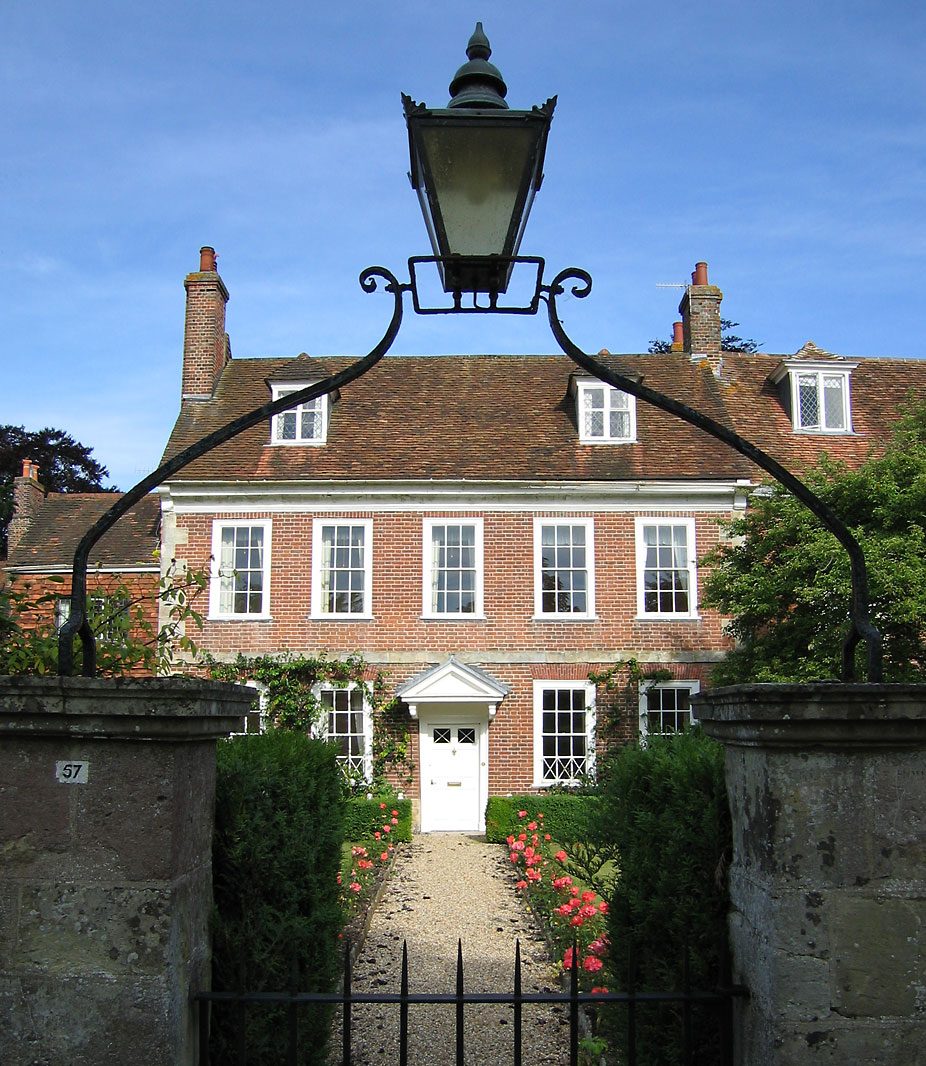
When you encounter an unfamiliar building in Building Guessr or in the real world, a systematic approach produces results faster than trying to remember every style simultaneously. The following five-step sequence uses each observation to progressively narrow the date range, discarding hypotheses as each piece of evidence rules them out.
Step 1: What is the primary structural material? Glass and steel curtain wall = after 1950. Raw exposed concrete = 1950–1975. Dressed stone with no reinforcement visible = before 1900. Brick = could be anything from medieval to 1950, needs further evidence. Timber framing visible on the exterior = either medieval half-timber or post-2000 contemporary sustainable construction. This step alone narrows the window to a 50–100 year range in most cases.
Step 2: What shape are the arches, if any? No arches at all = either ancient (Roman concrete, no arches needed) or modern (after 1900, structural frame carries loads without arches). Pointed arches = Gothic (1140–1500) or Gothic Revival (1840–1920). Round (semicircular) arches = Roman (before 500), Byzantine (300–1400), Romanesque (1000–1200), Renaissance (1420–1600), Baroque (1600–1750), or Neoclassical (1750–1900). The arch shape tells you which large family of styles you are in; further evidence distinguishes between them.
Step 3: How much ornament is there, and what kind? No ornament at all = Modern or contemporary. Classical ornament (pilasters, columns, entablatures, pediments) in correct proportions and sparse distribution = Neoclassical. Classical ornament richly applied with curves and sculpture = Baroque. Pilasters and round-arched windows in careful proportional relationships = Renaissance. Organic, curving, naturalistic ornament = Art Nouveau. Geometric stepped ornament = Art Deco. Historical ornament in an obviously knowing, self-conscious way = Postmodern.
Step 4: What is the roof doing? Flat roof (invisible from the facade) = Modernist or contemporary. Steeply pitched roof with towers and spires = Gothic or Gothic Revival. Mansard roof (steeply pitched lower section, nearly flat upper section, with dormer windows) = French Baroque or French Second Empire (1850–1880). Dome on a drum = Renaissance, Baroque, or Neoclassical. Shallow pitched roof behind a classical balustrade = Renaissance or Neoclassical. Complex parametric curved form = contemporary (post-2000).
Step 5: What is the geographic and cultural context? The same visual signals mean different dates in different places, as the Regional Variations section above explains. A building with Gothic pointed arches is from the 12th–15th century in France but might be 19th century anywhere in the world. A building with white rendered flat-roofed Modernist form might be 1930 in Germany or 1960 in West Africa or 1975 in Brazil. Use the geographic context — visible landscape, street furniture, neighboring buildings, license plates, language of any visible signs — to calibrate your dating for the specific region.
Spotting It in Building Guessr
Building Guessr's Era filter is a direct application of the dating skills described in this guide. The five eras in the filter (Ancient, Medieval, Renaissance to Baroque, Industrial Age, Modern) correspond roughly to the architectural periods covered here, though the boundaries are approximate and many buildings span eras or were built in revival styles that fall in unexpected era categories. The strategy is to use the dating clues described above to identify the most likely Era, apply the filter, and then use Style and Country filters to narrow further. The arch shape is the fastest single diagnostic: if the building has pointed arches, start with Medieval or Industrial Age (Gothic Revival). If it has round arches and classical ornament, start with Renaissance to Baroque or Industrial Age (Neoclassical). If it has no arches and a glass curtain wall, go straight to Modern.
The most common errors in Building Guessr dating are confusing Gothic Revival with actual Gothic (both use pointed arches, but Gothic Revival buildings are newer, more uniform, and typically in industrial-era materials like machine-cut stone or molded brick), confusing Neoclassical with Renaissance (Neoclassical uses purer Greek and Roman forms with less ornament than Baroque but more than Modernism), and confusing early Brutalism with International Style (both are mid-20th century, but the glass curtain wall is the distinctive signal of International Style, while raw concrete is the signal of Brutalism). If you can reliably make these three distinctions, your era accuracy in Building Guessr will improve substantially.
Put your dating instincts to the test — can you place an unknown building within 50 years?
Play Building GuessrFurther Reading
Sources & further reading
Reference material this page draws on, and where to read further. External links open third-party sites.
- Architectural style · Wikipedia
- Gothic Revival architecture · Wikipedia
- Georgian architecture · Wikipedia
- Victorian architecture · Wikipedia
- Modern architecture · Wikipedia
- Brick · Wikipedia