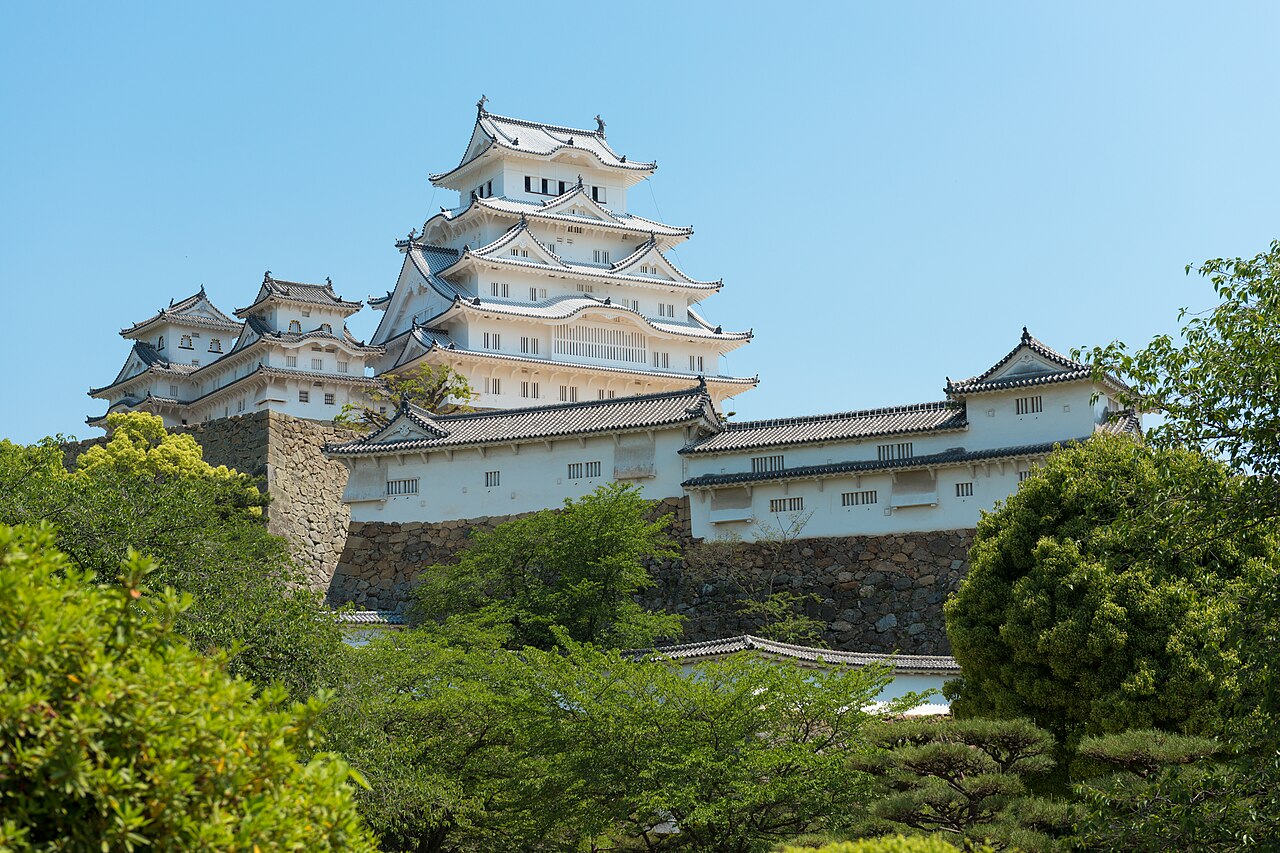
Architecture in Japan
Japan's architecture is one of the most distinctive in the world, shaped by a profound respect for natural materials, seismic engineering constraints, and a Buddhist and Shinto religious tradition that values impermanence alongside permanence. Japanese wooden architecture — the post-and-beam construction of temples, shrines, and teahouses — developed structural responses to earthquakes centuries before modern engineering: interlocking joints without nails, flexible frames that sway rather than crack, and the deliberate use of wood's compressibility. The Meiji period (1868–1912) brought a radical opening to Western styles; the postwar Metabolism movement proposed modular, adaptable mega-structures as responses to Japan's destroyed cities and limited land. Contemporary Japanese architecture — Tadao Ando, Kengo Kuma, Toyo Ito, SANAA — is among the most internationally influential in the world.
Notable Buildings
-
Edo Period Castle
Himeji Castle
The White Heron Castle is Japan's finest surviving feudal castle, completed in its current form in 1609. Its white-plastered walls, complex defensive maze layout, and tiered roofline make it the definitive image of Japanese castle architecture. It has never been attacked, conquered, or destroyed.
-
Zen Buddhist
Kinkaku-ji (Golden Pavilion), Kyoto
The three-storey pavilion at the centre of a pond garden has its top two floors covered in gold leaf. Built as a shogun's retirement villa in 1397, it became a Zen temple after his death. The current structure is a 1955 reconstruction after the original was burned by a monk.
-
Shinto
Itsukushima Shrine, Miyajima
The vermilion torii gate of Itsukushima appears to float on the sea at high tide — one of Japan's most photographed images. The shrine complex, built on stilts over the water, dates from the 6th century in its origins and was patronised by the Heian-period military leader Taira no Kiyomori.
-
Buddhist
Senso-ji Temple, Tokyo
Tokyo's oldest temple (founded 628 CE) is approached through the Kaminarimon (Thunder Gate) and the Nakamise-dori shopping street. The current buildings date from 1958 after war damage. It receives approximately 30 million visitors annually — more than any other religious site in Japan.
-
Contemporary
Tokyo Skytree
At 634 metres, the Tokyo Skytree (2012) is the world's second tallest structure and Japan's tallest. Its triangular cross-section at the base transitions to a circular section higher up, reducing wind load. The height (634m) references the old reading of Tokyo's name: Musashi (6-3-4).
-
Metabolist
Nakagin Capsule Tower (demolished 2022)
Kisho Kurokawa's 1972 tower in Shimbashi attached 140 prefabricated concrete capsules — each a complete living unit — to two central concrete cores. It was the only built example of Metabolist capsule architecture and was demolished in 2022, ending a decades-long preservation campaign.
-
Modernist
21_21 Design Sight, Tokyo
Tadao Ando's 2007 design museum in Roppongi uses folded steel-plate roofs that appear to rise from the ground. The building is mostly underground, with garden spaces at grade — a demonstration of Ando's principle that architecture should not compete with its site.
Architectural Character
Japanese architecture's most characteristic quality is its integration with landscape. Whether the Zen garden — a composed landscape of raked gravel, moss, and placed stones — or the shoin-zukuri interior, which opens onto a garden through sliding shoji screens, the boundary between inside and outside is treated as porous rather than fixed. The traditional post-and-beam wooden frame, assembled without nails using interlocking mortise-and-tenon joints, creates a structural system that performs remarkably well in earthquakes: its joints flex and return rather than fracturing.
This system also allows buildings to be dismantled, moved, and rebuilt — the Grand Shrine at Ise is rebuilt on an adjacent site every 20 years as an act of ritual renewal, a practice maintained without interruption for over 1,300 years. Contemporary Japanese architects inherited this spatial sensibility and expressed it through Modernist means — Tadao Ando's concrete meditation spaces, SANAA's dematerialised glass volumes, Kengo Kuma's material experiments with wood, bamboo, and stone.
Test your knowledge of Asian landmarks.
Play Building Guessr