Architecture in Peru
Peru is home to one of the great architectural civilisations of the ancient world. The Inca Empire, which controlled a territory of 2 million square kilometres in less than a century (c.1438–1533 CE), built without the wheel, without iron tools, and without mortar — and produced stonework of such precision that the joins between ashlar blocks cannot be felt with a finger. Machu Picchu, Sacsayhuamán, Ollantaytambo, and dozens of other sites demonstrate a mastery of stone that has no equal in the pre-Columbian Americas. The Spanish conquest of 1533 imposed colonial baroque over Inca stonework — Cusco Cathedral was built partly from stones quarried at Sacsayhuamán — creating one of the most direct architectural superimpositions of conquest anywhere in the world. The coastal civilisations (Moche, Chimú) built in adobe on a massive scale.
Notable Buildings
-
Inca
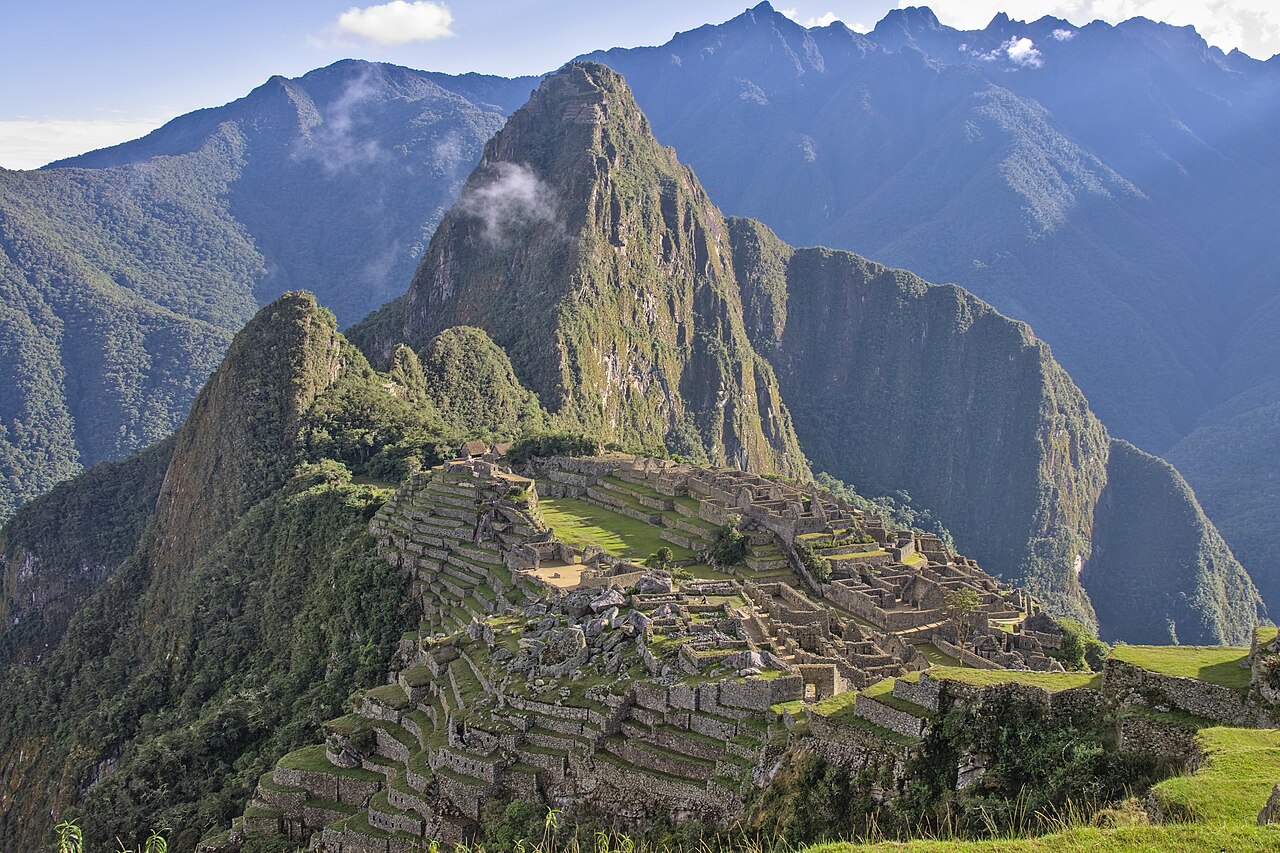
The Inca citadel (c.1450 CE) on a ridge at 2,430 metres above sea level, overlooking the Urubamba River is the most-visited site in South America. Its ashlar stonework, fitted without mortar to sub-millimetre tolerances using only stone and bronze tools, has survived nearly 600 years of seismic activity without significant damage — a testament to the earthquake-resistant properties of the flexible dry-stone joint.
-
Inca
Sacsayhuamán, Cusco
The ceremonial complex and fortress above Cusco contains some of the largest stones ever moved in the pre-Columbian Americas — the largest weighs approximately 125 tonnes. The three parallel zigzag walls are constructed in polygonal masonry: irregular stones fitted together without mortar in a jigsaw pattern that distributes seismic loads across multiple contact surfaces.
-
Inca
Ollantaytambo
The best-preserved Inca town in Peru, still inhabited on its original grid plan. The terraced temple-fortress above the town was under construction when the Spanish arrived; the unfinished masonry provides one of the clearest views available of Inca construction methods, including the ramps used to raise stones.
-
Chimú
Chan Chan, near Trujillo
The capital of the Chimú Empire (c.900–1470 CE) is the largest pre-Columbian city in South America — 20 square kilometres of adobe walls, royal compounds (ciudadelas), and elite residences, decorated with elaborate relief patterns of fish, birds, and geometric forms. The adobe material is highly vulnerable to El Niño rainfall events.
-
Colonial Baroque
Cusco Cathedral
Built on the foundations of the palace of the Inca Viracocha (1560–1654), using stones quarried from Sacsayhuamán. The cathedral's twin bell towers, Spanish Baroque facade, and Mannerist interior represent the most direct architectural statement of conquest in Peru: a Christian church built from the stones of the Inca emperor's palace.
-
Adobe
Huaca Pucllana, Lima
A massive ceremonial and administrative pyramid built by the Lima culture (c.200–700 CE) in the Miraflores district of Lima — now surrounded by the modern city. The handmade adobe bricks are laid in a distinctive "bookshelf" pattern, which allows the structure to flex rather than crack in earthquakes, demonstrating pre-Columbian seismic awareness.
Architectural Character
Inca architecture is defined above all by its stone. The Inca worked andesite and granite without metal tools — using harder stones as hammers and abrasives — achieving fits between irregular polygonal blocks that required planning of three-dimensional joint profiles across multiple stones simultaneously. This is not merely craftsmanship but spatial geometry applied to structural engineering: the irregular polygonal plan (ashlar) distributes seismic loads across many contact surfaces rather than concentrating them at mortar joints, making Inca walls more earthquake-resistant than their Spanish successors.
The trapezoidal doorway, window, and niche — wider at the base than the top — appears throughout Inca architecture and is both aesthetically distinctive and structurally rational (the form locks under gravity load). The Inca concept of the ceque system — a network of 41 imaginary lines radiating from the Coricancha temple in Cusco, each associated with shrines (huacas) across the landscape — is a form of sacred geography encoded in the city's organisation that goes beyond the architectural object to embrace the entire built landscape.
Test your knowledge of American landmarks.
Play Building Guessr