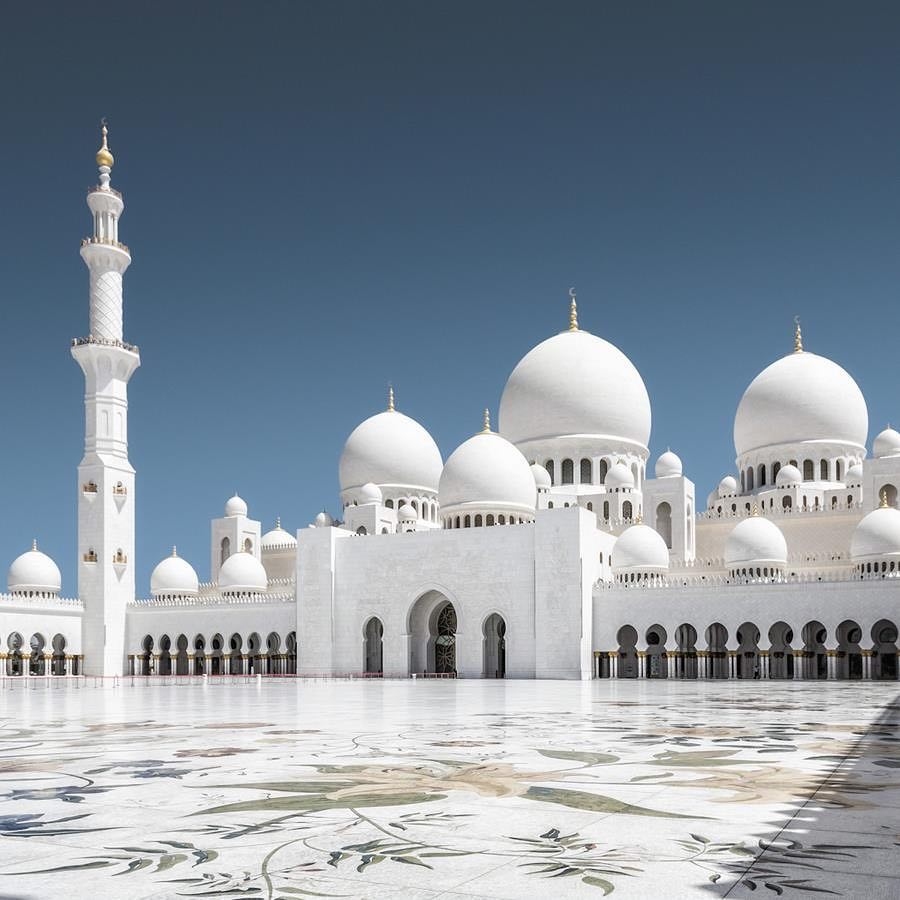
Islamic architecture is one of the most visually coherent traditions in the built world, yet it is also one of the most regionally varied. A mosque in Istanbul looks nothing like a mosque in Mali, and a palace in Granada shares almost no surface details with a palace in Lahore — yet both are unmistakably part of the same broad family. The thread connecting them is not a single style but a shared set of architectural problems solved in culturally specific ways: how to mark sacred space, how to orient a congregation toward Mecca, how to handle the transition between a flat wall and a curved ceiling, and how to cover vast surfaces with ornament that rewards close inspection without ever depicting a human figure. Once you understand the recurring solutions to those problems — the minaret, the iwan, the muqarnas, the arabesque, the dome cluster — you can begin to place a building's region and period with reasonable confidence, even from a single photograph.
This guide works through those elements one at a time before finishing with a practical regional cheat sheet. The goal is not to turn you into an architectural historian but to give you a reliable set of visual triggers for the most common Islamic building types you are likely to encounter in a geography guessing game.
The minaret: not just a tower
The minaret's original function is acoustic. Before recorded sound, a muezzin climbed to an exterior balcony and projected the call to prayer — the adhan — across a neighborhood by voice alone. Height mattered because it extended range. Visibility mattered because minarets doubled as orientation points, letting travelers identify a town's religious center from a distance. A minaret is therefore simultaneously a loudspeaker tower, a landmark, and a statement of institutional presence. Understanding those three functions explains why different cultures built them so differently.
The cylindrical Ottoman minaret is the type most people recognize first: extremely slender, almost pencil-shaped, rising to a sharp conical cap with one or more cantilevered balconies partway up the shaft. The profile is deliberately attenuated — Ottoman minarets aim for the sky rather than commanding the ground. The Sultan Ahmed Mosque in Istanbul (commonly called the Blue Mosque, completed 1616) is the most photographed example, and its six minarets caused a diplomatic incident when it was built: having six minarets was at that time a privilege reserved for the mosque at Mecca. The sultan had to fund a seventh minaret at the Grand Mosque in Mecca to restore the hierarchy. The number of minarets at an Ottoman mosque is itself a clue — two flanking the main dome is common; four marks a mosque of exceptional royal importance.
The square North African minaret belongs to a completely different aesthetic lineage. Developed under the Almohad dynasty in the 12th century, these towers are broad, almost blocky by comparison, with geometric surface decoration in carved stone or faience tiles running up each face. The Koutoubia Mosque in Marrakech (begun 1158) is the defining example — its squared tower with decorative blind arcading set the template for the region. So closely did the Almohads follow this model across their territories that the Koutoubia has a near-twin in Spain: the Giralda in Seville, originally the minaret of the city's Friday mosque (built around 1198), later converted into a bell tower after the Christian reconquest. Stand the two photographs side by side and the family resemblance is unmistakable despite the different climates and centuries of subsequent alteration.
The strangest minaret type of all is the spiral minaret, of which the best surviving example rises from the Great Mosque of Samarra in Iraq, completed in 848 under the Abbasid caliph al-Mutawakkil. The Malwiya Tower, as it is called, is a free-standing helix: a broad-based cone with an external ramp that winds counterclockwise up to a small cylindrical pavilion at the top. The visual reference is clearly the ancient Mesopotamian ziggurat, and this is probably intentional — the Abbasid caliphs were conscious inheritors of earlier Babylonian and Assyrian culture and used architectural quotation as a statement of dynastic legitimacy. The Malwiya is genuinely unlike anything else in the Islamic world, and if you see it in a photo, there is only one building it can be.
The iwan and the courtyard plan
The iwan is one of the most elegant architectural inventions in the Islamic world, and once you know what it looks like, you will spot it constantly in Persian, Central Asian, and Mughal buildings. An iwan is a rectangular vaulted hall that is fully enclosed on three sides but completely open on the fourth, facing a courtyard. It functions as a kind of threshold space — sheltered enough to use in hot weather, but visually and physically connected to the open air. The iwan existed in pre-Islamic Sassanid Persian architecture, but Islamic builders elevated it to an organizing principle. In the standard four-iwan plan, one iwan is placed at the center of each side of a rectangular courtyard, creating a cross-axial layout with the courtyard as the hub. This arrangement became the standard template for mosques, madrasas, and caravanserais across the Persian-speaking world.
The Imam Mosque (also called the Shah Mosque) in Isfahan, Iran, completed around 1629 during the Safavid dynasty, is the most complete surviving example of the four-iwan plan at grand scale. Its entrance portal faces the public square but is angled slightly to align the prayer hall with Mecca — a geometrical sleight of hand concealed behind the symmetry of the facade. The tilework on the four iwans of Isfahan is the other thing you notice immediately: deep cobalt and turquoise glazed ceramics covering virtually every surface, with floral and calligraphic motifs interlacing across the vaulted soffits. Persian mosque facades tend toward this saturated blue-green palette in a way that immediately distinguishes them from Ottoman stone or Moorish plasterwork.
The courtyard of a Persian or Timurid mosque frequently features a reflective pool on the central axis. This is partly practical — ablution before prayer — but also deliberately aesthetic. The Safavids understood that a still water surface doubles the apparent height of a building and creates a symmetry that transforms the courtyard into an almost abstract composition. The Taj Mahal (completed 1653) uses the same logic in its famous reflecting pool, though the Taj is a mausoleum rather than a mosque. The Mughal architects who designed it inherited the four-part charbagh garden layout — four quadrants divided by water channels — as a cosmological symbol of paradise, the Persian word for which, firdaus, literally means a walled garden. The architectural language of the iwan and the charbagh traveled from Persia into the Indian subcontinent through the Mughal dynasty's Central Asian roots, which is why Mughal buildings often feel like a dialogue between Persian geometry and Indian materials.
Muqarnas: stalactite vaulting
Of all the elements specific to Islamic architecture, muqarnas are the most arresting and the hardest to describe in words. The term refers to a system of three-dimensional geometric cells — small concave niches, prisms, and half-vaults — stacked in descending tiers to fill the transitional zone between a flat wall and a curved arch, dome, or ceiling. The effect, when you look up into a fully realized muqarnas vault, is of standing beneath an enormous crystalline formation or a frozen cascade of soap bubbles. The forms are deeply complex in their geometry but are generated by repeating a small number of basic units at different scales and orientations. Historians of mathematics have noted that muqarnas builders were working with quasi-periodic tiling patterns centuries before Western mathematicians formalized the underlying geometry.
The technique appears to have originated in Persia during the 10th century, appearing first in modest niched squinches before developing into the elaborate multi-tiered vaults that characterize the mature tradition. By the 11th and 12th centuries, muqarnas had spread westward through the Arab world and arrived in North Africa and Andalusia. The most photographed examples in the world are in the Alhambra palace in Granada, Spain, built primarily under the Nasrid dynasty between the 13th and 14th centuries, with the most celebrated muqarnas ceiling in the Hall of the Abencerrajes and the Hall of the Two Sisters dating to around 1391. These Andalusian examples are made from carved and painted plaster, giving them an almost weightless, honeycomb quality — they are extraordinarily delicate-looking for surfaces that have survived more than six centuries.
A crucial point for anyone trying to understand what they are looking at: muqarnas are never structural. They carry no load. The actual vault or dome is built first from brick or stone, and the muqarnas is a decorative skin applied to the undersurface. This is why they can be made from plaster in Andalusia or from glazed ceramic tiles in Central Asia without any structural consequence — the material choice is purely aesthetic. In Ottoman interiors, muqarnas appear in the transition zones between pendentives and walls, often painted or tiled in blues and golds. In Persian interiors, they are frequently sheathed in mirror glass (a later tradition called aineh-kari), which multiplies the visual complexity through reflection. Once you know what to look for, muqarnas become one of the most reliable indicators that you are looking at an Islamic interior rather than any other tradition.
Arabesque and geometric pattern
One of the most common misconceptions about Islamic art is that figural representation was universally banned, driving all creative energy into geometric and vegetal ornament. The reality is more nuanced. The Quran itself contains no explicit prohibition on depicting living beings — the restriction derives from hadith (reported sayings of the Prophet), and its application was never uniform across time and region. Persian miniature painting flourished from the 13th century onward with richly detailed scenes of human and animal figures. Mughal court painters produced portrait series of emperors with considerable psychological depth. What is essentially true, however, is that figural representation was considered inappropriate inside mosque interiors — the space of communal prayer — and this convention held across virtually all Islamic traditions and periods. The consequence was that the decorative arts of the mosque focused almost exclusively on two registers: calligraphy (the written word of God rendered as ornament) and abstract pattern.
The two main types of abstract pattern are the arabesque and geometric tessellation. The arabesque is a continuously flowing interlaced scroll of stylized plant forms — stems, leaves, palmettes, and blossoms — that branch and rebranch without ever resolving into a recognizable plant. The logic is fractal: zoom in on any part of an arabesque and you find the same branching structure at a smaller scale. Geometric tessellation works differently, beginning with a regular grid and subdividing it using compass and straightedge constructions to produce interlocking stars, hexagons, and polygons. Mamluk tilework in Egypt and Moorish zillij tilework in North Africa represent two regional peaks of this tradition, using cut and fired ceramic tesserae set into geometric compositions of extraordinary precision.
The Alhambra is the most complete surviving example of all three decorative registers working together in a single interior. The lower walls are faced with zillij tilework in geometric patterns — cool, hard-edged, and durable at floor level where wear is greatest. Above the tile dado, carved and painted stucco panels carry arabesque and calligraphic inscription across the mid-wall zone. Above that, the ceiling dissolves into muqarnas or carved wooden geometric lacework. The three registers are not independent — their proportions, rhythms, and color palettes are carefully coordinated to create a surface that grows richer the longer you look at it. Few buildings in the world reward close attention as richly as the Alhambra, and its influence on subsequent Islamic ornamental traditions — and on 19th-century European Orientalist revivalism — was enormous.
The Ottoman mosque plan
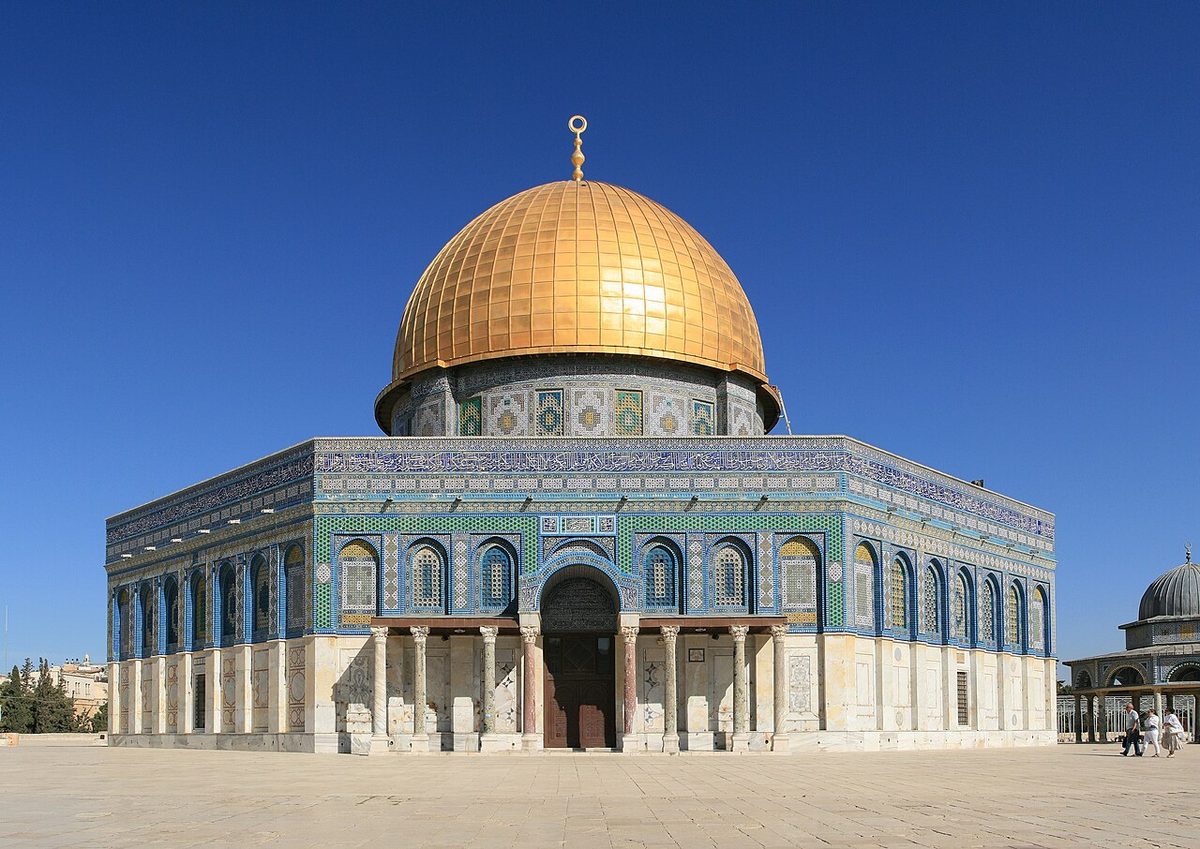
Ottoman mosque architecture represents one of history's most systematic attempts to solve a specific architectural problem: how to cover the largest possible congregation with a single unified interior space. The problem was partly practical — a mosque without columns or piers obstructing sightlines allows every worshipper to see the imam — and partly symbolic, expressing the unity of the community under God. The Ottoman answer, developed over roughly a century and brought to its highest form by the imperial architect Mimar Sinan, was to adapt the structural logic of the Byzantine dome and push it to its spatial limits.
Sinan was born around 1489 and served as chief Ottoman architect for fifty years, during which he is said to have built or overseen more than 300 structures. His early masterpiece, the Süleymaniye Mosque in Istanbul (completed 1558), acknowledges its debt to the nearby Hagia Sophia explicitly: the central dome is flanked by two half-domes on the main axis, creating a cascading spatial sequence that elongates the prayer hall and distributes the dome's thrust into the walls. If you look at the Süleymaniye's silhouette from the Bosphorus, you see a pyramid of ascending domes, with the two pencil minarets rising at the four corners of the courtyard framing the composition against the Istanbul skyline.
Sinan considered his later mosque, the Selimiye Mosque in Edirne (completed 1575), his true masterpiece — and most architectural historians agree with his assessment. The Selimiye abandons the half-dome cascade and instead supports an enormous central dome on eight slender piers, allowing the walls between the piers to be almost entirely glazed. The result is an interior flooded with light that seems to float rather than press down. The dome's internal diameter — approximately 31.5 meters — actually exceeds that of the Hagia Sophia, a fact Sinan noted with pride. Four slender minarets at the corners of the courtyard are among the tallest in the Islamic world, and from a distance the composition is unmistakable: the four needle-sharp minarets surrounding a single enormous dome create a silhouette found nowhere else. If you see that combination in a photograph, you are almost certainly looking at Edirne, Turkey.
Moorish architecture: Andalusia and North Africa
The term "Moorish" refers to the architectural tradition of the western Islamic world — principally the Iberian Peninsula (al-Andalus) and North Africa — from the Umayyad period in the 8th century through the final Nasrid dynasty in Granada, which ended with the Reconquista in 1492. It is a tradition that developed largely in parallel with, and sometimes in reaction against, the Persian and Anatolian branches of Islamic architecture, producing a distinctive visual vocabulary built around the horseshoe arch, carved and painted stucco, and elaborate geometric woodwork.
The founding monument of Moorish architecture is the Great Mosque of Córdoba, begun in 785 by Abd al-Rahman I on the site of a Visigothic church. The original building has been repeatedly expanded and — after the Reconquista — partially converted into a cathedral, producing the extraordinarily strange hybrid interior that survives today. The mosque's most visually distinctive feature is its double-arch system: two tiers of arches stacked vertically, the lower ones horseshoe-shaped (slightly wider at mid-height than at the springing point of the arch, giving them their characteristic bulging profile), the upper ones semicircular, with the two tiers connected by slender striped piers. The alternating bands of red brick and white stone in the arches — a reference to Roman aqueduct construction — give the interior a rhythmic quality quite unlike anything in Eastern Islamic architecture.
The Alhambra palace complex, built by the Nasrid dynasty mainly during the 13th and 14th centuries, is the culmination of the Moorish tradition, and it achieves its effects through means that are almost paradoxical: the structure underneath is cheap — largely rammed earth and sun-dried brick — while every surface is sheathed in carved plaster, zillij tile, and painted cedarwood at a level of intricacy that seems to deny the modest materials beneath. The horseshoe arch appears throughout, but the Nasrid version is often elaborated with a cusped or lobed edge, turning a structural element into a purely decorative screen. Colored tilework runs as a dado around the base of the walls, and the upper portions dissolve into stucco latticework so fine it resembles lace. Looking for these signatures — horseshoe arch, zillij dado, geometric wood ceiling, absence of heavy stone masonry — will identify Moorish work quickly.
Regional variation: telling them apart
Once you have the individual elements in mind, the challenge becomes distinguishing between regional traditions when you only have a photograph and a few seconds to decide. Here is a practical summary of the most reliable visual triggers.
Ottoman mosques are identifiable primarily by their pencil-thin cylindrical minarets and their dome cascade. Look for a central dome flanked by half-domes and a tier of smaller domes, with the minarets rising at the corners of the forecourt. The exterior stonework is typically cut ashlar — pale cream or grey — and the interiors are characterized by Iznik tilework in blue and white. Location is almost always Turkey, the Balkans, or historically Ottoman-controlled territories in the Middle East and North Africa.
Persian mosques are defined by the four-iwan courtyard, a saturated blue-green tile palette, and pointed arches with muqarnas semi-domes above the iwan openings. The color of the tilework is the single fastest clue: no other regional tradition uses that specific combination of cobalt, turquoise, and white in tile on building exteriors at such scale. Location is Iran, Afghanistan, Uzbekistan, and Tajikistan.
Mughal mosques occupy their own distinct visual register. The Jama Masjid in Delhi (completed 1656 under Aurangzeb's father Shah Jahan) and the Badshahi Mosque in Lahore, Pakistan (completed 1673 under Aurangzeb) both exemplify the mature Mughal mosque plan: a large rectangular courtyard of red sandstone with a prayer hall at one end whose facade is dominated by three bulbous onion domes in white marble, typically with black marble inlay stripes. The dome profile is more swollen and globular than the Ottoman type — it bulges outward at mid-height before tapering to a finial, a form likely derived from Central Asian Timurid prototypes. The combination of red sandstone courts and white marble domes is the most reliable single visual signature for Mughal religious architecture.
Moorish and Maghrebi mosques are identified by their square minarets (the Almohad inheritance), horseshoe arches at entrances and interior arcades, and the characteristic tilework dado in geometric patterns. North African mosques often have a simple whitewashed exterior with decoration concentrated at the minaret and doorway, saving the most elaborate surface treatment for the courtyard interior. The square minaret alone is enough to narrow your location to Morocco, Algeria, Tunisia, or Mauritania — or, if you are looking at a converted building, possibly southern Spain.
Sub-Saharan African mosques represent perhaps the most visually striking regional variant and the one most likely to surprise players who have not encountered it before. The Great Mosque of Djenné in Mali — substantially reconstructed in 1907 on the site of an earlier structure — is built entirely from banco, a sun-dried mud plaster applied directly over a timber armature. The exterior surface is studded with rows of protruding wooden beams called torons, which serve a structural purpose (they reinforce the mud walls and act as scaffolding anchors for the annual replastering ceremony, when the entire community re-coats the mosque together) but also create the building's unmistakable bristling texture. The three towers on the qibla wall, each topped with an ostrich egg, and the organic, almost biological surface produced by the banco technique make the Djenné mosque instantly recognizable. There is nothing else in the world that looks quite like it.
For related reading, try our guide to reading religious architecture across traditions, or our piece on ancient temples explained.
Regional Variations in Islamic Architecture
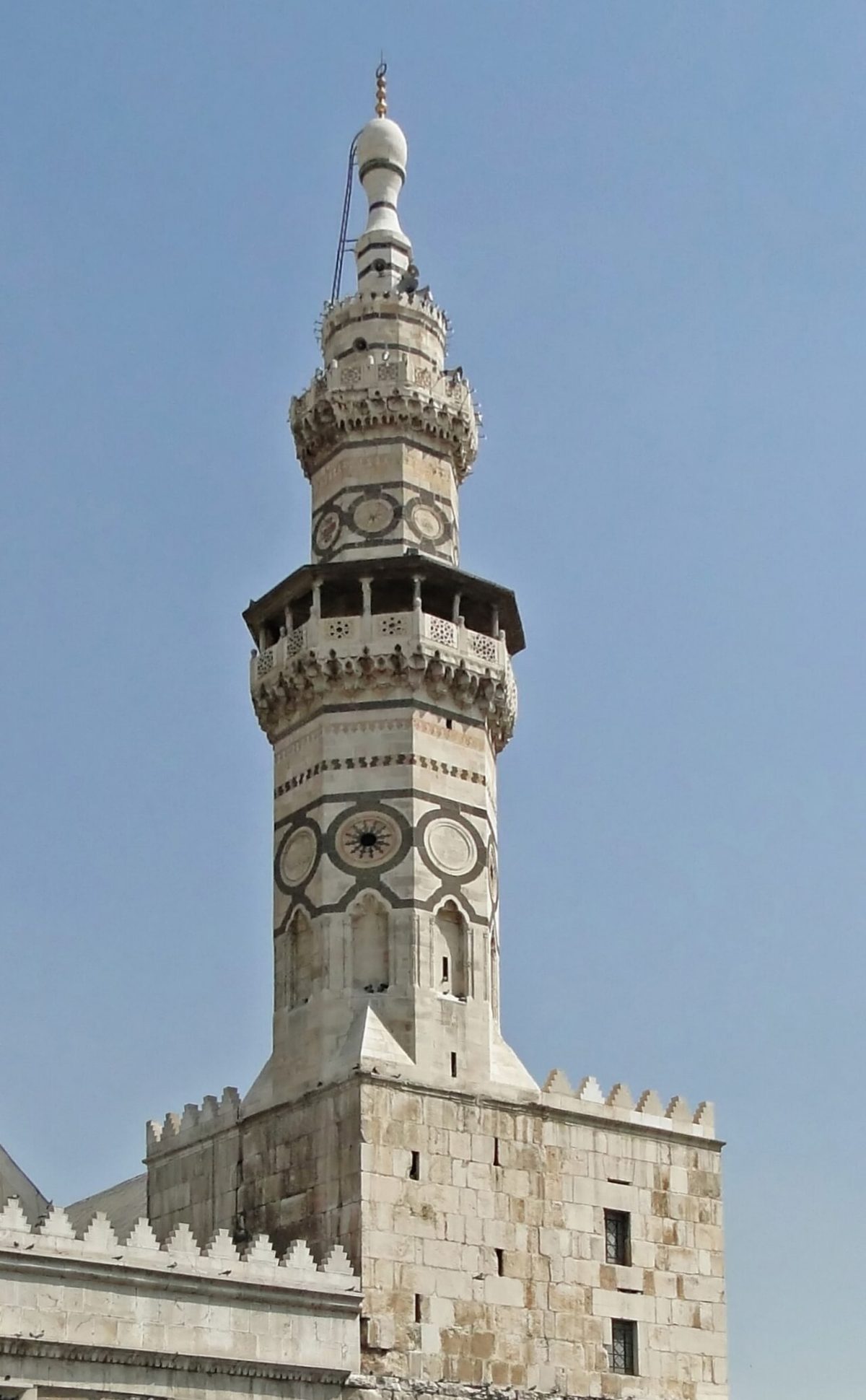
The Arab hypostyle mosque is the oldest surviving mosque form, rooted in the Prophet Muhammad's house in Medina — a simple courtyard with a shaded portico. The hypostyle plan scales this model upward: a large open courtyard (sahn) surrounded by covered arcades, with the prayer hall on the Mecca-facing side expanded into a forest of columns. The Great Mosque of Córdoba and the Great Mosque of Kairouan in Tunisia are the defining examples. The roof of the prayer hall is typically flat or vaulted in timber or simple masonry, and the minaret — where present — is typically a square tower, especially in North Africa under Almohad influence.
The Persian four-iwan mosque reorganizes the courtyard entirely. Four vaulted halls (iwans) face the central courtyard from each side, creating a cross-axial plan in which the prayer iwan on the Mecca-facing side is the largest and most elaborately decorated. The courtyard is typically paved in geometric tilework with a central ablution pool. The exterior of each iwan is framed by a tall rectangular portal surround (pishtaq) covered in muqarnas and calligraphic inscription. This type dominated mosque architecture across Iran, Afghanistan, and Central Asia from the Seljuk period onward, and its color vocabulary — cobalt, turquoise, and white glazed tile — is immediately recognizable.
The Ottoman central dome mosque takes the structural logic of Hagia Sophia — a large central dome on pendentives — and adapts it to Islamic liturgical requirements. The prayer hall must accommodate a large congregation with unobstructed sightlines to the imam. Sinan's solution was to support the central dome with cascading half-domes on the main axis and smaller exedras filling the corners, creating a unified interior volume that reads as a single grand space from any point within it. The exterior reads as a controlled cascade of domes from a single commanding central mass, framed by the pencil-thin minarets that are the most reliable single identifier of the Ottoman mosque tradition.
The Mughal mosque blends Persian forms — the three-bay prayer hall facade, the central dome flanked by two smaller domes, the arched screen gateway — with Indian materials: red sandstone for the courtyard structure, white marble for the prayer hall and domes, with black marble inlay in geometric patterns. The Mughal minaret is distinctly different from the Ottoman type: shorter, more massive, octagonal in plan, with canopied marble balconies at multiple levels and a small chhatri (domed kiosk) at the top. The combination of red sandstone, white marble domes, and octagonal minarets identifies Mughal mosques reliably across the subcontinent.
Key Islamic Architecture Identifiers
- Minaret: the tower for the call to prayer — cylindrical and pencil-thin (Ottoman), square (Almohad/North African), spiral (Abbasid/Iraq), octagonal with balconies (Mughal)
- Mihrab: the niche in the qibla wall indicating the direction of Mecca — always present in mosque prayer halls, often the most elaborately decorated element
- Minbar: the stepped pulpit from which the Friday sermon is delivered — a tall wooden or stone structure to the right of the mihrab
- Muqarnas: stalactite-like decorative vaulting filling transitional zones — in spandrels, portal niches, and dome bases across all Islamic traditions
- Iwan: the vaulted hall open on one face to the courtyard — the organizing element of Persian and Central Asian mosque plans
- Arabesque: continuously flowing interlaced plant-form ornament — present on carved stucco, painted tile, and metalwork across all traditions
- Calligraphic band: Quranic text rendered as frieze ornament — typically running around the interior of domes, along arch soffits, and across upper wall zones
- Horseshoe arch: an arch wider at mid-height than at the springing point — the defining arch form of Moorish and Maghrebi architecture
- Pointed ogee arch: an arch with a double curve, concave below and convex above — common in Mughal and some late Ottoman and Persian work
- Central courtyard with ablution fountain: present in virtually all mosque types, proportioned differently by tradition
A Closer Look: Süleymaniye Mosque, Istanbul
The Süleymaniye Mosque, completed in 1558 under the patronage of Suleiman the Magnificent and designed by Mimar Sinan, occupies a commanding hilltop position in Istanbul overlooking the Golden Horn. It was Sinan's attempt to synthesize the structural achievement of Hagia Sophia — then still the dominant architectural presence in Constantinople — with the spatial and liturgical requirements of a Friday mosque for the most powerful Islamic ruler of the sixteenth century. In doing so, Sinan established the template for the great Ottoman imperial mosque that his successors followed for generations.
The building's structural organization is explicitly modeled on Hagia Sophia: a large central dome on pendentives flanked by two half-domes of the same diameter on the east-west axis, creating a cascading sequence of dome volumes that elongate the prayer hall without interrupting the sightlines. On the north and south flanks, the dome's thrust is absorbed by massive outer walls pierced by arched windows at multiple levels. The effect from inside is of a single vast space unified under the dome, its boundaries dissolved by light entering from 138 windows arranged in multiple tiers. Sinan was a systematic engineer, and he documented his structural decisions carefully — his accounts of how he reinforced the foundations, designed the drainage, and calculated the pier sizes survive in contemporary chronicles.
The exterior silhouette of the Süleymaniye is the element most studied by later architects. The building sits on a raised platform, its courtyard surrounded by a colonnade with a central ablution fountain. From across the Golden Horn, the dome and its surrounding half-domes rise in a controlled pyramid, framed by four minarets — two tall at the corners of the prayer hall, two shorter at the corners of the courtyard — a hierarchy of height that reinforces the visual dominance of the central dome. The entire composition is a masterclass in how architectural massing can express institutional power while solving engineering problems simultaneously. Sinan himself considered it a preparatory exercise; his true masterpiece, the Selimiye in Edirne, followed seventeen years later.
Spotting It in Building Guessr
Minarets are the single most reliable identifier of Islamic religious architecture in the game. Their presence narrows a building immediately to a mosque or its immediate neighborhood; their form then identifies the regional tradition. Ottoman pencil minarets mean Turkey or Ottoman-influenced territories; square minarets mean Morocco, Algeria, Tunisia, or Mauritania; spiral minarets mean Iraq specifically (the Samarra mosque); octagonal canopied minarets mean the Indian subcontinent. Muqarnas vaulting appearing in spandrels, portal niches, or dome bases confirms Islamic architecture even when minarets are not visible in the frame. The absence of figural representation and the presence of geometric tilework, calligraphic inscription bands, and arabesque ornament distinguish Islamic interiors from Byzantine ones, which share some visual characteristics (dome on pendentives, gold mosaic work) but always include figurative imagery of Christ, the Virgin, and saints.
For exterior identification, the dome profile is also decisive. A flattish hemispherical dome surrounded by cascading smaller domes and pencil minarets is Ottoman. A pointed blue-tiled dome with a muqarnas semi-dome above the entrance iwan is Persian or Central Asian. A bulbous white marble dome with octagonal minarets and red sandstone courts is Mughal. A squat hexagonal or cylindrical minaret beside a simple arcaded courtyard mosque is likely sub-Saharan African or early Arab-plan. These are not infallible rules — regional and historical variation creates many exceptions — but they will carry you correctly through the majority of encounters with Islamic buildings in the game.
Think you can identify these traditions on sight? Try a round.
Play Building GuessrFurther Reading
Sources & further reading
Reference material this page draws on, and where to read further. External links open third-party sites.
- Islamic architecture · Wikipedia
- Minaret · Wikipedia
- Mihrab · Wikipedia
- Muqarnas · Wikipedia
- Mosque–Cathedral of Córdoba · Wikipedia
- Alhambra · Wikipedia
- Iwan · Wikipedia
- World Heritage listing: Alhambra · UNESCO World Heritage Centre