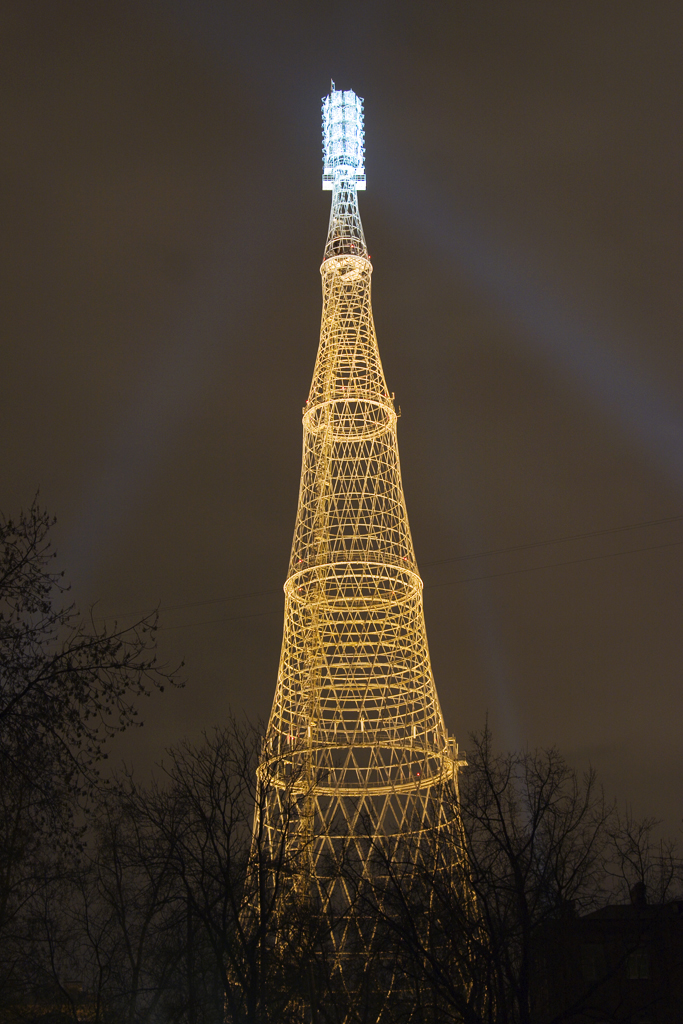
The most radical buildings ever designed
Between 1917 and roughly 1932, Soviet architects produced some of the most radical buildings ever designed — dynamic industrial forms meant to express the energy and purpose of a new social order. The buildings of Soviet Constructivism are not decorative. They are ideological: forms that were intended to communicate, without words, that a new kind of society had come into being and required a new kind of architecture to house it. The cantilevered volume, the exposed structure, the industrial glazing, the absence of any historical ornament — all were deliberate rejections of the bourgeois architectural tradition and deliberate affirmations of a world built on the logic of the machine and the collective rather than the luxury of the individual.
The movement lasted barely fifteen years in its built form before Stalin's government shut it down with a decree mandating a return to classical monumentalism. In those fifteen years, it produced a body of work that influenced Western modernism, shaped Deconstructivism sixty years later, and continues to attract architects and historians who see in it the most intellectually consistent attempt in the 20th century to design buildings from first principles rather than from convention or tradition.
The context is essential. The Russian Revolution of October 1917 swept away not merely a government but an entire social and cultural order. The tsarist state, the Orthodox Church, the aristocracy, and the bourgeoisie — the clients, patrons, and ideological anchors of Russian architecture for centuries — were replaced overnight by a Soviet state that had no architectural tradition of its own and was explicitly committed to building one. The first years of the Soviet state were simultaneously years of civil war, economic collapse, and extraordinary cultural experimentation. The Bolshevik leadership, whatever its political authoritarianism in other respects, was genuinely committed to modernist art and architecture as the expression of the new order, and for a brief period the most radical artists and architects in Europe found themselves working with direct state support.
Origins in the Russian avant-garde
Soviet Constructivism did not appear from nowhere in 1917. It emerged from a pre-revolutionary Russian avant-garde that had been among the most inventive in Europe. Suprematism — the abstract painting movement founded by Kazimir Malevich around 1915, working with pure geometric forms (squares, circles, crosses) in black, white, and primary colors on white grounds — provided the formal vocabulary from which Constructivist architecture would develop. Malevich's Architectons — abstract plaster models of what suprematist architecture might look like, exhibited from 1923 onward — are proto-buildings: assemblages of rectangular volumes in different proportions, white on white, generating complex shadow patterns that are purely formal experiments.
El Lissitzky (1890–1941) was the most important figure in translating suprematist ideas into architectural proposals. His Proun works (an invented word, sometimes glossed as "project for the affirmation of the new") were abstract compositions that occupied an intermediate space between painting, architecture, and sculpture — two-dimensional images that implied three-dimensional structures, using the conventions of architectural drawing (axonometric projection, section, plan) to suggest buildings that could theoretically be built but were never intended to be built directly. His Cloud Irons (Wolkenbugel, 1924) — horizontal office slabs raised on tripod legs above existing Moscow streets at major intersections — were genuine proposals, never built, that demonstrated the ambition of Constructivist thinking: architecture that was simultaneously urban infrastructure, a symbol of the new society, and a formal experiment in the dynamic possibilities of cantilever and suspension.
Alexander Rodchenko (1891–1956) approached architecture from the perspective of a graphic designer, photographer, and industrial designer. His contributions to Constructivism were primarily in graphic design — the red, black, and white poster compositions that are among the most powerful political graphics ever produced — but the spatial logic of his graphic work is directly related to Constructivist architecture: diagonal dynamics, the interaction of geometric forms, the deliberate disruption of the expected reading axis. Rodchenko's Workers' Club interior design (exhibited at the Paris International Exhibition of Decorative Arts, 1925) applied the same compositional principles to a functional interior: modular furniture that could be reconfigured, a chess table, a rotating display stand for newspapers, a reading room — all in red and black, all in geometric forms, all designed to function as a social space for collective activity rather than a domestic space for individual consumption.
The key figures: Melnikov, the Vesnins, and the OSA group
Konstantin Melnikov (1890–1974) is the most visually distinctive of all the Constructivist architects, the designer whose buildings are immediately recognizable and unlike anything being built anywhere else in the world in the same period. Melnikov worked with cylindrical forms, hexagonal window patterns, diagonal structural systems, and dramatic cantilevers in combinations that appear simultaneously industrial and expressionist — buildings that are clearly made of modern materials by a designer who has internalized the formal logic of machines, but whose forms have a personal poetry that pure functionalism would not generate.
His five Workers' Clubs built in Moscow between 1927 and 1929 — the Rusakov Club, the Kauchuk Club, the Burevestnik Club, the Frunze Club, and the Svoboda Club — are each formally distinct and each remarkable. The Rusakov Club (1927–29) is the most dramatic: three cantilevered concrete volumes, stacked like the drawers of a filing cabinet pushed out from a central core, each containing a separate section of the 1,500-seat auditorium. The cantilevers can be combined into a single large hall or separated by movable walls into smaller spaces, and the three projecting volumes read from the exterior as an aggressive, asymmetric composition that appears to be in motion — leaning over the street, claiming urban space. No building in Moscow in 1927 looked anything like it.
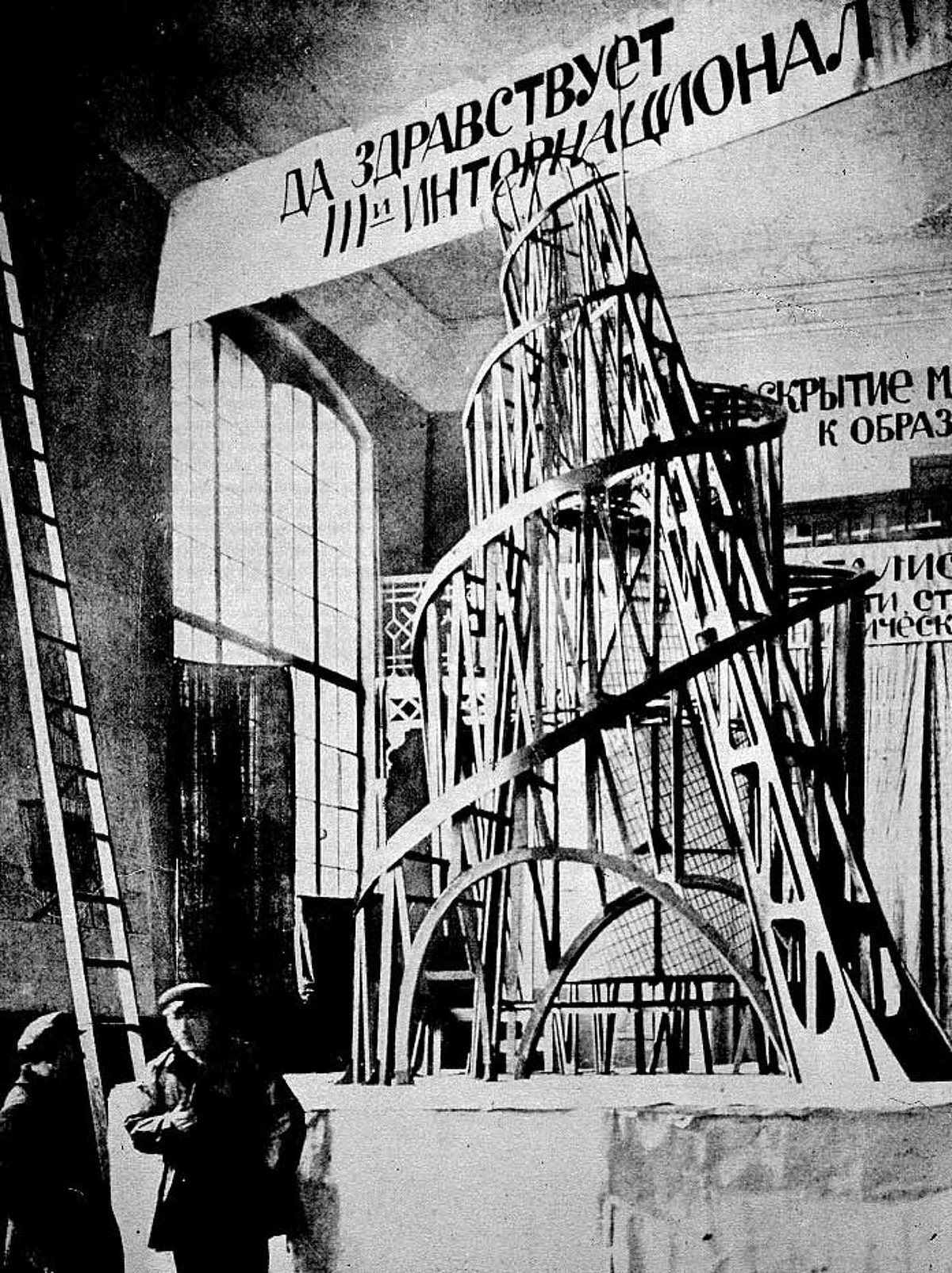
The Vesnin brothers — Leonid, Viktor, and Alexander Vesnin — were the most technically rigorous of the Constructivist architects and the founders of the OSA (Society of Contemporary Architects), the theoretical organization that gave Constructivism its intellectual framework. Their 1923 competition entry for the Palace of Labor in Moscow — an enormous complex to house the headquarters of the Soviet trade union federation — was never built but was the project that defined Constructivist ambition: a building of complex geometric massing, large glass surfaces, and a formal dynamic that was entirely new in Russian architecture. The structural system was exposed on the exterior, the circulation routes were legible from the outside, and the building's function was expressed in its form rather than disguised behind a decorative facade.
The OSA group formalized Constructivism's theoretical position in the journal Sovremennaia Arkhitektura (Contemporary Architecture, 1926–30): form must follow function, historical ornament is not only unnecessary but dishonest, industrial materials are not only appropriate but mandatory, and the architect's role is not to produce beautiful buildings but to design efficient environments for collective social activity. This was not merely a stylistic position — it was an ethical one, and the OSA architects argued it with the intensity of people who believed that the wrong kind of building could undermine the revolution and the right kind could help build communism.
Constructivist principles and the built examples
The defining formal principles of Constructivism can be stated simply: form follows social function, the industrial materials (concrete, steel, glass) are the appropriate and only honest materials, diagonal dynamics express the energy and movement of the new society in ways that classical symmetry cannot, and no historical ornament — not a pediment, not a classical cornice, not a decorative pilaster — is permissible because all such ornament is a lie about what a building is made of and how it is built.
In built form, these principles produced buildings that are immediately recognizable by their bold cylindrical or cubic volumes, their large industrial windows (often arranged in horizontal bands or in grid patterns on curved surfaces), their exposed structural elements, and their dramatic formal compositions that use cantilever, rotation, and the interaction of geometric forms to create a sense of movement and energy in a static building. The color palette is typically limited: white or pale render for the main volumes, sometimes with red or primary-color accents on structural elements or signage. The absence of ornament means that the building's effect depends entirely on its massing and on the quality of its geometric composition.
The Narkomfin Building in Moscow (Moses Ginzburg and Ignaty Milinis, 1928–32) is the canonical example of Constructivist housing, and one of the most influential housing buildings of the 20th century. Ginzburg was the leading theorist of the OSA and the Narkomfin was his attempt to demonstrate in built form what the Constructivist conception of collective living would look like. The building houses 54 apartments for employees of the Commissariat of Finance, raised on pilotis above a landscaped ground floor, connected by a single corridor at every two floors (the F-type unit, split-level, allows the corridor to serve twice as many apartments as a conventional arrangement). The building also contains a communal kitchen and dining room, a gymnasium, a library, a nursery, and a rooftop solarium — the vision of a life in which domestic functions (cooking, childcare, laundry) are collectivized, freeing the residents — especially women — from the burden of individual household management. The Narkomfin predates Le Corbusier's Unité d'Habitation by twenty years and is in some respects more rigorously worked out. It has recently been restored after decades of serious deterioration.
The shift to Socialist Realism
The Constructivist period ended abruptly and by political decree. In April 1932, a resolution of the Central Committee of the Communist Party dissolved all independent artistic groups and organizations — including all the architectural associations — and replaced them with a single Union of Soviet Architects working under the direction of the party. The architectural policy that emerged from this reorganization was Socialist Realism: an architecture of monumental classical forms, historical ornament, and civic grandeur, derived from the academic classical tradition and applied to the buildings of the Stalinist state. The justification offered — that Constructivism was "formalist," concerned with abstract form rather than with the needs of the Soviet people — was ideological rather than architectural, but its effect was total.
The contrast between the two periods is one of the starkest in architectural history. The Seven Sisters — the seven Stalinist skyscrapers built in Moscow between 1945 and 1953 — are as far from Constructivism as architecture can travel: enormous towers in Soviet Baroque, loaded with ornamental spires, classical colonnades, decorative friezes, and wedding-cake profiles that owe more to American Art Deco and 19th-century European eclecticism than to any specifically Soviet tradition. Architects who had been Constructivists adapted or were sidelined. Melnikov, the most personally distinctive of them, refused to design in the Socialist Realist style and received no significant commissions after 1937. He spent the remaining thirty-seven years of his life in a kind of internal exile, living in his own house in Moscow — itself a Constructivist masterpiece — and drawing projects that would never be built.
The scale of the Stalinist building program was enormous: not merely the Seven Sisters but thousands of metro stations, residential blocks, public buildings, and civic spaces across the Soviet Union and its satellite states. Each metro station in the Moscow Metro from the 1930s through the 1950s is individually designed and lavishly decorated — marble columns, bronze chandeliers, mosaic ceiling murals — as underground palaces of communism, accessible to all. Whether this represents a genuine commitment to beauty in public life or a cynical use of aesthetic display to distract from political terror is a question that cannot be answered architecturally.
Why so few Constructivist buildings survive
The survival rate of Constructivist buildings is poor, and the reasons are multiple. The most direct cause is the Stalinist period itself: after 1932, Constructivist buildings were associated with an ideologically condemned tendency, and many were demolished, modified beyond recognition, or simply allowed to deteriorate without maintenance funds. Some were physically altered — ornament added, facades reclad — to bring them into conformity with Socialist Realist norms. Others survived in modified form and were not recognized as significant until the post-Soviet period, by which point they were often in too poor a condition to preserve economically.
A second cause was the inherent vulnerability of the construction technology. Constructivist buildings were typically built with early reinforced concrete technology, using construction techniques that were less developed than those available a decade later. The concrete often had an inadequate water-to-cement ratio, the reinforcement was sometimes insufficient, and the construction supervision was variable. Buildings that received no maintenance for decades — as many Soviet buildings did during periods of economic stress — suffered badly. The Narkomfin Building, for example, was in a state of advanced deterioration by the 1990s, with reinforcement corrosion causing concrete spalling across large sections of the facade, the roof waterproofing entirely failed, and the communal facilities long since converted to individual apartments. Its rescue and restoration, completed in 2020 by Alexey Ginzburg (grandson of the original architect), required an international fundraising campaign and extensive structural intervention.
A third cause is the general low priority given to 20th-century architectural heritage in Russia and the former Soviet states until relatively recently. The Soviet architectural tradition was politically compromised in the post-1991 period, and there was limited public appetite for preserving buildings associated with the communist era. Preservation priorities have begun to shift as a new generation of architects and historians has argued for the significance of Constructivism, but many buildings have already been lost or compromised beyond recovery.
Later influence: Western Modernism and Deconstructivism
Constructivism's influence on Western architecture was transmitted through several channels. The most important was the emigration of key figures: El Lissitzky worked extensively in Germany in the 1920s, bringing Constructivist ideas into direct contact with the German Bauhaus and the broader Western modernist movement. Naum Gabo and Antoine Pevsner (whose 1920 Realistic Manifesto was one of the key theoretical documents of Constructivism) both emigrated to Western Europe and later to the United States, where their sculpture and theoretical work was absorbed into the post-war abstract art and architecture movements. László Moholy-Nagy, though Hungarian rather than Russian, transmitted related ideas through his work at the Bauhaus.
The formal vocabulary of Constructivism — cantilevered volumes, diagonal dynamics, industrial materials expressed honestly, the deliberate disruption of expected symmetry — reappeared in the Deconstructivist architecture of the late 1980s and 1990s. The 1988 Deconstructivist Architecture exhibition at the Museum of Modern Art in New York, curated by Philip Johnson and Mark Wigley, explicitly drew connections between the Constructivist projects of the 1920s — especially El Lissitzky's Prouns and the Vesnin brothers' unrealized competition entries — and the work of Frank Gehry, Zaha Hadid, Daniel Libeskind, Rem Koolhaas, and Peter Eisenman. Hadid's early work in particular — her graduate thesis at the Architectural Association in London, her early competition entries — was described by her tutors as Constructivism rebuilt: the same diagonal energy, the same refusal of conventional symmetry, the same commitment to dynamic form, but realized with the computational tools of the late 20th century rather than the drafting boards of the 1920s.
Regional Variations
Soviet Constructivism was geographically concentrated in the major Soviet cities — Moscow, Leningrad (St. Petersburg), Kharkov (then the capital of Soviet Ukraine), and Yekaterinburg (then called Sverdlovsk) — but its influence extended throughout the Soviet republics and, through emigres and publications, into Western Europe. In Kharkov, the Gosprom building (1925–28, designed by Serafimov, Felger, and Kravets) is one of the largest Constructivist buildings ever realized: a complex of interconnected office towers arranged around an internal courtyard, built in reinforced concrete with large horizontal window bands, forming the centerpiece of Dzerzhinsky Square (now Freedom Square), one of the largest squares in Europe. Gosprom demonstrates that Constructivism was not merely a Moscow phenomenon but a genuinely Soviet architectural program implemented across the entire territory of the new state.
In Central Asia — Kazakhstan, Uzbekistan, Turkmenistan — Soviet architectural policy brought Constructivist buildings to cities that had no tradition of Western architectural forms. The results are among the most striking encounters of the 20th century between architectural modernism and non-Western urban contexts: Constructivist government buildings and workers' clubs set among traditional courtyard houses and bazaars, their formal boldness heightened by the contrast with their surroundings. Many of these buildings are now in poor condition and receive little preservation attention despite their historical significance.
In Western Europe, Constructivist ideas were absorbed and modified rather than applied directly. The Dutch De Stijl movement — Theo van Doesburg, Gerrit Rietveld — shared the Constructivist commitment to geometric abstraction and primary colors but applied it to a different political and cultural context. Rietveld's Schroder House in Utrecht (1924) is the closest Western European equivalent of Constructivist domestic architecture: a house whose facades are composed of interlocking planes in primary colors, whose interior can be entirely reconfigured by sliding and folding partitions, and whose form is derived from the abstract paintings of Piet Mondrian rather than from any historical building type. The German Bauhaus, particularly during the Dessau period (1925–32), absorbed Constructivist ideas about the relationship between design, industry, and social purpose that shaped the entire subsequent history of design education in Europe and America.
In the post-Soviet republics, Constructivist buildings have very different cultural status. In Russia itself, the post-Soviet period saw both renewed interest — particularly from architects and the design community — and continued demolition of significant buildings for commercial redevelopment. In Ukraine, the political transformation after 2014 and particularly after 2022 has produced a complex reassessment of the Soviet architectural heritage: buildings that are architecturally significant but politically associated with Russian imperial power. The long-term fate of the Constructivist buildings of Kharkov and Kyiv will depend as much on politics as on preservation policy.
Key Identifiers: Soviet Constructivism
- Cantilevered volumes: large volumes projecting horizontally far beyond their structural support, the cantilever expressed openly rather than disguised — the projecting mass is the formal statement
- Diagonal structural elements: struts, braces, and structural members arranged diagonally rather than vertically, creating a sense of dynamic force and energy rather than static stability
- Industrial glazing in large horizontal bands: windows wrapped continuously around the building in horizontal strips, or arranged in large flat grids on curved surfaces, using the maximum glazing area the structure allows
- Cylindrical forms: circular towers, cylindrical stair cores, and curved walls appear frequently, often combined with flat rectangular volumes to create a dynamic contrast of geometries
- Complete absence of historical ornament: no columns, no pilasters, no cornices, no decorative moldings — if any carved or applied ornament appears, the building is not Constructivist
- White or pale render with red or primary-color accents: the typical color scheme uses white or light grey as the primary surface color, with structural elements, signage, or accent panels in red or primary colors
- Exposed structural honesty: beams, columns, and structural nodes are left visible rather than concealed behind cladding, communicating the building's structural logic directly
- Functional massing: the building's exterior form directly reflects its interior program — different uses produce different volumes that are visible as distinct formal elements from outside
A Closer Look: Melnikov House, Moscow
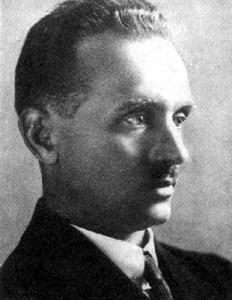
The Melnikov House in Moscow (Konstantin Melnikov, 1927–29) is one of the most extraordinary buildings of the 20th century: a private house designed by its architect-owner as a demonstration of Constructivist principles applied to domestic architecture, and as a personal statement of individual artistic vision at a moment when individual expression was becoming politically dangerous. Melnikov received permission from the Soviet government to build the house on a plot in the Arbat district of Moscow on the condition that the design would demonstrate the possibilities of the new Soviet architecture. What he built was something that no one had anticipated and that has no direct precedent or successor.
The house consists of two interlocking cylinders — one in front of the other, the rear cylinder higher than the front — built of brick and rendered externally in yellow plaster. The cylinders are not simply round towers: their walls are perforated by an extraordinary pattern of hexagonal windows, approximately 60 in total, arranged in a regular honeycomb grid that covers almost the entire surface of both cylinders. The hexagonal window is not a standard construction element; Melnikov designed and fabricated custom wooden frames for each window. The structural principle is elegant: the hexagonal openings are structural as well as decorative — the brickwork between them forms a lattice of diamond-shaped structural elements that distribute the load efficiently without a separate structural frame. The wall is simultaneously window, structure, and ornament, a fusion of function and form that is exactly what Constructivism aspired to.
The interior is organized around the interlocking geometry of the two cylinders. The entrance is at ground level in the front cylinder; a ramp leads up to the main living spaces; the upper levels of the rear cylinder contain the studio, an open-plan space of extraordinary spatial quality where Melnikov worked until his death in 1974. The bedroom is a single large room on the upper level of both cylinders, with 60 of the hexagonal windows arranged around it on three walls — a room of unusual luminosity and acoustic quality created by the curved walls and the diffused light from multiple directions.
Melnikov designed the house in 1927, when he was at the peak of his career and when Constructivism still had official support. By 1932, the political situation had shifted decisively, and Melnikov received no significant public commissions after 1937. He spent the remaining decades of his life in the house, which became simultaneously his refuge and his prison — a building that was too idiosyncratic to demolish, located on a valuable urban site that successive Soviet governments considered for redevelopment, kept intact partly by official inertia and partly by the advocacy of his son Viktor, who inherited the house and continued to live in it after Melnikov's death. The house was designated a heritage monument in 2004 and transferred to the Shchusev State Museum of Architecture in 2014, which has undertaken ongoing restoration work. It is now open to visitors by appointment, and the experience of moving through its spaces — the ramp, the cylindrical rooms, the hexagonal windows framing Moscow beyond — is unlike anything else in European domestic architecture.
Spotting It in Building Guessr
Constructivist buildings are relatively rare in Building Guessr — the survival rate is low, and the buildings that do survive are geographically concentrated in Russian and former Soviet cities. The most reliable identifying features are the combination of white or pale rendered surfaces, large industrial windows in horizontal bands or hexagonal patterns, and a bold formal composition that uses cylindrical volumes, cantilevered masses, or diagonal structural elements without any historical ornament. The building should feel simultaneously rational and dramatic: a composition of industrial forms arranged with aesthetic intentionality, but without the decorative surfaces that Baroque or Neoclassical architecture would use to achieve a similar visual intensity.
The geographic context is a strong secondary signal. A building with Constructivist characteristics in a Russian or former Soviet city is almost certainly genuine Constructivism from the 1920s or early 1930s. In Western Europe, similar formal characteristics in a building from the same period might indicate Bauhaus influence, De Stijl, or early modernism — styles that share formal elements with Constructivism but developed in different cultural and political contexts. The Era filter set to Early 20th Century and the country filter for Russia will surface the most likely candidates. Be aware that Constructivist buildings often appear in poor condition in photographs — weathered white render, stained concrete, deteriorated windows — because they have typically received less preservation attention than the Socialist Realist buildings that followed them.
Can you spot a cantilevered Soviet workers' club among Moscow's streetscapes?
Play Building GuessrFurther Reading
Sources & further reading
Reference material this page draws on, and where to read further. External links open third-party sites.
- Constructivist architecture · Wikipedia
- Vladimir Tatlin · Wikipedia
- Konstantin Melnikov · Wikipedia
- Socialist realism · Wikipedia
- Stalinist architecture · Wikipedia
- Narkomfin building · Wikipedia