Nordic architecture is one of the most widely admired regional traditions of the 20th and 21st centuries — defined by honesty of material, responsiveness to extreme natural conditions, and an unusually close relationship between building and landscape. Where other traditions in the modern period have sought to transcend climate — to seal buildings against the outside world and make interiors identical regardless of geography — Nordic architecture has consistently moved in the opposite direction, treating the specific conditions of the north as both a constraint and a resource. The darkness, the cold, the birch forests, the granite coasts, and the long summer light are not problems to be solved; they are the materials of the architecture itself.
The Vernacular Foundation
The Nordic building tradition begins with timber. The forests of Scandinavia and Finland provided the primary construction material across millennia, and local builders developed sophisticated techniques for working it in extreme climatic conditions. The Norwegian stave church is the most spectacular surviving expression of this tradition: a medieval church type built entirely in vertical timber staves (large planks set on edge), with elaborate dragon-head carvings at the ridge ends and multiple overhanging roofs that protect the walls from snow and rain. Of the roughly 1,000 stave churches that once existed in Norway, 28 survive. The Borgund Stave Church (c. 1180) is the best-preserved: a dark, tar-blackened timber structure of extraordinary visual complexity, its multiple rooflines stepping up to a central tower, its surfaces decorated with carved animal interlace patterns. The stave church demonstrates that timber construction can produce architectural drama and sophistication equal to any stone tradition — it is a regional response to available materials that is technically and aesthetically brilliant.
In Finland, the vernacular building tradition was log construction: horizontal squared timbers interlocked at the corners, chinked against the cold, forming low, compact farmhouses and barns. This tradition created an intimate relationship between interior and the smell and texture of wood that persisted in Finnish design sensibility well into the 20th century. Swedish vernacular architecture introduced another element that became a regional identity marker: the deep red-painted timber farmhouses visible across the agricultural landscape of central and southern Sweden. Falun red, the iron-oxide-based pigment used, was a byproduct of the copper mining industry at Falun and became universally adopted across rural Scandinavia from the 18th century onward. The red-painted timber house is now so associated with Sweden that it functions as a national symbol, recognizable worldwide.
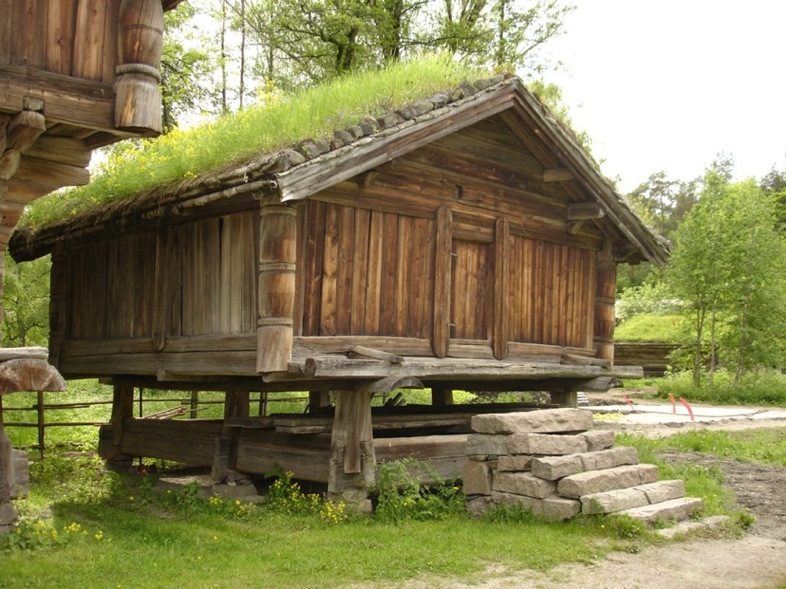
Across Iceland, the vernacular response to treelessness and extreme weather was the turf house: a structure of stone and timber frame buried in insulating turf on all sides and the roof. Icelandic turf farms from the 17th and 18th centuries survive in museum contexts and show a remarkable architectural logic — the buildings are underground from the outside, warm and dry within, their rooflines visible only as a gentle rise in the ground. This tradition of building with the landscape rather than against it — of using the earth itself as a building material and thermal buffer — anticipates principles that 20th-century architects would rediscover under the rubric of sustainable design.
Alvar Aalto and Finnish Modernism
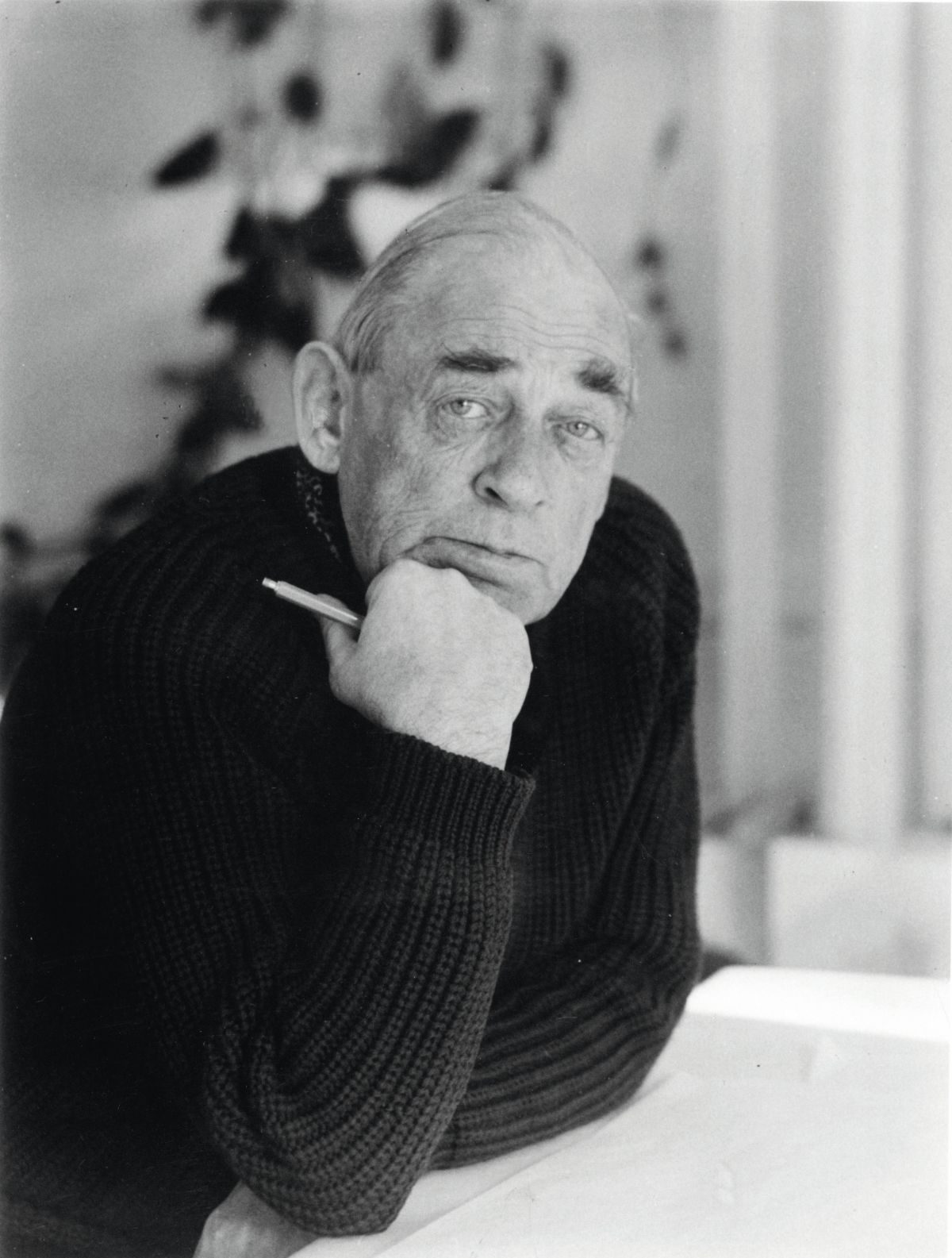
Alvar Aalto (1898–1976) is the central figure of Nordic modernism and one of the most important architects of the 20th century. His achievement was to take the abstract principles of European modernism — the Bauhaus critique of ornament, the machine aesthetic, the social program of housing and community — and rework them through the specific materials, light conditions, and cultural values of Finland. The result was a modernism that felt warm, human, and rooted rather than abstract and universal: what critics have called "humanist modernism" or the "organic" wing of the modern movement.
The Paimio Sanatorium (1932) established Aalto's international reputation and remains one of the key buildings of European modernism. Designed as a tuberculosis sanatorium in the Finnish forests, every element of the building was designed around the conditions of healing: the ward wings are oriented to catch maximum sunlight; the corridor handrails are angled to be gripped without strain by weakened patients; the washbasins in patient rooms are shaped so that running water is silent, not disturbing light sleepers. The furniture Aalto designed for Paimio — including the famous Paimio chair, with its bent birch plywood seat — was developed specifically to support the posture of patients with lung disease. This integration of architectural thinking with human physiological detail, at every scale from the building's siting to the angle of a handrail, is the hallmark of Aalto's approach.
The Villa Mairea (1939), designed as a private house for the industrialist Harry Gullichsen and his wife Maire, is Aalto at his most exploratory and lyrical. The house combines timber, brick, and steel in a composition that deliberately resists the rigid geometry of orthodox modernism: the plan is irregular, the rooms flow into each other, the columns in the living area are wrapped in rattan, the sauna is a separate timber hut in the garden connected by a path through the forest. The house is a meditation on what it means to live between nature and culture, between the Finnish forest tradition and European modernism, and it refuses to resolve the tension simply. The Finlandia Hall (1971) in Helsinki, Aalto's late-career civic building, shows the same sensibility at the scale of a concert and conference hall: white Carrara marble cladding on the exterior, undulating forms, and an auditorium shaped by acoustic requirements that appear as a series of irregular ceiling planes and balcony edges.
Danish Modernism and the Welfare State
Arne Jacobsen (1902–1971) is the central figure of Danish modernism, and his work ranges across scales from urban planning to teaspoons. His SAS Royal Hotel in Copenhagen (1960) was a total work of design: the building, its interiors, its furniture (the Swan and Egg chairs, now canonical designs), and every object within it were designed by Jacobsen. The result was a coherent design environment of unusual intensity. His Rødovre Town Hall (1956) is a quieter masterpiece: a low, horizontal brick building of great precision and clarity, demonstrating the Danish tradition of refined brick modernism.
The most famous Danish export in architecture is Jørn Utzon (1918–2008) and his Sydney Opera House (1957–1973), which is discussed below. Utzon's other buildings are less well known internationally but equally significant: the Bagsværd Church near Copenhagen (1976) has a simple white concrete exterior and an interior of extraordinary cloudlike concrete shell vaults overhead, inspired by cumulus clouds seen from an airplane. The contrast between the modest exterior and the soaring interior is a deliberate architectural decision: the church does not announce itself on the street; the experience unfolds only once you enter.
Swedish Grace and the Stockholm Tradition
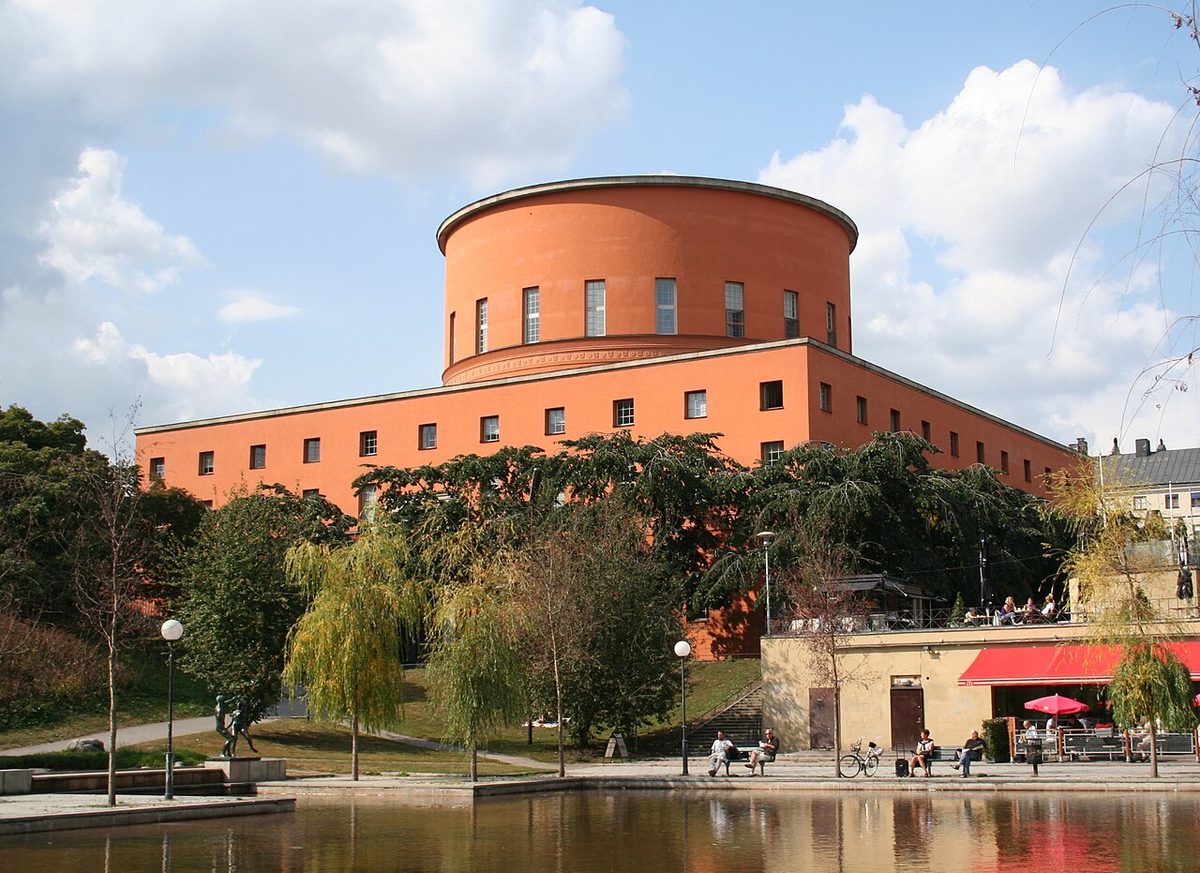
Ragnar Östberg's Stockholm City Hall (1923) is the masterpiece of Swedish National Romanticism — a movement that sought to create a distinctly Scandinavian architecture by synthesizing vernacular Swedish building traditions with Renaissance and Byzantine influences, expressed in the distinctive Swedish brick and render aesthetic. The building occupies a prominent waterfront site at the end of Kungsholmen island, its tower visible across the water. The tower, 106 meters tall with a copper crown topped by three golden crowns (the symbol of Sweden), is the dominant element of the Stockholm skyline from the harbor. The interior includes the Golden Hall, whose walls are covered in approximately 18 million mosaic tiles in gold and color, representing scenes from Swedish history. The effect is somewhere between a Byzantine church and a medieval hall, entirely unlike any building in the mainstream European modernist tradition.
The Swedish tradition also produced a distinctive approach to housing design, particularly in the Stockholm suburb planning of the postwar era. The suburb of Vällingby (1950s, SATO/Backstrom and Reinius) became an international model for car-free, mixed-use suburban planning centered on a pedestrian shopping street with housing towers and low-rise blocks in the surrounding landscape. Vällingby was studied by urban planners worldwide and influenced housing development across Scandinavia and beyond. The integration of transit infrastructure (underground railway station directly below the shopping center), housing at varied densities, and public green space set the template for what would later be called transit-oriented development.
Contemporary Nordic Architecture
Contemporary Nordic architecture is dominated by a handful of internationally prominent firms whose work is simultaneously rooted in Nordic tradition and global in its reach. Snøhetta, based in Oslo, is best known for the Oslo Opera House (2008) — a building whose white granite roof is accessible to the public, sloping down into the fjord so that people can walk on top of it. The Oslo Opera House revived the waterfront and triggered the transformation of the Bjørvika district from industrial port to cultural quarter. Snøhetta has also designed the National Museum of Norway and the Bibliotheca Alexandrina in Egypt, a very large library on the site of the ancient Library of Alexandria.
BIG (Bjarke Ingels Group), based in Copenhagen, has become one of the most discussed architectural practices in the world through a combination of formal inventiveness, programmatic ambition, and media savvy. The 8 House in Copenhagen (2010), a figure-eight-shaped housing block with a continuous cycling path spiraling up its exterior to a penthouse, demonstrates BIG's characteristic approach: a formal gesture that is simultaneously a spatial experience and a functional innovation. 3XN, also Danish, is known for high-quality cultural buildings including the Museum of Liverpool (2011) and the Fisketorvet mall in Copenhagen, with a characteristic attention to movement patterns and daylight. These firms have taken the Nordic commitment to material honesty, landscape sensitivity, and social purpose into a global practice, influencing architecture far beyond Scandinavia.
Regional Variations
Each Nordic country has developed a distinct architectural identity within the broader tradition. Norway's contribution is most strongly associated with the stave church tradition, the landscape-sensitive contemporary work of firms like Snøhetta and Jensen & Skodvin, and a particular tradition of small-scale tourist architecture — mountain lodges, fjord-side pavilions, and national tourist route facilities designed by leading architects as a deliberate investment in the quality of the landscape experience. The Norwegian Scenic Routes program, which commissioned site-specific architecture at viewpoints along 18 tourist routes, is one of the most ambitious public architecture programs in the world, and the quality of work produced — by firms like Reiulf Ramstad Architects and Saunders Architecture — is extraordinary for such a small country.
Finland's contribution to Nordic architecture is disproportionately large given its population, because of Aalto's international stature and the Finnish design tradition more broadly. Finnish architecture has also been shaped by the sauna culture that is central to Finnish social life: the sauna is both an architectural type (a specialized small timber building with specific thermal requirements) and a cultural institution, and the care devoted to sauna design in Finland has influenced Finnish attitudes to craft, material, and the designed environment more broadly. The contemporary Finnish firm JKMM Architects, known for museum and cultural buildings of refined material quality, continues the Aalto tradition without copying it.
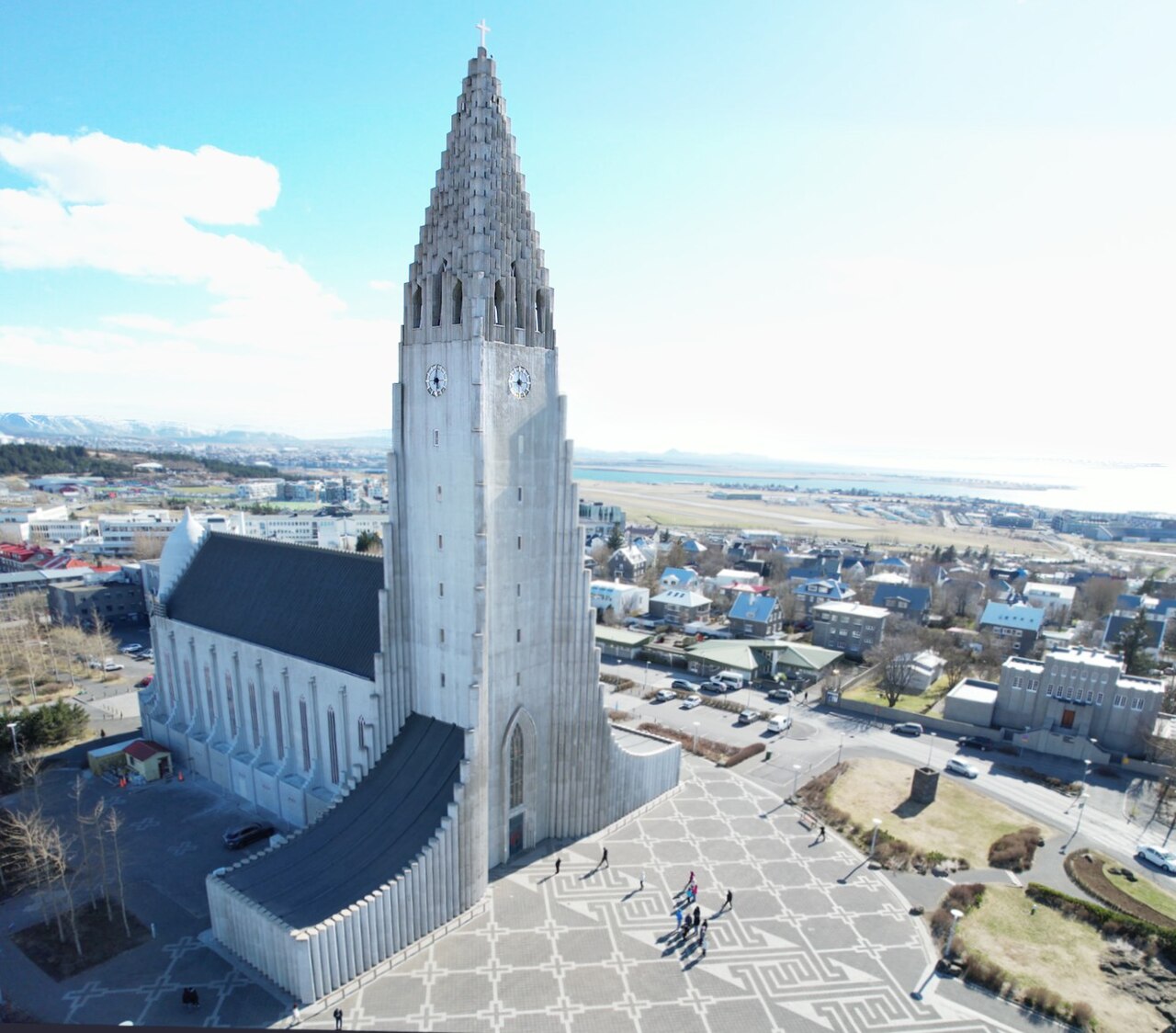
Denmark's architectural identity has been shaped by the welfare state tradition, a long-standing commitment to craft and industrial design, and a brick modernism that is distinct from both the International Style glass box and the timber tradition of the other Nordic countries. Danish modernism at its best — Jacobsen, Henning Larsen, Jørn Utzon — achieves a refinement of detail that is almost Japanese in its precision: nothing is superfluous, every joint is considered, every material choice is deliberate. Iceland has developed an architecture that negotiates between its extreme landscape, its isolation, and its aspirations to international cultural engagement: the Harpa Concert Hall in Reykjavík (Henning Larsen with Olafur Eliasson, 2011) is the most ambitious expression of this — a building whose glass facade is composed of geometric steel frames that change color with the light, making the building itself a kind of aurora borealis, a direct reference to the natural phenomenon most associated with Iceland.
Across all five countries, the shared elements are an insistence on material quality, a responsiveness to natural light (which in the north varies dramatically across the year, from near-total darkness in winter to the midnight sun in summer), an integration with landscape and topography rather than domination of it, and a social commitment to making architecture available to ordinary people — in public buildings, in public housing, and in the designed quality of the everyday environment. The Nordic welfare states invested in architecture as a public good, and the results are visible in the unusually high average quality of the built environment across the region.
Key Identifiers: Nordic Architecture
- Timber or brick as primary exterior material — rarely glass curtain wall; the material is typically visible and honest, not clad or concealed
- Large glazed apertures oriented south or toward significant views — windows scaled to capture scarce natural light rather than to express structural span
- Pitched or mono-pitch roofs with generous overhangs — traditional forms adapted to heavy snow loads and driving rain; contemporary versions often dramatically scaled
- Integration with topography — buildings that follow the ground rather than leveling it; split levels, ramps, and roofs accessible as public space
- Restrained color palette with natural material texture — birch, pine, brick, granite, copper; color from the materials themselves rather than from paint or cladding
- Attention to seasonal light — roof lights, clerestories, and carefully positioned windows designed around the specific quality of northern light at different times of year
- Social program legible in the architecture — public institutions, housing, and civic buildings that convey accessibility and democratic purpose rather than exclusivity
- Refined joinery and material transitions — junctions between different materials handled with unusual care; the detail is the design
A Closer Look: Paimio Sanatorium, Finland
The Paimio Sanatorium, designed by Alvar Aalto and completed in 1932, stands in a pine forest near Turku in southwestern Finland and is one of the defining buildings of European modernism — and one of the most complete demonstrations of what architecture can do when it is rigorously organized around human wellbeing rather than around formal abstraction. Tuberculosis, when the building was designed, was the leading cause of death in Finland; there was no effective drug treatment, and the principal therapy was rest, fresh air, and sunlight. Everything in the building's design follows from that medical program.
The building is organized as a series of wings angled to catch the maximum possible sunlight in the Finnish climate. The main ward wing faces south and slightly east, so that the low winter sun reaches every patient room. The roof terrace is fully glazed on the south side, allowing patients to take the sun cure outdoors even in winter. The individual patient rooms were analyzed with extraordinary care: Aalto studied the positions patients assumed when lying in bed and designed the ceiling color and texture accordingly — the ceiling above the bed is painted a dark, matte, warm color to avoid visual fatigue from lying face-up; the walls are a light, warm tone that reflects daylight without glare. The washbasin spout is angled to direct water against the ceramic basin rather than into the standing water, making the sound of washing inaudible to other patients. The central heating pipes are positioned high on the walls, circulating warm air where it can be felt without creating cold feet on the floor. Every detail serves the healing purpose, and none of it appears labored or mechanical — the building feels warm, light, and generous rather than clinical.
The Paimio Sanatorium has been a working medical facility continuously since its completion, adapted first as a general hospital when tuberculosis declined and then as a rehabilitation center. It is one of the few canonical modernist buildings still operating in its original function, which means it has been maintained and adapted over 90 years rather than preserved in aspic. Some of Aalto's original interiors have been altered, others preserved; the balance between conservation and living use is an ongoing negotiation. The building is a UNESCO World Heritage Site as part of the Aalto nomination accepted in 2016, and it receives architectural pilgrims from around the world who come to stand in the ward corridors and understand what it means to design with complete commitment to a human purpose.
Spotting It in Building Guessr
Nordic architecture is identifiable in Building Guessr primarily through material honesty and landscape relationship. If you see a building that uses visible brick or timber as the primary exterior finish, sits in a landscape of birch, pine, or granite, has large south-facing windows and a pitched or mono-pitch roof with prominent overhangs, and shows no applied ornament, you are almost certainly looking at something Nordic. The quality of restraint is characteristic: Nordic buildings do not shout. They use fewer materials than other traditions, detail those materials with greater care, and let the quality of the craftsmanship do the communicating.
For period identification, the Norwegian stave church (dark timber, multiple overhanging roofs, dragon-head finials) is from the medieval period and is uniquely Norwegian. Swedish red-painted timber farmhouses with white trim suggest the 18th or 19th century. Brick modernism with refined horizontal window bands and a low profile suggests Denmark and the mid-20th century. Contemporary Nordic buildings — accessible roofs, large structural glass expanses, integration with waterfront or landscape — are likely from the 1990s onward and could be from any of the five countries. The Falun-red painted timber house is the single most immediately recognizable marker of the Swedish vernacular, visible from considerable distance; no other color is quite the same, and it appears across rural Scandinavia in a way that has no equivalent in any other regional tradition.
Find Nordic buildings across the Scandinavian and Finnish location filters.
Play Building GuessrFurther Reading
Sources & further reading
Reference material this page draws on, and where to read further. External links open third-party sites.
- Architecture of Norway · Wikipedia
- Stave church · Wikipedia
- Alvar Aalto · Wikipedia
- Nordic Classicism · Wikipedia
- Jørn Utzon · Wikipedia
- Functionalism (architecture) · Wikipedia