The Counter-Reformation in stone
Baroque architecture emerged in Rome around 1600 as the Catholic Church's deliberate visual response to the Protestant Reformation. The architects and patrons who shaped it were not primarily motivated by aesthetics — they were motivated by theology and politics. The Protestant reformers had stripped their churches of images, sculpture, and ornament on the grounds that decoration was idolatrous distraction from the Word of God. The Catholic response, formalized by the Council of Trent (1545–1563), was almost the opposite: art and architecture were powerful instruments of faith, capable of moving the heart and the soul in ways that scripture alone could not. If architecture could produce wonder, awe, and an overwhelming sense of divine presence, then architecture was a missionary tool.
This is the key to understanding everything that looks excessive or theatrical about the Baroque. The curved facades, the gilded ceilings, the trompe-l'oeil paintings that dissolve the boundary between real architecture and painted illusion, the twisted columns, the dramatic shafts of light piercing through hidden windows — none of it is accidental or merely decorative. Every element is engineered to produce a specific emotional and spiritual effect in the person standing inside the building. Baroque is architecture as theater, and the congregation is the audience that the building is designed to persuade.
The word "baroque" itself was originally derogatory, derived possibly from the Portuguese barroco (an irregularly shaped pearl) or the Spanish barrueco (a rough or imperfect pearl). Critics in the 18th century used it to mean something grotesque and overwrought — too much ornament, too little restraint. The term has long since lost its pejorative edge and now describes one of the most influential stylistic periods in Western architectural history.
Key characteristics: what makes a building Baroque
Baroque architecture shares a family of formal characteristics that distinguish it immediately from the Renaissance style it grew out of. Where the Renaissance valued static symmetry, clarity, and the calm application of classical rules, the Baroque deliberately introduced movement, tension, and emotional intensity into every element.
The most visible characteristic is the curved facade. Renaissance facades are predominantly flat planes or gently projecting and receding elements in a single direction. Baroque facades are dynamic: they curve in plan, undulating outward and inward, creating facades that seem to breathe. Borromini's San Carlo alle Quattro Fontane in Rome (begun 1638) is the definitive example — a tiny church whose facade curves convex-concave-convex in a sinuous wave that contains more formal invention per square meter than almost any other building in history.
Equally important is the Baroque treatment of light and shadow — what critics call chiaroscuro in stone, borrowing the term from painting. The Baroque architect did not illuminate a space evenly; instead, light was admitted from hidden or unexpected sources, creating dramatic contrasts of brilliance and shadow that directed the eye, heightened spatial drama, and could produce an almost supernatural effect. Bernini's Ecstasy of Saint Teresa in Santa Maria della Vittoria in Rome places the sculpture in a hidden niche where concealed windows above and behind it pour golden light down from above, making the marble appear to glow. The architecture and the sculpture are inseparable.
The oval plan is another Baroque invention. Renaissance churches almost invariably used longitudinal nave-and-aisles plans derived from Roman basilicas, or centralized Greek-cross plans. Baroque architects discovered the oval as a shape that combined both impulses: it has a clear longitudinal axis (altar at one end, entrance at the other) while enclosing the congregation in a unified elliptical space that creates a sense of gathering and community. Borromini used oval plans repeatedly; so did Bernini, and the oval became the standard plan for Catholic churches throughout Central Europe and Latin America.
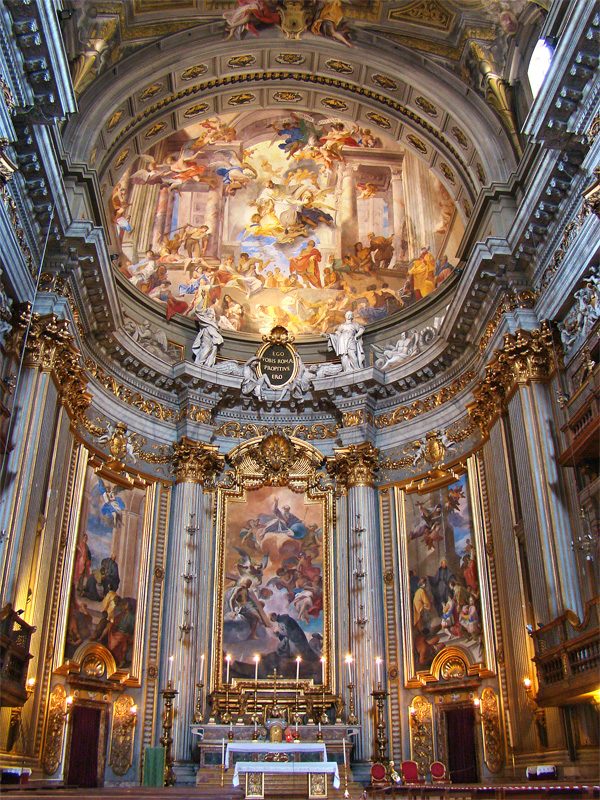
Trompe-l'oeil ceiling painting was developed to an extraordinary degree in the Baroque period. The painted ceiling illusion — figures appearing to soar into a painted sky, columns and arches dissolving into clouds, saints and angels ascending from the real architectural space into an imaginary heavenly one — was a uniquely Baroque achievement. The most spectacular example is Andrea Pozzo's ceiling of Sant'Ignazio in Rome (1694), where a painted architectural structure continues the real architecture of the nave upward into an illusory dome and colonnade that extends the building by what appears to be another fifty meters. The illusion is perfectly calculated for one specific point on the floor marked by a disk; moving away from that point causes the perspective to collapse in a dizzying distortion.
Other characteristic elements include broken pediments (classical triangular pediments split at the top and the elements pulled apart or folded inward), paired columns (columns grouped in twos or threes for greater visual weight and drama), twisted Solomonic columns (columns with spiral-carved shafts derived from the legendary columns of the Temple of Solomon, deployed by Bernini in his baldachin over the high altar at St. Peter's), and abundant sculptural ornament integrated so thoroughly with the architecture that the boundary between building and sculpture becomes difficult to define.
Italian Baroque: Bernini and Borromini
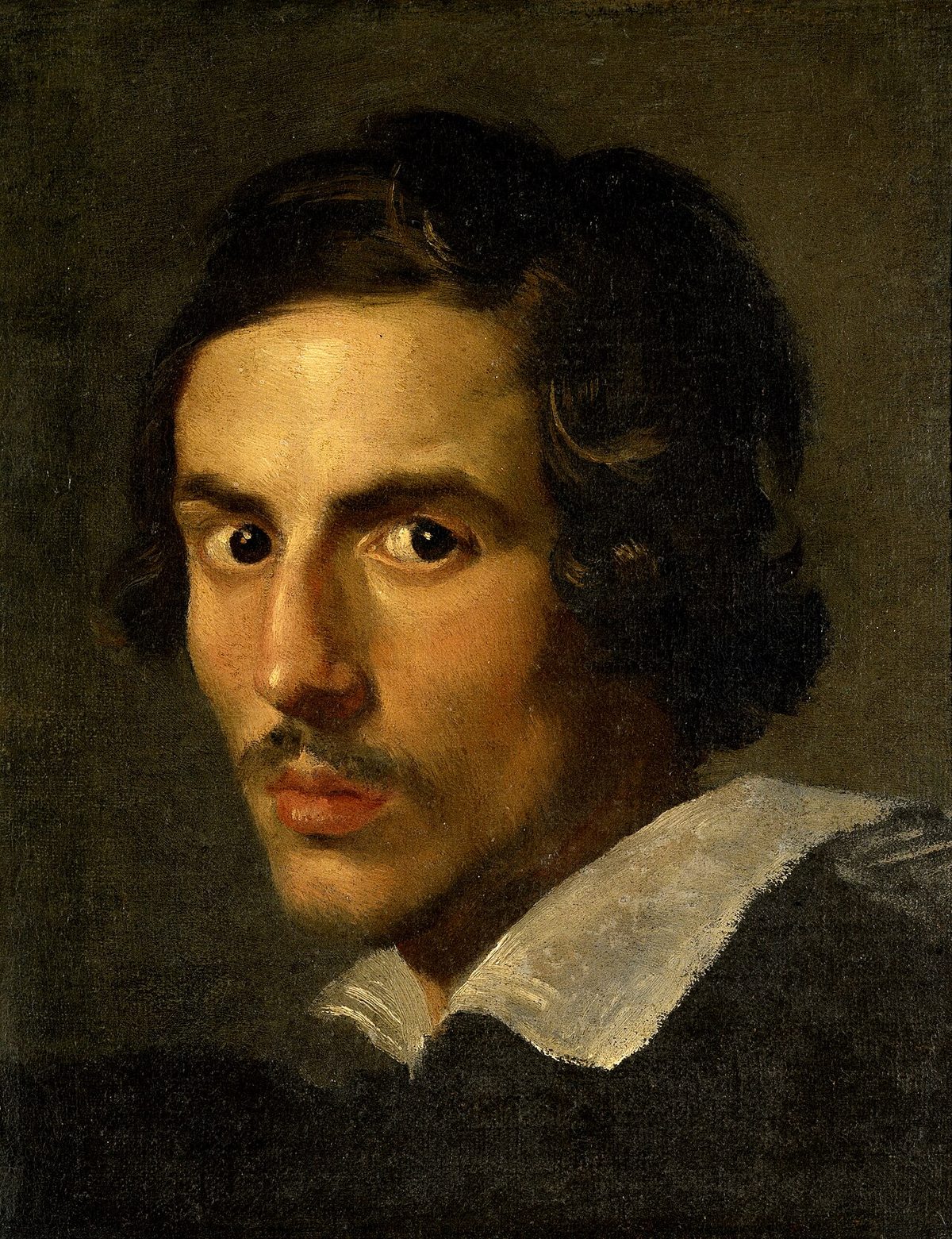
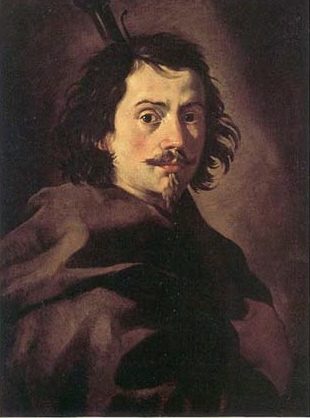
The Italian Baroque was defined above all by the rivalry between two contemporaries in Rome: Gian Lorenzo Bernini (1598–1680) and Francesco Borromini (1599–1667). They were born within a year of each other, worked on the same buildings, and loathed each other — and between them they created the vocabulary of the high Baroque.
Bernini was the establishment figure: suave, well-connected, the favourite of multiple popes, a sculptor of genius whose architectural projects were conceived as stages for sculptural drama. His greatest architectural achievement is the colonnade of St. Peter's Square in Rome (1656–67), a pair of curving colonnades embracing the vast oval piazza in front of the basilica. Bernini described them as the arms of the church reaching out to embrace the faithful, and the image is precise: the colonnade pulls you toward the facade with a visual magnetism that is purely architectural. The scale is enormous — the colonnade contains 284 columns and 88 pilasters — but it reads as welcoming rather than overwhelming because the curves draw the eye inward rather than confronting it.
Borromini was the more intellectually radical of the two, a deeply learned designer who pushed the structural logic of classical forms into territory that no one had imagined before and that would not be fully understood until the 20th century. His San Carlo alle Quattro Fontane (San Carlino, 1638–46) is the first great Baroque church: a tiny building on a cramped corner site whose interior is an oval derived from a complex geometric figure, whose walls undulate in complex curves, and whose ceiling is a honeycomb of geometric coffers that change shape as they recede — hexagons, octagons, and crosses — creating the illusion of a space larger than it is. The exterior facade, added in 1667, is Borromini's most complex facade design: three bays of undulating curves, two concave flanking the one convex center, packed with niches, columns, a cartouche, an oval medallion, and a small tower — all compressed into a surface barely twelve meters wide.
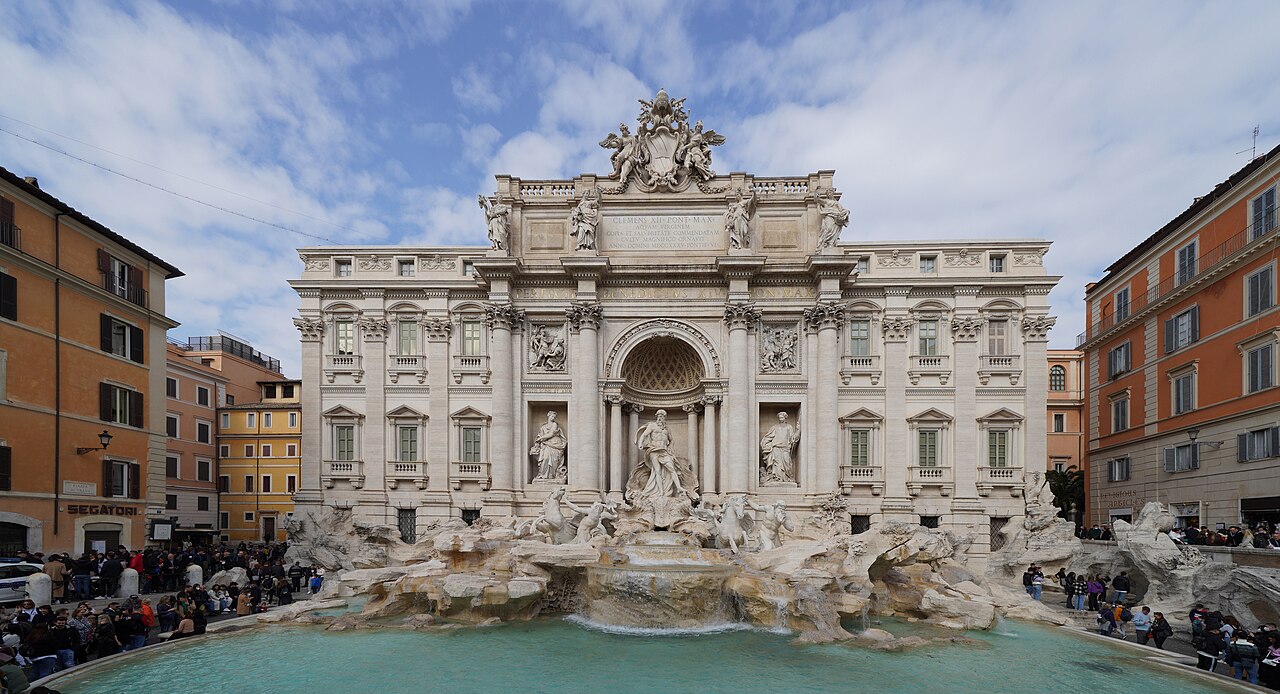
Beyond Bernini and Borromini, the Italian Baroque produced the Church of the Gesù in Rome — the headquarters of the Jesuit order and the building that established the formula for Catholic churches worldwide — the Palazzo Barberini, the Trevi Fountain (designed by Nicola Salvi, completed 1762), and the Spanish Steps (designed by Francesco de Sanctis, 1723–25). Rome itself became the Baroque city par excellence, its streets and piazzas organized around sequences of fountains, obelisks, and church facades designed as a theatrical promenade through the city.
French Baroque and the classical variant
French Baroque — sometimes called French Classicism — represents a significant departure from the Italian original. The French court under Louis XIV was the most powerful political entity in 17th-century Europe, and French culture was deeply invested in rationality, order, and formal perfection. French architects absorbed the Baroque impulse toward grandeur but disciplined it with a severity that Italian architects would have found excessive.
The defining monument of French Baroque is the Palace of Versailles, begun by Louis Le Vau in 1661 and massively expanded by Jules Hardouin-Mansart from 1678 onward. The garden facade of Versailles is 680 meters long — the longest palace facade in the world — and it is organized with a rigid regularity that Italian Baroque would never have imposed: a long base level of rusticated stone, a piano nobile of large arched windows framed by paired pilasters, and an attic story with flat square windows and a balustrade topped with sculptural trophies. Everything is symmetrical, everything is in proportion, nothing curves. The French have replaced the Italian dynamism with a different kind of overwhelming: sheer scale and relentless consistency.
The interior, however, is pure Baroque. The Hall of Mirrors — seventy-three meters long, lined with seventeen arched mirrors facing seventeen arched windows looking out over the gardens, the ceiling covered with paintings by Charles Le Brun celebrating Louis XIV's military victories — is one of the most theatrical interior spaces ever created. The mirrors double the light from the windows, the ceiling painting transforms the room into a propaganda instrument, and the scale makes every individual in it feel small in a way that is not accidental. Versailles was designed to make clear who was in charge.
Other key works of French Baroque include the Church of the Invalides in Paris (Hardouin-Mansart, completed 1708), with its great gilded dome visible across the city, and the Place Vendome (Hardouin-Mansart, 1699–1720), an octagonal urban square whose uniform facade of arched windows and pilasters established the model for formal urban squares throughout 18th-century Europe.
Central European and Spanish Baroque
The Baroque spread through the Habsburg territories of Central Europe — Austria, Bavaria, Bohemia, and beyond — and in this context it became even more exuberant than its Italian source. The Central European Baroque is the Baroque of white and gold, of onion domes, of pilgrimage churches set on hilltops, of interior spaces where every surface is gilded, frescoed, or carved in stucco.
The Melk Abbey in Austria (Jakob Prandtauer, 1702–36), perched dramatically on a rocky promontory above the Danube, is one of the most perfectly composed Baroque complexes in Europe: a monastic complex whose church facade, towers, and wings are arranged in a dynamic diagonal composition that takes advantage of its site to create a building that looks different from every angle. The interior of the church — all white and gold, frescoed vaults, twisted columns, gilded altars — is the Central European Baroque at its most concentrated. The effect on a visitor arriving by boat up the Danube, as pilgrims once did, is precisely what the architects intended: overwhelming, rapturous, and designed to communicate that the church is a foretaste of heaven.
In Spain and Portugal, the Baroque absorbed local traditions of elaborate surface ornament — the plateresque style of intricate carved stone decoration — to produce something even more extreme. The Churrigueresque style (named after architect José Benito de Churriguera) took Baroque ornamental exuberance to its logical limit: facades so encrusted with carved detail that the underlying architectural structure becomes almost invisible beneath the surface decoration. The west facade of the Cathedral of Santiago de Compostela (18th century) and the sacristy of the Cartuja in Granada are the canonical examples — surfaces that seem to have been inflated rather than built, every inch carved into forms that proliferate without evident end.
Spanish colonial Baroque spread to Mexico, Peru, and the Philippines, where it absorbed indigenous craft traditions to produce a hybrid style sometimes called Ultra-Baroque or Mestizo Baroque — churches whose stone facades combine European compositional schemes with indigenous geometric and floral motifs in combinations that have no European precedent.
Regional Variations
The Baroque was never a single unified style but a family of related approaches to the common problem of producing grandeur, movement, and emotional impact. In Rome, the original context, the Baroque was above all a sculptural style: buildings conceived as three-dimensional compositions in which architecture, sculpture, painting, and landscape were fused. In France, the Baroque was disciplined by a classical rationalism that produced the formal garden, the symmetrical palace, and the regulated urban square. In Central Europe — Austria, Bavaria, and Bohemia — the Baroque became an art of interior atmosphere: whitewashed churches whose gilded stucco, frescoed ceilings, and carved altarpieces created an overwhelming sensory experience designed explicitly for the rural peasant congregation who might walk many kilometers on a pilgrimage to reach the church.
England had its own Baroque moment, brief and distinctive. Sir Christopher Wren's St. Paul's Cathedral in London (1675–1710) is the most restrained of all the major Baroque domes — a building that absorbed the lessons of Rome without the emotional extravagance. Wren was working in a Protestant country whose aristocratic patrons were suspicious of Catholic theatrical excess; the result is a Baroque building calibrated to English taste. His contemporary Nicholas Hawksmoor pushed further into genuine Baroque drama in his London churches — Christ Church Spitalfields, St. Mary Woolnoth — where the massing is bold, the ornament concentrated, and the spatial sequences deliberately theatrical. John Vanbrugh at Castle Howard (1699–1712) and Blenheim Palace (1705–24) created a British Baroque of enormous, almost brutal massing, heroic skylines, and dramatic spatial sequences that owed as much to stage design as to architecture.
In Portugal, the Baroque produced the extraordinary Joanine style (named after King John V), whose most spectacular monument is the Library of the University of Coimbra (1717–28): a three-room interior of gilded carved wood, painted ceilings, and frescoed trompe-l'oeil bookshelves — a Baroque interior applied to a secular scholarly purpose. Portuguese colonial Baroque travelled to Brazil, where it fused with local materials and craftsmanship to produce the Aleijadinho style, named after the sculptor Antonio Francisco Lisboa, whose carved soapstone facade and atrium sculptures for the Basilica of Bom Jesus de Matosinhos in Congonhas are among the masterpieces of 18th-century art in any medium.
The Russian Baroque of the early 18th century is a product of Peter the Great's forced westernization campaign. The Peterhof Palace near St. Petersburg (begun 1714, expanded by Bartolomeo Rastrelli from 1747) combines a Versailles-derived formal garden with fountains, gilded statues, and a palace facade of an exuberance that exceeds even Versailles — more gilded, more colored, more ornate, designed to demonstrate that Russia had not merely adopted European civilization but intended to surpass it. Rastrelli's Winter Palace in St. Petersburg (1754–62) and the Catherine Palace in Tsarskoye Selo (1752–56) continue the same logic, producing a Russian Baroque that is among the most extreme expressions of the style anywhere in the world.
Key Identifiers: Baroque Architecture
- Curved facades: walls that undulate convex and concave in plan, often in a single facade, giving the building a sense of movement and dynamism absent in Renaissance architecture
- Broken pediments: the triangular pediment of classical architecture is split at the apex or base and the two halves are pulled apart, sometimes filled with a cartouche, urn, or sculptural figure
- Paired and clustered columns: columns grouped in twos or threes at key structural points, increasing visual weight and emphasizing the entry or focal elements
- Twisted Solomonic columns: columns with spiral-carved shafts, derived from the legendary columns of Solomon's Temple in Jerusalem and used by Bernini in the baldachin of St. Peter's — a powerful symbol of sacred space
- Dramatic entrance sequences: the approach to a Baroque building is designed as a sequence of spatial experiences — open piazza, closing colonnade or forecourt, monumental stair, vestibule — each transition heightening anticipation
- Trompe-l'oeil ceiling paintings: illusionistic paintings on ceilings that appear to extend the architectural space upward into sky, clouds, and heavenly scenes, dissolving the distinction between real and painted architecture
- Chiaroscuro lighting: dramatic contrasts of light and shadow created by concealed windows, lanterns, or skylights that illuminate key elements while leaving surroundings in shadow
- Abundant sculptural ornament: carved stucco, gilded plasterwork, bronze sculpture, and painted decoration integrated with the architecture to a degree that makes the boundary between building and artwork indefinable
- Oval plans: churches and rooms with oval floor plans that combine longitudinal and centralized space, particularly common in Central European and Italian Baroque
- Volutes and scrolls at large scale: the scroll forms (volutes) of classical capitals enlarged to become major architectural elements, especially on church facades where they link the nave height to the aisle height
A Closer Look: the Church of the Gesù, Rome
The Church of the Gesù in Rome — the mother church of the Jesuit order — is the building that established the template for Catholic church design for the next two centuries and across every continent where Catholic missionaries travelled. Designed by Giacomo Barozzi da Vignola with a facade by Giacomo della Porta (completed 1584), it predates the full Baroque by a generation, but it is the building from which the Baroque developed its fundamental spatial formula, and its interior received its most important Baroque additions in the 1670s and 1680s.
The plan is the key innovation. The Gesù abandoned the medieval cathedral model (narrow nave, flanking aisles separated by columns or piers) in favor of a single wide nave without aisles. The side aisles were replaced by a series of chapels set into the thickness of the walls, separated from the nave by arches but clearly visible from it. This gave the Jesuit preacher an unobstructed line of sight to every member of the congregation — crucial for a Counter-Reformation Church committed to effective preaching. It also created a unified spatial volume that is entirely different in character from the Gothic or Renaissance church: a large, undivided room in which the entire congregation is gathered in one shared space.
The ceiling of the nave received its definitive decoration in 1679 when Giovanni Battista Gaulli (known as Baciccia) began work on the fresco of the Triumph of the Name of Jesus. What Gaulli created is one of the great achievements of Baroque illusionism: a painted sky that appears to open the ceiling of the church into heaven, with figures of the blessed rising into the light and figures of the damned tumbling downward — some of the painted figures apparently escaping the frame of the painting and becoming three-dimensional stucco figures clinging to the real gilded frame. The effect depends on a complex system of concealed lighting: the nave is relatively dark at floor level, the dome (rebuilt and enlarged by Giacomo della Porta) admits a ring of windows, and the painted ceiling receives light from the dome that makes it appear to glow from within. Standing in the nave of the Gesù and looking up is the essential Baroque experience: you cannot locate the exact boundary between the real building and the painted illusion.
The Gesù formula — wide nave, side chapels, crossing dome, illusionistic ceiling painting — spread to every part of the world that Jesuit missionaries reached. The plan of the Gesù can be recognized in Jesuit churches in Lima, Goa, Macau, and Montreal, as well as in every Baroque church built in Rome, Vienna, or Munich in the following two centuries. No single building has had a more direct influence on Catholic architecture worldwide.
Spotting It in Building Guessr
Baroque buildings are generally identifiable by their combination of classical vocabulary and dynamic, curving forms — the presence of columns and pilasters confirms a connection to the classical tradition, while the curves, the broken pediments, and the sculptural density of the ornament distinguish the Baroque from the more restrained Renaissance and Neoclassical styles. The most reliable single identifier is the undulating facade: if a facade curves in plan — convex at one point, concave at another — and is covered with classical ornament, it is almost certainly Baroque. A flat facade with very heavy ornament — carved stone details at the cornice, pilasters with elaborate capitals, sculptural figures in niches, a large cartouche above the entrance — is also likely Baroque, particularly if the building is a church in a Catholic country.
Geographic context helps considerably. In Italy, particularly Rome, richly ornamented churches with curved facades or dramatic entrance staircases are Baroque from the 17th or early 18th century. In France, large formal palaces with long symmetrical facades, mansard roofs, and formal gardens are French Baroque or Classicism from the same period. In Central Europe — Austria, southern Germany, Poland, and the Czech Republic — white churches with onion domes or bulbous towers, set on hilltops or in rural landscapes, are almost invariably Central European Baroque pilgrimage churches from the early 18th century. In Latin America, elaborately carved stone facades on churches in colonial towns — especially in Mexico, Peru, or Bolivia — represent the Colonial or Mestizo Baroque of the 17th and 18th centuries. Use the Era filter for 1600–1750 and the Style filter for Baroque to narrow quickly to these buildings.
Can you identify a Baroque church from its facade curve alone? Put your eye to the test.
Play Building GuessrFurther Reading
Sources & further reading
Reference material this page draws on, and where to read further. External links open third-party sites.
- Baroque architecture · Wikipedia
- Gian Lorenzo Bernini · Wikipedia
- Francesco Borromini · Wikipedia
- St. Peter's Basilica · Wikipedia
- Rococo · Wikipedia
- Christopher Wren · Wikipedia