What it is
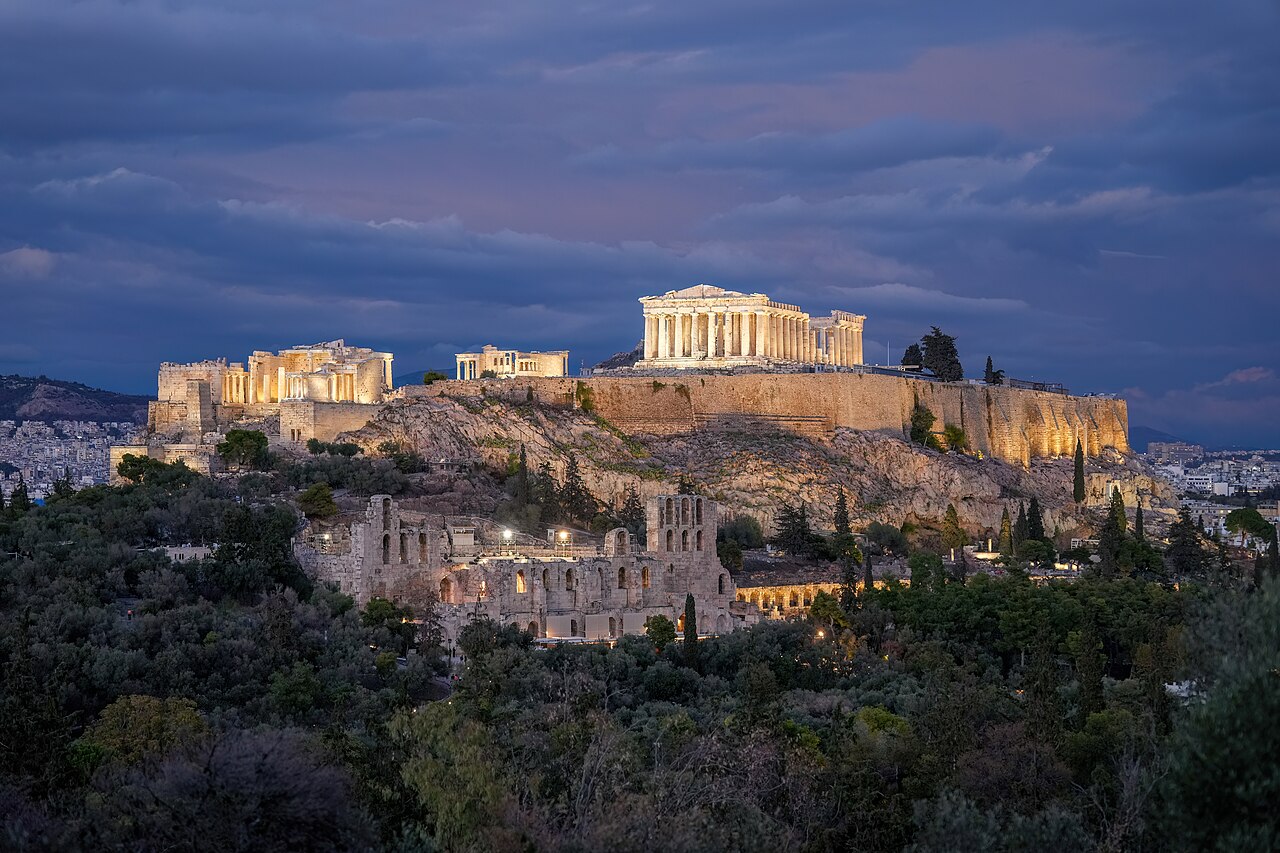
The Acropolis of Athens — from the Greek akropolis, "high city" — is a flat-topped limestone plateau rising 156 meters above sea level at the center of Athens, and it has been the site of the city's most important religious buildings since the Bronze Age. The structures visible today were almost entirely built during a single concentrated period of construction in the second half of the fifth century BCE, under the direction of the Athenian statesman Pericles, following the destruction of the earlier sanctuary by the Persian army in 480 BCE. The building program — which included the Parthenon, the Erechtheion, the Propylaia, and the Temple of Athena Nike — was overseen by the sculptor Pheidias and represented the most ambitious expenditure on public architecture in the history of the ancient Greek world. The funding came from the treasury of the Delian League, an alliance of Greek city-states nominally formed to resist Persia; Pericles' use of league funds to build monuments in Athens was politically controversial among the league's members and remains so among historians today.
The Acropolis has been in continuous use for more than 3,000 years, a fact that has paradoxically complicated its preservation. The Parthenon served successively as a temple to Athena, a Christian church (sixth to fifteenth century CE), and a mosque after the Ottoman conquest of Athens in 1458. In 1687, Venetian forces besieging the Ottoman garrison on the Acropolis fired artillery at the Parthenon, which the Ottomans were using as a gunpowder magazine; the resulting explosion destroyed the building's cella (inner room) and blew out the central columns on both sides. Between 1801 and 1812, Lord Elgin, the British ambassador to the Ottoman Empire, removed approximately half of the surviving sculptural decoration from the Parthenon — friezes, metopes, and pediment figures — and sold them to the British Museum, where they remain, the subject of an ongoing repatriation dispute between Greece and the United Kingdom. The Acropolis was inscribed as a UNESCO World Heritage Site in 1987.
Architectural significance
The Acropolis ensemble is the definitive statement of classical Greek architecture, and its influence on every subsequent tradition that drew on Greek precedents — Roman, Renaissance, Neoclassical, and beyond — is both direct and immeasurable. The Propylaia (437–432 BCE), the monumental ceremonial gateway to the sanctuary, demonstrates a spatial and structural sophistication that goes beyond simple monumentality: designed by the architect Mnesikles, it uses columns of two different orders — Doric on the exterior and Ionic in the interior — to mediate between the scale of the exterior approach and the more intimate scale of the sanctuary beyond, while simultaneously accommodating the uneven topography of the hill's western approach through a complex split-level plan. The Propylaia was never fully completed due to the outbreak of the Peloponnesian War, but what was built represents one of the most thoughtfully planned ceremonial entries in the history of architecture.
The Erechtheion (421–406 BCE) addresses the most architecturally difficult brief on the Acropolis: a building that must simultaneously honor multiple deities and sacred sites on ground of dramatically varying levels, without any possibility of the bilateral symmetry that Greek architecture normally relied upon. The architect — name unknown — resolved this through an asymmetrical plan with three different porches at different levels, and the famous Porch of the Caryatids, where six draped female figures serve as columns supporting the entablature above. Each caryatid is subtly different from the others — the position of the weight-bearing leg alternates, the drapery falls differently — to avoid the mechanical repetition that would make the group read as a factory product rather than a work of art. Five of the original caryatids are now in the Acropolis Museum below the hill; the one removed by Lord Elgin is in the British Museum. The sixth in place on the porch is a replacement cast.
Key features
- Parthenon (447–432 BCE): The dominant building of the Acropolis — a Doric temple to Athena on the highest point of the plateau — is covered in its own building profile; it is the largest Doric temple ever built in mainland Greece and the most studied single building in the history of Western architecture.
- Erechtheion with Porch of the Caryatids: The asymmetrical Ionic temple on the northern edge of the plateau, with its six caryatid figures serving as structural columns; replicas stand in place on the building while the five surviving originals are in the Acropolis Museum at the hill's base.
- Propylaia gateway (437–432 BCE): The monumental ceremonial entrance to the Acropolis on its western slope, using both Doric and Ionic columns in a complex split-level composition; unfinished at the outbreak of the Peloponnesian War but complete enough to be fully operational as an entrance.
- Temple of Athena Nike (427–424 BCE): A small Ionic temple on the bastion at the southwestern corner of the Acropolis, overlooking the approach from below; dismantled by the Ottomans in 1686 and rebuilt from its original blocks in the nineteenth century.
- Dramatic cliff-edge site: The Acropolis is visible from virtually every part of Athens and from the surrounding hills and sea approaches; the building ensemble reads as a unified composition from below, with the Parthenon dominant on the skyline and the subsidiary buildings glimpsed at the edges of the plateau.
- Acropolis Museum: The new Acropolis Museum at the base of the hill, opened in 2009 and designed by Bernard Tschumi, houses the surviving original sculptures from the Acropolis buildings — including the five Erechtheion caryatids, the Parthenon frieze blocks held in Athens, and the pediment sculptures — in purpose-built conservation conditions with direct views up to the buildings on the hill.
Preservation status
A comprehensive restoration program has been underway on the Acropolis since 1975, directed by the Committee for the Conservation of the Acropolis Monuments. The program's principal achievement has been the reversal of the damage caused by nineteenth-century restorations that used iron clamps to hold marble fragments together; the iron oxidized, expanded, and cracked the marble from within, causing far more damage than the original deterioration the repairs were meant to address. The ongoing work replaces these iron clamps with titanium — a metal that does not oxidize — and carefully rejoins original fragments using new marble from the same quarries at Mount Penteli that supplied the original builders. Acid rain damage to the marble surfaces is a continuing concern; some of the most severely affected sculptural details have been moved inside to the Acropolis Museum and replaced in situ with cast replicas. The Elgin Marbles debate — Greece's sustained campaign for the return of the Parthenon sculptures held in the British Museum — remains one of the most prominent unresolved questions in international cultural property law.
Think you can place this building on the map?
Play Building Guessr