Architecture in the United Kingdom
The United Kingdom's built environment layers 5,000 years of continuous habitation into a remarkably compact island. Neolithic stone circles, Roman military infrastructure, Norman castles, Gothic abbeys, Tudor manor houses, Georgian terraces, Victorian engineering megastructures, and a 20th-century modernist tradition of social housing all coexist within a few miles of each other in many parts of the country. England, Scotland, Wales, and Northern Ireland each developed regional variations on shared architectural themes: English Perpendicular Gothic, Scottish Baronial, Welsh castle-building under Edward I, and the Baroque of Sir Christopher Wren's post-Fire London. The Industrial Revolution, largely driven by British engineers and entrepreneurs, produced the first iron bridges, the first railway stations, the iron-and-glass greenhouse, and the structural typologies that defined 19th-century industrial architecture worldwide.
Notable Buildings
-
Gothic
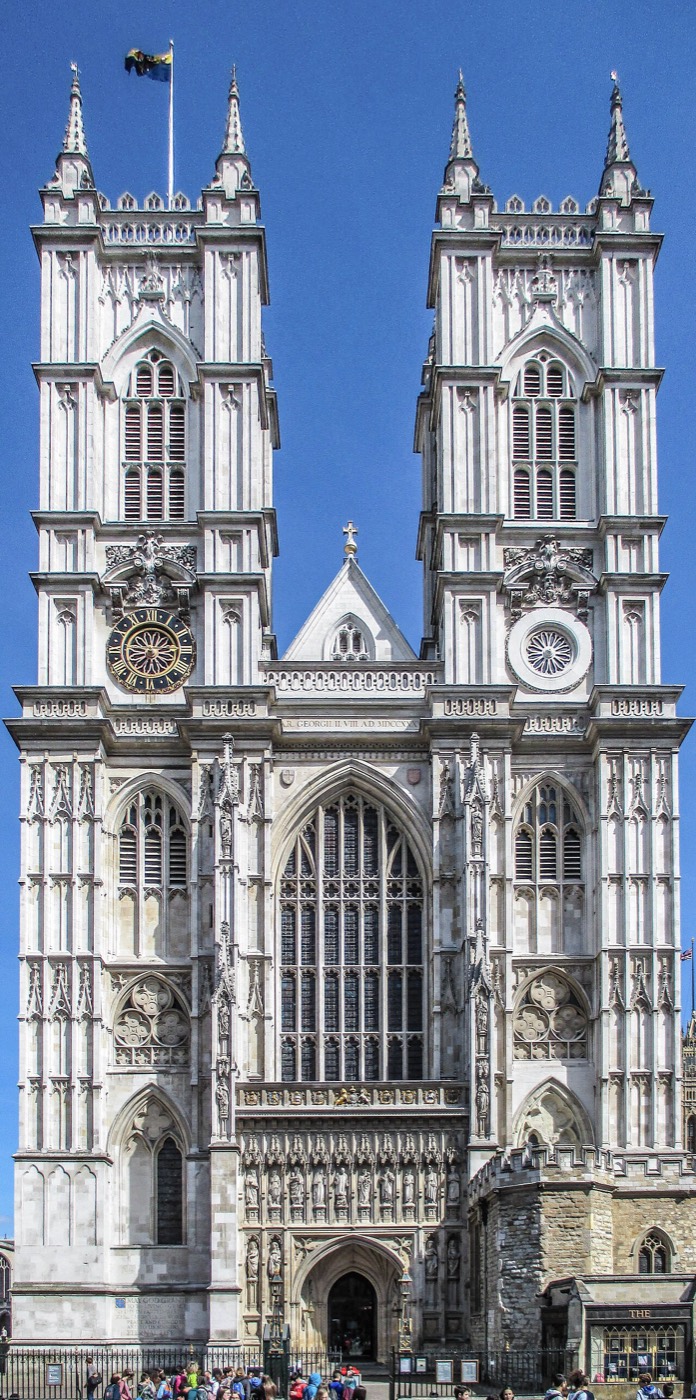
Coronation church of English and British monarchs since William the Conqueror in 1066, and the burial place of Newton, Darwin, Chaucer, Dickens, and many monarchs. The current structure dates largely from 1245 under Henry III, replacing an earlier Norman church, with the famous west towers completed only in the 18th century.
-
Neolithic
Sarsen stones transported from 25 miles away and bluestones transported 200 miles from Wales were erected on Salisbury Plain in phases between 3000 and 1500 BCE. The main stones align with the summer solstice sunrise. How precisely they were transported and raised remains one of archaeology's most debated questions.
-
Norman / Medieval
William the Conqueror's White Tower (begun 1078) is the oldest standing part. The Tower has served as royal palace, treasury, armoury, prison, place of execution, and the home of the Crown Jewels. Six resident ravens are kept by Royal Warrant — legend holds the kingdom will fall if they ever leave.
-
Medieval
Built on a volcanic plug above the city of Edinburgh, with St Margaret's Chapel (c.1130) as its oldest surviving structure. The castle has been besieged over 26 times in its history and houses the Honours of Scotland, the oldest surviving crown jewels in the British Isles — crown, sceptre, and sword of state.
-
Neoclassical
The London residence of the British monarch since Queen Victoria moved there in 1837. The familiar east facade was added in 1913 by Aston Webb. The palace has 775 rooms, 19 State Rooms used for official entertaining, and the balcony from which the Royal Family appears on state occasions and royal celebrations.
-
English Baroque
St Paul's Cathedral
Christopher Wren's masterpiece (1710), built after the Great Fire of London destroyed the medieval cathedral. The dome — inspired by St Peter's in Rome — is one of three nested structures: a brick cone provides structural support, an outer lead-covered dome provides the exterior silhouette, and the painted inner dome is visible from the cathedral floor.
-
Gothic Revival
Houses of Parliament (Palace of Westminster)
Rebuilt by Charles Barry and Augustus Pugin after the fire of 1834, in a Gothic Revival style chosen as the authentic national architectural idiom. The Elizabeth Tower (popularly called Big Ben after its largest bell) has become the most recognisable clock tower in the world and an international symbol of British democracy.
-
Roman
Roman Baths, Bath
The best-preserved Roman bathing complex in northern Europe, built around a natural hot spring that produces 1.5 million litres of water per day at 45°C. The site has been in continuous use for bathing since Roman times. The Georgian city of Bath that surrounds it is itself one of the finest examples of Neoclassical town planning in Britain.
Architectural Character
British architecture is marked by pragmatism and adaptation more than stylistic revolution. The Norman Conquest (1066) brought Romanesque building traditions from France; Gothic arrived and was developed into a distinctly English variant — Perpendicular Gothic — with its fan vaulting, vast windows with complex tracery, and flattened four-centred arches that has no close parallel in France, Germany, or Spain. King's College Chapel, Cambridge, and Henry VII's Chapel at Westminster Abbey are its greatest achievements.
The Baroque arrived late and in moderated form. Wren, Hawksmoor, and Vanbrugh produced an English Baroque at Blenheim, Castle Howard, and Greenwich that is more controlled than the Roman or South German versions — grandeur restrained by Protestant sobriety. Georgian architecture (1714–1830) produced the most coherent urban fabric in Britain: Bath's Royal Crescent, Edinburgh's New Town, and London's Regency terraces demonstrate a shared Palladian vocabulary applied across decades of speculative development, creating city-scale compositions of extraordinary unity.
Victorian engineering produced the railway station, the iron-and-glass market hall, and the municipal civic building as new building types that had no historical precedent. The Crystal Palace (1851), the Paddington Station train shed, and the Forth Bridge exemplify a tradition of structural ambition that shaped architecture worldwide. The 20th century brought the Arts and Crafts movement, the social housing programmes of the postwar welfare state, and the High-Tech architecture of Foster, Rogers, and Grimshaw — a continuation of the British tradition of foregrounding structure and engineering.
Test your knowledge of European landmarks in the game.
Play Building Guessr